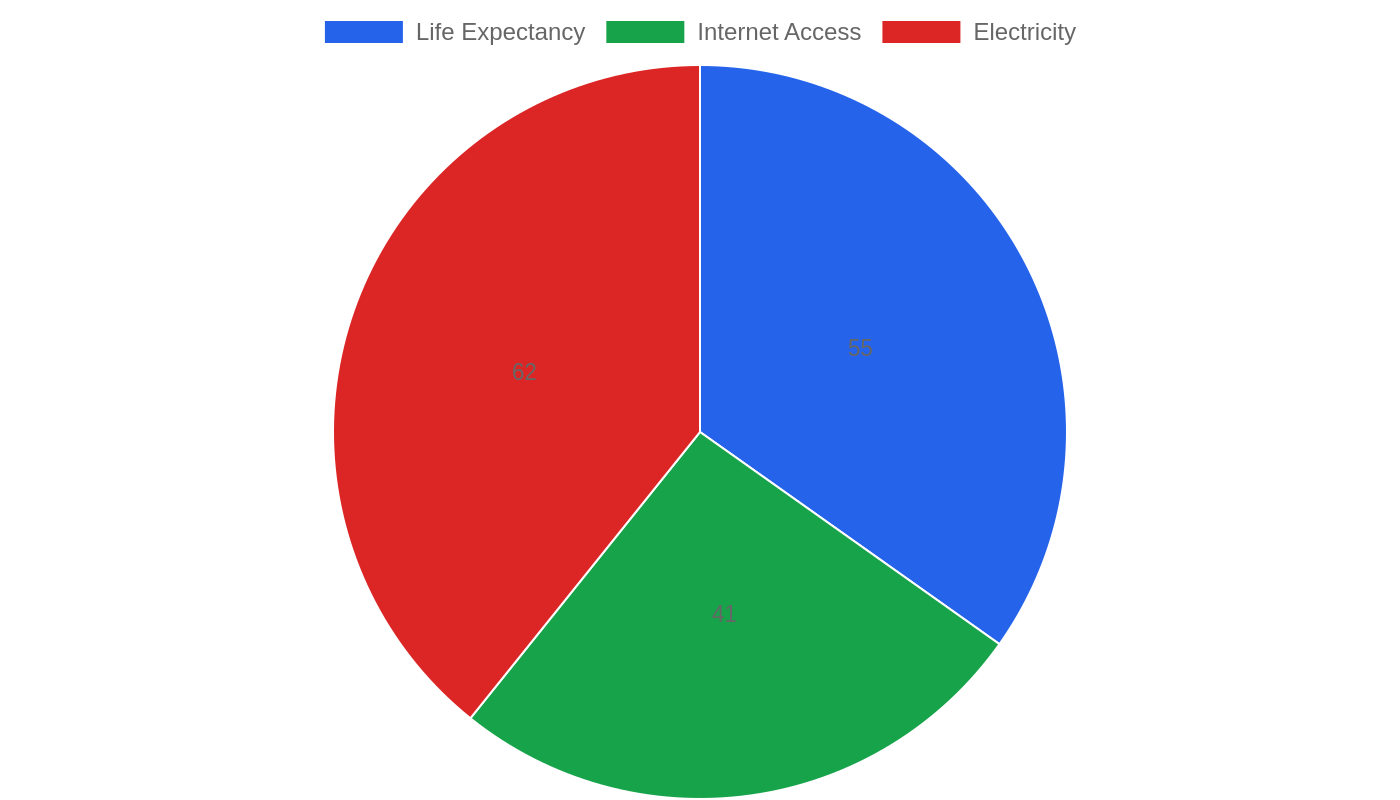
Economic Pulse Net | Sources: World Bank World Development Indicators, Government Sources | 2026
Key Takeaways
– New Caledonia remains a French *sui generis* territory, with gradual power transfers from Paris creating a unique but unresolved political status
– The economy is heavily dependent on nickel mining, yet the World Bank provides no current GDP, inflation, or employment figures, highlighting a critical data vacuum
– Citizens hold French nationality and vote in French presidential and European Parliament elections, tying the territory’s fate directly to mainland politics
– A 54-member Territorial Congress, composed of members from three provincial assemblies, governs alongside a High Commissioner representing the French state
– The territory’s political future remains uncertain as debates over independence, self-determination, and resource control continue to shape daily life
The Nickel Paradox — An Economy Built on One Metal
New Caledonia’s economic story is written in nickel. The territory sits on an estimated one-quarter of the world’s nickel reserves, a resource that has defined its development, its trade relationships, and its vulnerability. Yet for all its mineral wealth, the World Bank provides no current data on GDP growth, inflation, unemployment, or GDP per capita.
This absence of basic macroeconomic indicators is itself telling: it speaks to a territory that exists in a statistical limbo, neither fully integrated into France’s national accounts nor independent enough to produce its own comprehensive data.
The nickel industry has long been the backbone of New Caledonia’s economy, accounting for the vast majority of export revenues and formal employment. When global nickel prices surge, the territory booms. When they crash, as they have in recent years amid oversupply from Indonesia, New Caledonia’s economy suffers acutely.
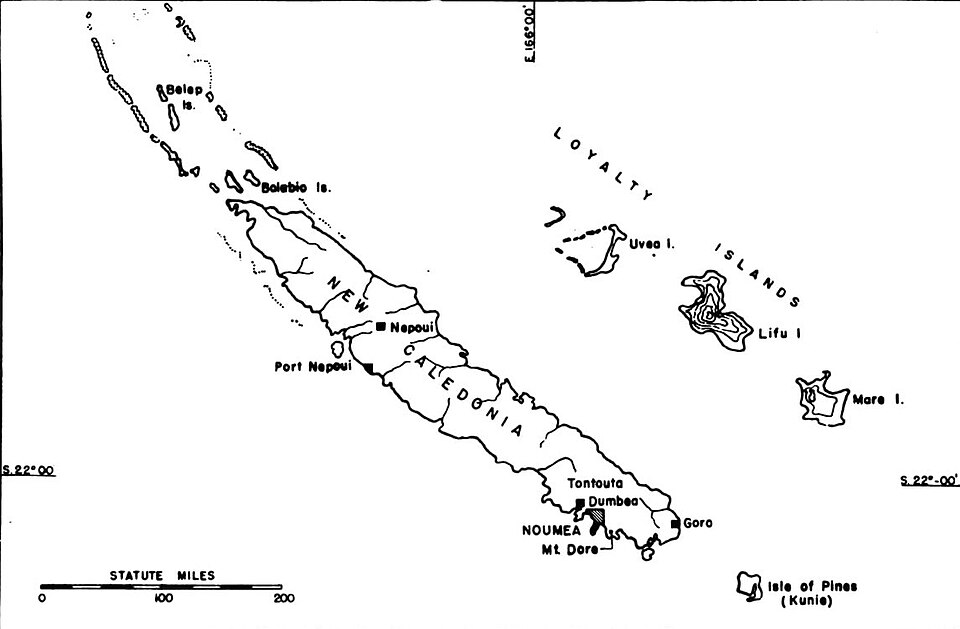
The territory’s three main mining and processing operations — including the troubled Goro nickel plant — have faced repeated operational challenges, from environmental protests to cost overruns and shareholder disputes.
Without official GDP figures from the World Bank, analysts must rely on anecdotal evidence and sectoral reports. What is clear is that New Caledonia’s economic model is dangerously undiversified. The territory imports most of its food, fuel, and manufactured goods, leaving it exposed to global supply chain disruptions and currency fluctuations tied to the French Pacific franc.
Inflation, though unmeasured by official sources, is felt acutely by households as import costs rise and local production struggles to compete.
Unemployment figures are similarly absent from the World Bank dataset, but local reports suggest chronic joblessness, particularly among the indigenous Kanak population and younger workers. The formal economy coexists with a significant informal sector, including subsistence agriculture and small-scale fishing, which provides a safety net but does not appear in national statistics.
The Price of Paradise — Living Costs in a Remote Territory
New Caledonia is an expensive place to call home. The cost of living reflects its geographic isolation, its dependence on imports, and its status as a French overseas territory with wages tied to metropolitan France. Housing in Nouméa, the capital and economic hub, commands premium prices, with rents for a modest apartment often exceeding those in comparable French cities on the mainland.
The gap between housing costs and local incomes is a persistent source of social tension. For young New Caledonians, particularly those without family property, homeownership remains a distant dream. The rental market is tight, with limited supply and high demand from both locals and French expatriates working in the administration, mining sector, or military.
Daily expenses — from food to fuel to utilities — carry a significant markup compared to regional averages in Southeast Asia or even Australia. A simple grocery shop can shock newcomers accustomed to European or Australian prices. Fresh produce, much of it imported, is particularly costly. Local markets offer some relief, with tropical fruits, vegetables, and fish available at lower prices, but these cannot meet the full demand of the territory’s population.
The cost of living is not merely an economic statistic; it is a political issue. For decades, the gap between the haves and have-nots in New Caledonia has mapped onto ethnic and geographic lines, with indigenous Kanak communities in rural areas facing higher costs and lower incomes than the European-descended population in Nouméa. Any serious discussion of New Caledonia’s economic future must grapple with this inequality.
Mining Giants and Political Stakes — The Business Climate
New Caledonia’s business environment is dominated by a handful of large players, primarily in the nickel sector. The territory’s top companies include Société Le Nickel (SLN), a subsidiary of French mining giant Eramet, and the Koniambo Nickel SAS (KNS) operation, which is jointly owned by the local government and global commodities trader Glencore. The Goro nickel plant, now operated by Prony Resources, has been a flashpoint for environmental and social conflict since its construction.
These companies are not just economic actors; they are political institutions. Their decisions about investment, production, and layoffs directly affect the territory’s stability. When KNS announced potential closures or SLN faced financial difficulties, the French government stepped in with subsidies and loan guarantees, underscoring how deeply embedded the nickel industry is in New Caledonia’s governance.
For outside investors, the business climate is a mixed bag. The territory offers legal stability through French law, access to European markets, and a skilled workforce educated in French systems. But it also presents challenges: high labor costs, complex environmental regulations, political uncertainty over the independence question, and a small domestic market.
The mining sector remains the primary draw, but there are emerging opportunities in tourism, aquaculture, and renewable energy — if the political and regulatory environment can provide sufficient certainty.
The business community watches the political landscape closely. Every shift in the independence debate sends ripples through investment decisions. Companies need to know whether they are operating in a territory that will remain French, become independent, or continue in its current ambiguous state.
A Democracy in Transition — Safety, Politics, and Daily Life
New Caledonia’s political system is a study in complexity. As a *sui generis* territory of France, it has gradually received transferred powers from Paris in areas such as education, health, and mining. The French state remains represented by a High Commissioner, while a 54-member Territorial Congress — drawn from three provincial assemblies — handles local governance. Citizens hold French nationality, vote for the President of France, and participate in elections to the European Parliament.
This arrangement was designed as a transitional path toward a final status decision, with referendums on independence held in 2018, 2020, and 2021. The results showed a narrowing but persistent majority in favor of remaining part of France. Yet the process has not resolved the underlying tensions. Pro-independence Kanak parties boycotted the third referendum, citing the COVID-19 pandemic and the legacy of colonial violence, leaving the outcome contested.
Safety in New Caledonia is generally good by regional standards, though tensions flare periodically. The territory has seen episodes of civil unrest, roadblocks, and clashes between pro-independence and loyalist groups, particularly during political crises. The World Bank provides no crime or safety indices, but local reporting suggests that property crime exists in urban areas while violent crime remains relatively low compared to other Pacific territories.
The French state maintains a significant security presence, including gendarmes and military forces, which acts as both a stabilizing factor and a reminder of colonial authority.
Quality of life in New Caledonia is shaped by its natural beauty — coral reefs, lagoons, and tropical forests — and by the social divisions that run through its communities. The Kanak population, which makes up around 40 percent of residents, continues to face economic marginalization and cultural displacement. For many, the independence question is not abstract; it is about land rights, language preservation, and political self-determination.
The Independence Question — What’s Happening Now
The political temperature in New Caledonia is rising. Following the contested 2021 referendum, which saw a boycott by pro-independence parties, the French government has been engaged in a delicate process of dialogue aimed at finding a new political framework. The independence movement, led by the Kanak and Socialist National Liberation Front (FLNKS), has demanded a fourth referendum or a transition toward full sovereignty, while loyalist parties insist the matter is settled.
In recent months, tensions have spilled into the streets. Roadblocks, protests, and clashes with security forces have disrupted daily life in Nouméa and surrounding areas. The French government has responded by deploying additional security personnel and calling for calm, but the underlying grievances remain unresolved. The economic cost of this instability is significant: businesses close during unrest, tourists stay away, and investment decisions are postponed.
The nickel industry is once again at the center of the debate. Pro-independence leaders argue that New Caledonia’s mineral wealth should benefit its people directly, not flow to French multinationals and the French treasury. Loyalist parties counter that independence would cut off the subsidies and market access that keep the territory afloat.
The French government, meanwhile, has signaled a willingness to negotiate a new status — somewhere between full integration and independence — but no concrete proposal has emerged.
The situation is fluid. For investors, policymakers, and observers, New Caledonia represents a test case of whether decolonization can be achieved peacefully and economically in the 21st century. The answer is not yet clear.
The Bottom Line
New Caledonia is a country — or territory, depending on your perspective — that defies easy categorization. Its economy rests on a single volatile commodity, its politics are caught between colonial legacy and independence aspirations, and its people live with a level of uncertainty that would unsettle most developed nations. For investors with a high tolerance for political risk and a long time horizon, the nickel sector offers potential rewards.
For those interested in the future of self-determination movements, New Caledonia is a case study in progress and frustration. Watch this territory not for its GDP data — which remains absent — but for the decisions that will shape its identity for generations to come.
Sources & Methodology
This article is authored by Economic Pulse Net for informational and research purposes. Economic Pulse Net sources its data from multilateral institutions, national statistics bureaus, and proprietary databases. All data is believed to be current as of the date of publication.
Published: July 18, 2026 | Category: Research — New Caledonia
Use these signals in your own platform
Economic Pulse publishes its live signal feed through a documented, read-only API. Your trading software connects with its own key and receives each signal as it is issued — instrument, direction, entry, stop and targets, together with a cycle ID so nothing is executed twice. The feed is independent of this website and cannot change it.
Signals are informational only and are not financial advice.