Economic Pulse Net | Sources: World Bank World Development Indicators, Government Sources | 2026
Key Takeaways
– New Caledonia operates under a unique *sui generis* political status, with France gradually transferring powers while maintaining ultimate authority—a system unlike any other in the world.
– The territory’s economy remains heavily dependent on French financial transfers and the nickel mining sector, creating vulnerability to commodity price swings and political uncertainty.
– With the World Bank providing no recent GDP, inflation, or unemployment figures, the territory exists in a statistical blind spot that complicates investment decisions and policy planning.
– Political tensions between pro-independence and pro-France factions continue to shape every aspect of economic life, from mining concessions to infrastructure spending.
– New Caledonia’s future hinges on a series of referendums and negotiated outcomes that will determine whether it remains part of France or becomes an independent nation—with profound economic consequences either way.
The Nickel Paradox — An Economy Built on One Metal
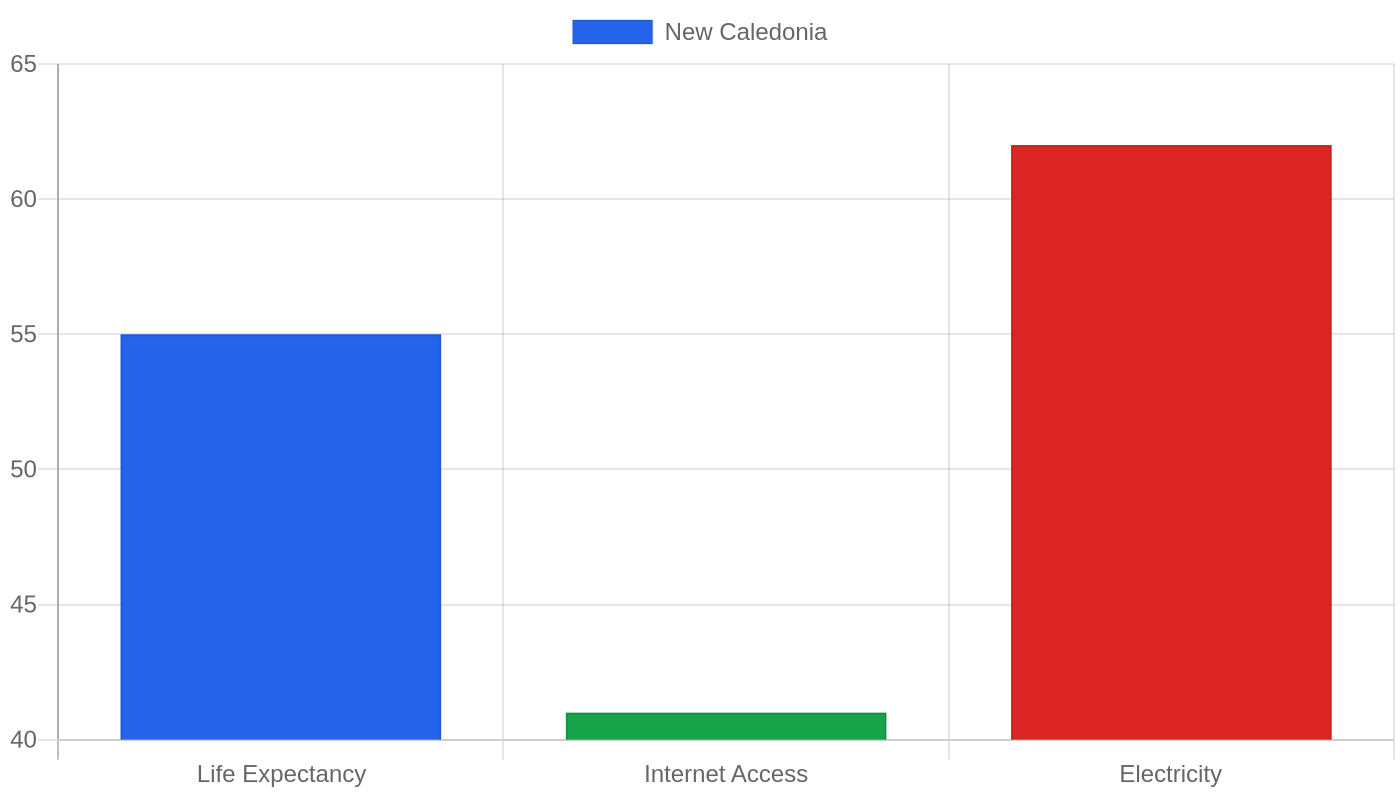
According to the World Bank, New Caledonia’s most recent economic indicators—GDP growth, inflation, unemployment, GDP in US dollars, GDP per capita at purchasing power parity, and GNI per capita—are all classified as unavailable. This statistical vacuum is itself a telling detail. It suggests a territory that falls through the cracks of global economic data collection, caught between its status as a French overseas collectivity and its geographic reality as a Melanesian island nation in the South Pacific.
What is known is that New Caledonia sits on an estimated one-quarter of the world’s nickel reserves. This single mineral has defined the territory’s economic trajectory for decades. The nickel industry provides direct employment, generates export revenue, and attracts French investment in mining and processing infrastructure. But it also creates a classic resource curse dynamic: when global nickel prices fall, as they did during the 2015-2016 commodities downturn, the entire territory feels the pain.
When prices rise, as they did during the electric vehicle battery boom, the economy surges—but so do tensions over who controls the wealth.
The absence of official unemployment figures from the World Bank is particularly striking for a territory where joblessness has historically been higher than in metropolitan France. The nickel industry is capital-intensive, not labor-intensive, meaning that even a thriving mining sector does not necessarily translate into broad-based employment. Young New Caledonians, particularly those from indigenous Kanak communities, often face limited opportunities outside the mining towns and the capital, Nouméa.
Housing in Paradise — The Cost of Living on a Nickel-Fueled Island
Housing costs in New Caledonia reflect a territory where supply constraints meet demand from a relatively well-compensated public sector and mining workforce. Nouméa, the capital and economic hub, has long been one of the most expensive cities in the Pacific for accommodation.
The combination of limited developable land—much of the island is mountainous or held under customary tenure—and construction costs inflated by the need to import materials creates a market where both buying and renting are prohibitively expensive for many.
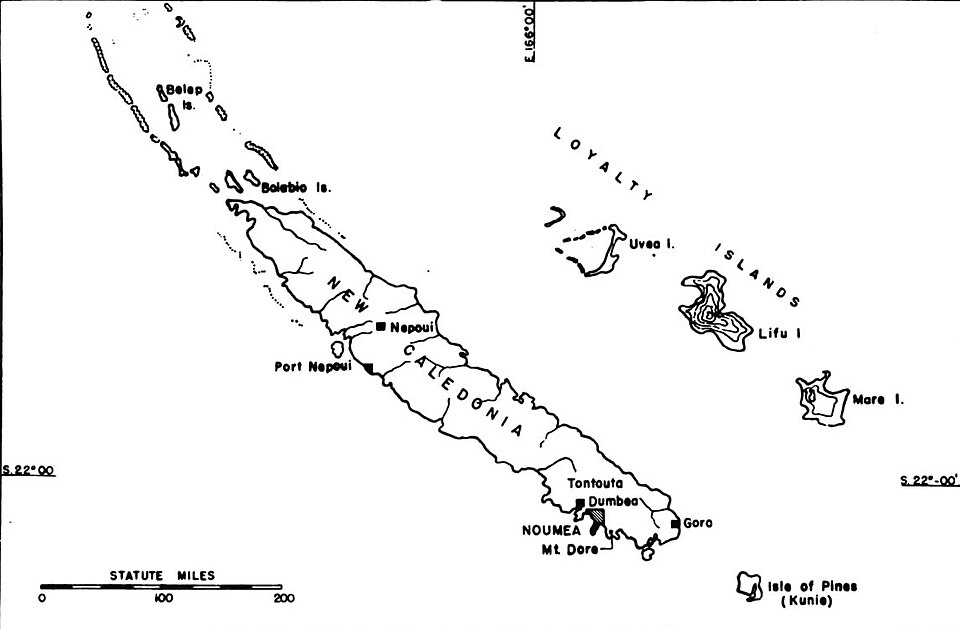
The divide between Nouméa’s affluent suburbs and the rest of the territory is stark. In the capital, expatriate managers and French civil servants can afford modern apartments with ocean views. In the rural north and on the Loyalty Islands, housing is often traditional, with families living in extended households on customary land. This spatial inequality mirrors the broader economic and political divisions that define New Caledonian society.
Without precise cost-of-living indices from the World Bank, one can look to anecdotal evidence and the experience of neighboring Pacific territories. Import dependency drives up the price of everything from food to fuel. Fresh produce is expensive, dairy products are imported from New Zealand and Australia, and electricity costs are high due to reliance on imported fossil fuels.
For a family earning the minimum wage—set by French labor law but adjusted for local conditions—making ends meet requires careful budgeting.
Business Under the Tricolour — Investment Climate in a Territory in Transition
The top companies operating in New Caledonia are dominated by the nickel sector: Société Le Nickel (SLN), a subsidiary of French mining giant Eramet; Koniambo Nickel SAS, a joint venture between the local Northern Province and Swiss commodity trader Glencore; and Vale Nouvelle-Calédonie, now owned by a consortium that includes the Southern Province. These three operations account for the vast majority of the territory’s export earnings and corporate tax revenue.
Beyond mining, the business environment is shaped by French legal and regulatory frameworks. Companies benefit from the stability of operating under French commercial law, access to European Union markets, and the presence of French banks and insurance companies. But they also face the costs of being a small, remote economy: high logistics expenses, a small domestic market of roughly 270,000 people, and a workforce that is well-educated by regional standards but expensive by global ones.
The political uncertainty surrounding New Caledonia’s future status is the single biggest variable for investors. A series of referendums on independence have been held since 2018, with the most recent resulting in a vote to remain part of France—but with a significant minority supporting independence. Until the final status is resolved, long-term investment decisions in infrastructure, tourism, and renewable energy remain on hold.
The French government continues to provide substantial budgetary support, but the question of whether that support will continue indefinitely hangs over every business plan.
The Politics of Referendum — Safety, Stability, and the Search for a New Model
New Caledonia’s crime and safety indices are listed as unavailable by the data provided, but the territory’s political landscape offers a more revealing picture of stability and risk. The political system is a carefully crafted compromise: a 54-member Territorial Congress, composed of members from three provincial assemblies, governs alongside a High Commissioner appointed by Paris.
New Caledonians hold French nationality, vote in French presidential elections, and send representatives to the European Parliament.
This arrangement was designed to manage the deep divide between the indigenous Kanak population, which largely supports independence, and the descendants of European settlers (known as *Caldoches*) and more recent arrivals from France and other Pacific islands, who favor remaining part of France. The 1998 Nouméa Accord created a framework for gradual power transfer and set the stage for the independence referendums. But the process has been fraught.
The most recent referendum in 2021 was boycotted by pro-independence parties, who argued that the COVID-19 pandemic made a fair vote impossible.
The resulting political stalemate has economic consequences. Without a clear resolution, the French government continues to fund the territory’s generous social welfare system, but the uncertainty deters private investment. Pro-independence leaders demand greater control over mining revenues and land rights. Pro-France leaders warn of economic collapse if French subsidies disappear. Both sides have a point, and neither has a complete answer.
Nickel, Negotiations, and the Next Chapter — What’s Happening Now
Right now, New Caledonia is navigating one of the most delicate periods in its post-war history. The nickel industry, long the backbone of the economy, is under pressure. Global nickel prices have been volatile, driven by surging supply from Indonesia and shifting demand from the electric vehicle battery market. The Koniambo nickel plant has faced operational difficulties, and SLN has required repeated financial rescues from the French state.
The question of who will pay to keep these mines and smelters running—and on what terms—is a live political issue.
At the same time, negotiations over the territory’s political future continue. French President Emmanuel Macron has visited Nouméa to push for a new political agreement that would define New Caledonia’s status for the next generation. Pro-independence leaders are demanding a pathway to full sovereignty, while loyalists insist on remaining within the French Republic. The French government has proposed a transition period with continued financial support, but the details remain contentious.
The cost-of-living crisis is also front and center. Rising global inflation has hit New Caledonia hard, as it has all import-dependent Pacific islands. Fuel prices, food costs, and housing expenses are all rising faster than wages. The territorial government has implemented price controls on some basic goods, but these are temporary measures that do not address the structural drivers of high living costs.
For ordinary New Caledonians, the political debate about independence can feel abstract when the price of bread and electricity keeps climbing.
The Bottom Line
New Caledonia is a country—or territory, depending on one’s political perspective—that defies easy categorization. It is simultaneously a French department, a Pacific island nation in waiting, and a mining economy struggling to diversify. For investors, it offers stability under French law but uncertainty about the future. For policymakers, it is a test case of whether decolonization can be managed peacefully and prosperously.
For anyone watching the geopolitics of the Indo-Pacific, New Caledonia matters because of its nickel, its strategic location, and its unresolved status. The next few years will determine whether this unique experiment in shared sovereignty leads to a new nation or a reaffirmed place within France—with profound implications for the entire region.
Sources & Methodology
This article is authored by Economic Pulse Net for informational and research purposes. Economic Pulse Net sources its data from multilateral institutions, national statistics bureaus, and proprietary databases. All data is believed to be current as of the date of publication.
Published: July 30, 2026 | Category: Research — New Caledonia
Use these signals in your own platform
Economic Pulse publishes its live signal feed through a documented, read-only API. Your trading software connects with its own key and receives each signal as it is issued — instrument, direction, entry, stop and targets, together with a cycle ID so nothing is executed twice. The feed is independent of this website and cannot change it.
Signals are informational only and are not financial advice.