Economic Pulse Net | Sources: World Bank World Development Indicators, Government Sources | 2026
Key Takeaways
– New Caledonia operates under a unique *sui generis* status, with France gradually transferring powers while maintaining control over key national functions like defense and currency.
– The territory holds three referendums on independence between 2018 and 2021, with the most recent resulting in a boycott by pro-independence parties, leaving the political future unresolved.
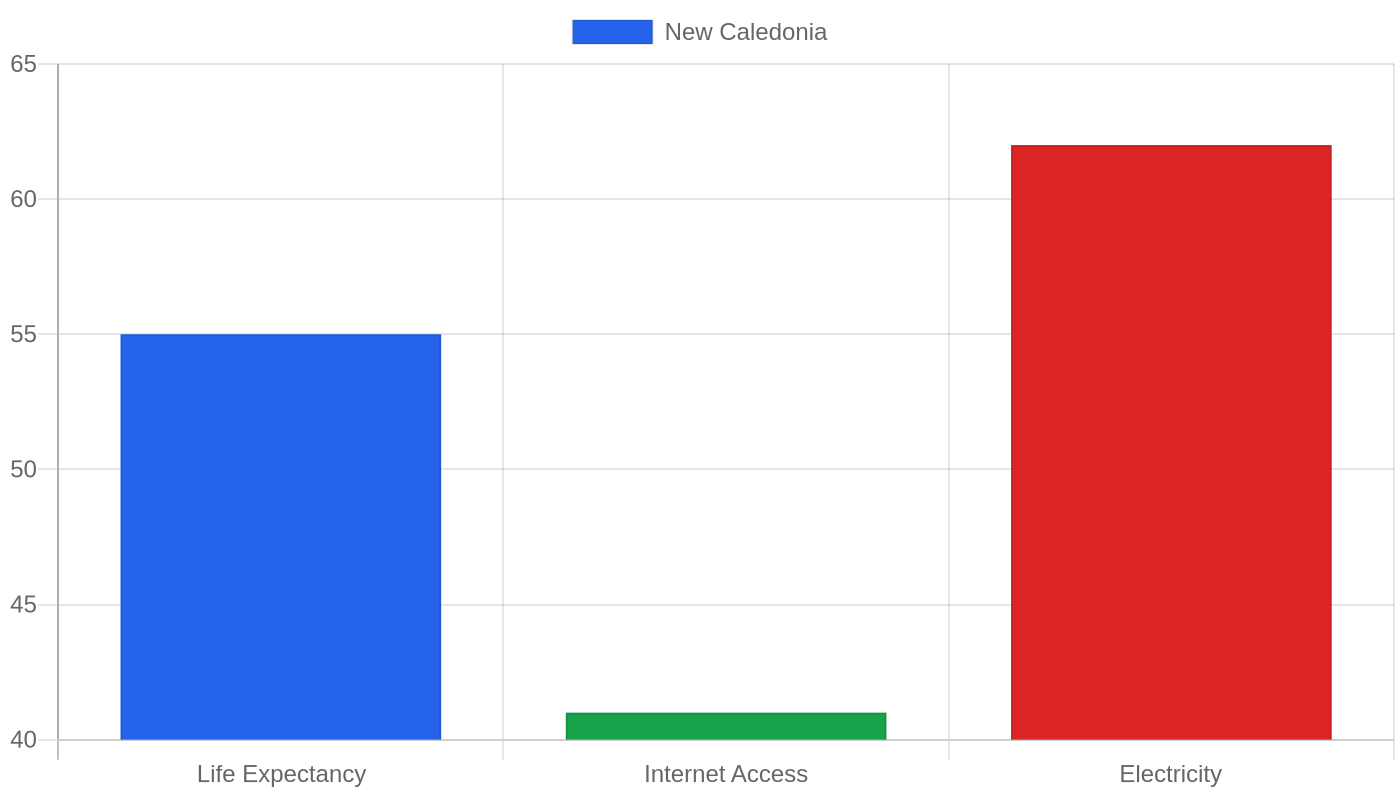
– Economic data from the World Bank shows significant gaps in GDP, inflation, and employment figures, reflecting the challenges of measuring a small, transitioning economy.
– New Caledonia’s nickel industry remains the backbone of the economy, but global price volatility and environmental concerns create uncertainty.
– The territory’s French connection provides stability through social welfare systems and EU access, but also ties its economic fate to metropolitan France.
The Nickel Paradox — Growth Without Data, Wealth Without Clarity
The World Bank’s statistical profile of New Caledonia presents a curious blank space. GDP growth, inflation, unemployment, GDP per capita — all marked “N/A.” This absence of data is not a failure of measurement but a reflection of New Caledonia’s peculiar status. As a *territory sui generis* to which France has gradually transferred certain powers, the territory sits somewhere between a fully independent nation and an overseas department.
The French National Institute of Statistics and Economic Studies (INSEE) collects data, but the World Bank’s standard metrics require sovereign state reporting.
What we do know is that New Caledonia’s economy revolves around nickel — the territory holds an estimated quarter of the world’s known nickel reserves. Mining and metallurgy dominate exports, with the Société Le Nickel (SLN) and other operators driving industrial activity. The nickel industry has historically accounted for roughly 90% of export revenues, making the territory acutely vulnerable to commodity price swings. When nickel prices fall on global markets, the entire economy contracts.
When they rise, New Caledonia experiences boom conditions that mask underlying structural vulnerabilities.
Employment patterns reflect this dependency. The mining sector employs a significant portion of the workforce directly, while service industries — retail, hospitality, public administration — depend on the spending generated by mining wages. The French state provides a social safety net that includes unemployment benefits, healthcare, and education funding, insulating the population from the worst effects of economic downturns.
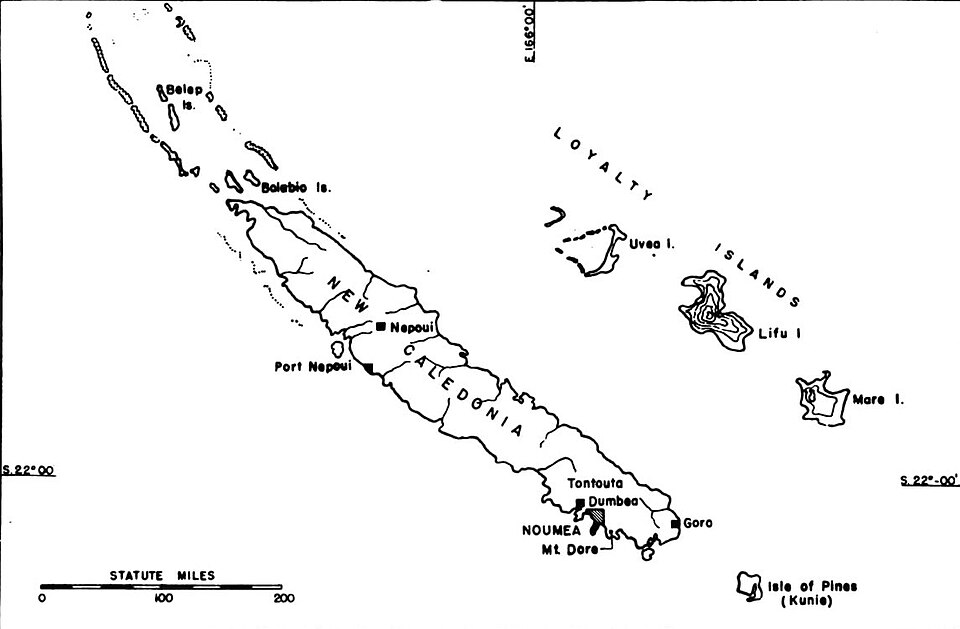
But this also creates a dual economy: a formal, French-subsidized sector in Nouméa and the surrounding areas, and a more traditional, subsistence-oriented economy in the Loyalty Islands and the interior.
Inflation dynamics remain opaque without CPI data, but anecdotal evidence from local media suggests that imported goods — which constitute the vast majority of consumer products — carry significant price premiums due to shipping costs and the territory’s geographic isolation. The French government’s decision to maintain the CFP franc (pegged to the euro) provides monetary stability but also means the territory cannot devalue its way to competitiveness.
The Nouméa Premium — Living in the World’s Most Expensive Pacific Outpost
Housing in New Caledonia presents a stark divide between the capital, Nouméa, and the rest of the territory. In Nouméa, property prices rival those of mid-tier French cities, with a small apartment in a desirable neighborhood commanding prices that would be unthinkable in most of mainland France. The limited land availability — the city is built on a narrow peninsula — combined with strict zoning regulations and the preference for single-family homes among the European-descended population, drives prices upward.
Renting is the dominant tenure for younger households and newcomers. A two-bedroom apartment in central Nouméa can cost between 120,000 and 180,000 CFP francs per month (approximately €1,000 to €1,500), a figure that represents a significant share of the median household income. Outside Nouméa, in towns like Koné or Poindimié, rents drop considerably, but so do employment opportunities and access to services.
Daily expenses reflect the territory’s isolation. Fresh produce, much of which is imported from Australia, New Zealand, or France, carries a premium. Local markets offer some relief — yams, taro, and tropical fruits are relatively affordable — but dairy products, meats, and processed foods are expensive by any standard. A simple meal at a mid-range restaurant in Nouméa costs roughly 3,000 to 4,000 CFP francs, about €25 to €33.
Compared to other Pacific territories like French Polynesia, New Caledonia is marginally cheaper, but compared to Southeast Asian neighbors, it is dramatically more expensive.
The cost of utilities adds another layer. Electricity, generated primarily from fuel oil, is costly, and air conditioning — almost a necessity during the hot season — can double a household’s energy bill. Water, while abundant, requires treatment and distribution infrastructure that is expensive to maintain across the territory’s dispersed population centers.
The French Connection — Investment Under the Tricolore
New Caledonia’s business environment is defined by its relationship with France. The territory uses the CFP franc, guaranteed by the French treasury, which eliminates currency risk for French investors but creates a structural trade deficit. Major companies operating in New Caledonia are overwhelmingly French-owned or French-affiliated. Société Le Nickel (SLN), a subsidiary of the French conglomerate Eramet, dominates the mining sector.
Other significant players include the banks — Banque de Nouvelle-Calédonie and BNP Paribas Nouvelle-Calédonie — and the retail sector, where French chains like Carrefour and Casino have a presence.
The sectors to watch extend beyond nickel. Tourism, while underdeveloped compared to Fiji or Vanuatu, has potential. New Caledonia’s lagoon, a UNESCO World Heritage site, offers world-class diving and sailing. The French government has invested in infrastructure, including the new international terminal at La Tontouta Airport and upgrades to the cruise ship facilities in Nouméa.
However, the high cost of travel and accommodation limits the market to affluent visitors from Australia, New Zealand, and mainland France.
The business climate is stable but bureaucratic. French administrative law applies, meaning that starting a business requires navigating the same regulatory framework as in metropolitan France. Labor laws are similarly French in structure, with strict protections for workers, high social charges for employers, and powerful unions — particularly in the mining and public sectors.
The territorial government has attempted to streamline procedures for foreign investors, but the requirement for French-language documentation and the need to navigate both local and national French regulations remains a barrier.
The unresolved political status also creates uncertainty. Pro-independence parties, which control two of the three provincial assemblies, have signaled that any future independent state would renegotiate mining contracts and potentially increase taxes on foreign companies. This political risk, combined with the volatility of nickel prices, means that New Caledonia is not for the faint-hearted investor.
But for those with a long-term view and a tolerance for political ambiguity, the territory offers access to critical mineral resources and a strategic position in the Pacific.
Politics in Suspension — The Unfinished Referendum
New Caledonia’s political landscape is a study in managed tension. The territory is governed by a 54-member Territorial Congress, composed of members from three provincial assemblies. The French state is represented by a High Commissioner, who retains control over defense, foreign affairs, justice, and public order. New Caledonians hold French nationality and vote in French presidential elections, as well as elections to the European Parliament.
The defining political issue remains independence. Three referendums were held between 2018 and 2021 under the terms of the Nouméa Accord, which transferred increasing powers to the territory. The first two resulted in votes to remain part of France, with the “no” vote declining from 56.7% in 2018 to 53.3% in 2020. The third referendum, held in December 2021, was boycotted by the main pro-independence parties, who argued that the COVID-19 pandemic had prevented proper campaigning.
The result — 96.5% in favor of staying with France — was rendered politically meaningless by the boycott.
The aftermath has left the territory in a constitutional limbo. Pro-independence parties demand a fourth referendum or a new political framework. Loyalists insist that the process is complete. The French government has proposed a period of “decolonization through shared sovereignty,” but no concrete timeline has emerged. This political uncertainty weighs on investment decisions and complicates long-term planning for businesses and households alike.
Crime and safety indices are not available from the provided data, but anecdotal reports suggest that Nouméa experiences property crime rates comparable to mid-sized French cities, while rural areas are generally safe. The presence of a significant French military and police presence provides a deterrent, and the territory has not experienced the violent crime epidemics seen in some other Pacific islands.
The Nickel Question — What Happens When the World Goes Green
The most pressing current issue in New Caledonia is the future of its nickel industry. The global transition to electric vehicles has created enormous demand for nickel, a key component in lithium-ion batteries. New Caledonia’s reserves are vast, and the territory has historically been one of the world’s top nickel producers. But the industry faces multiple challenges.
First, production costs are high. New Caledonian nickel is extracted using energy-intensive processes, and the cost of labor and compliance with French environmental regulations adds to the expense. Indonesian nickel, produced with cheaper labor and less stringent environmental oversight, has flooded global markets, depressing prices. Second, environmental concerns are growing.
Mining operations have damaged the territory’s unique ecosystems, and local communities — particularly indigenous Kanak groups — have protested the expansion of mining into customary lands.
The territorial government has attempted to diversify. There are pilot projects in nickel processing for battery-grade materials, which would capture more value locally. The French government has provided subsidies to keep SLN afloat during price downturns, but the long-term viability of the industry remains uncertain.
Some analysts suggest that New Caledonia’s future lies not in raw nickel exports but in becoming a hub for green hydrogen production, using the territory’s abundant solar and wind resources to produce fuel for export to Asia.
Meanwhile, the political stalemate continues. Pro-independence parties have called for a managed transition to sovereignty, with a focus on controlling natural resources. Loyalist parties argue that only continued French presence can provide the investment and expertise needed to modernize the nickel industry. The French government, for its part, appears unwilling to force a resolution, preferring to let the territory find its own path — even if that path remains unclear.
The Bottom Line
New Caledonia is a territory of contradictions: rich in resources but dependent on subsidies, politically divided but socially stable, geographically isolated but strategically positioned. For investors with a high tolerance for political risk, the nickel sector offers exposure to the critical minerals that will power the green transition. For travelers, the territory offers a unique blend of French culture and Pacific beauty.
For policymakers, New Caledonia represents a test case of whether decolonization can proceed without economic disruption. Watch this territory if you care about the future of critical minerals, the politics of Pacific sovereignty, or the question of how small territories navigate the gap between dependence and independence.
Sources & Methodology
This article is authored by Economic Pulse Net for informational and research purposes. Economic Pulse Net sources its data from multilateral institutions, national statistics bureaus, and proprietary databases. All data is believed to be current as of the date of publication.
Published: July 17, 2026 | Category: Research — New Caledonia
Use these signals in your own platform
Economic Pulse publishes its live signal feed through a documented, read-only API. Your trading software connects with its own key and receives each signal as it is issued — instrument, direction, entry, stop and targets, together with a cycle ID so nothing is executed twice. The feed is independent of this website and cannot change it.
Signals are informational only and are not financial advice.