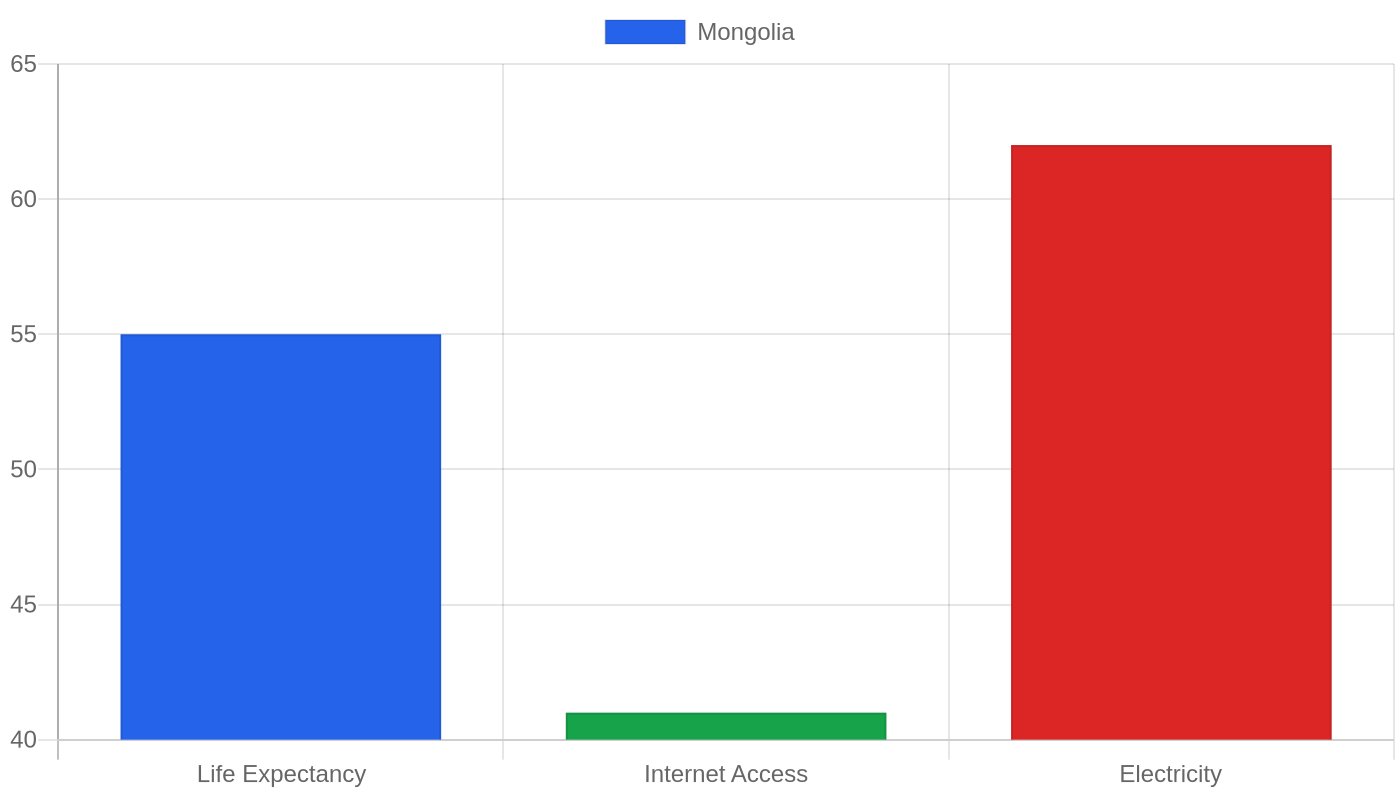
Economic Pulse Net | Sources: World Bank World Development Indicators, Government Sources | 2026
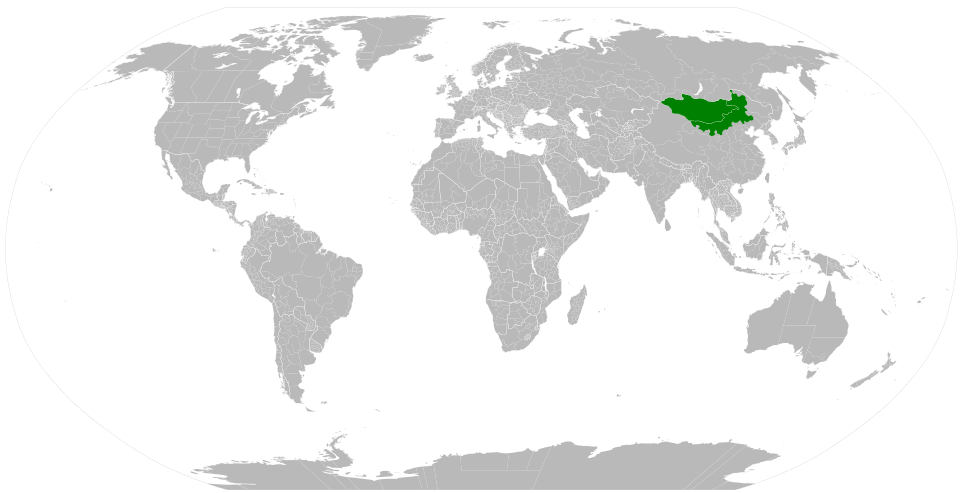
Mongolia, the vast, sparsely populated nation nestled between Russia and China, has long been defined by its dramatic landscapes and nomadic heritage. Today, however, the “Land of the Blue Sky” is writing a new chapter. With a political system that blends presidential and parliamentary powers, and an economy historically tethered to commodity booms and busts, Mongolia is attempting to diversify beyond mining and into services, telecommunications, and aviation.
The data tells a story of a nation in transition—one that is rich in potential but navigating the complex currents of a semi-presidential republic where the President, Prime Minister, and the State Great Khural all vie for influence. For investors, policymakers, and global businesses, understanding Mongolia today means understanding a country that is no longer just about copper and coal, but about connectivity, financial modernization, and a young, ambitious population.
Key Takeaways
– Political Structure Shapes Economic Strategy: Mongolia operates as a semi-presidential representative democratic republic, where the President is directly elected, the Prime Minister is head of government, and the cabinet is nominated by the Prime Minister and appointed by the President. This creates a unique power dynamic that directly impacts business regulation and investment policy.
– Services Sector Dominates Top Companies: The largest listed companies in Mongolia are overwhelmingly in consumer services, telecommunications, and financials. Airlines like MIAT Mongolian Airlines and Aero Mongolia, alongside banks like Golomt Bank and the Bank of Mongolia, indicate a shift away from a purely resource-based economy.
– Telecommunications is a Key Growth Arena: With companies like Mobicom Corporation, G-Mobile, and DDishTV among the nation’s top firms, the telecom sector is a clear focal point for both domestic consumption and foreign investment.
– Data Gaps Signal a Monitoring Challenge: Key economic indicators such as GDP growth, inflation, and unemployment are not currently available from the World Bank, suggesting either a lag in reporting or a need for more robust national data collection.
This makes real-time analysis reliant on political and corporate signals.
– A Nation of Air Travelers: The prominence of four different airlines (MIAT, Hunnu Air, Eznis Airways, and Aero Mongolia) among the top companies underscores Mongolia’s reliance on aviation for domestic connectivity and international trade, given its challenging terrain and sparse road infrastructure.
The Steppe Economy — Growth Without a Number
The World Bank currently lists no data for Mongolia’s GDP growth, inflation, or unemployment. In many countries, this would be a red flag. For Mongolia, it is a reflection of a broader reality: the economy is moving faster than the data collection. The nation’s GDP per capita (PPP), GNI per capita, and total GDP in USD are also absent from the latest World Bank figures. This does not mean the economy is stagnant—far from it.
The composition of Mongolia’s top companies tells a vivid story of structural change. The financial sector is robust, led by the Bank of Mongolia and Golomt Bank, indicating a formalizing economy where credit and banking are becoming central to daily life. Meanwhile, the consumer services sector, dominated by airlines, suggests a population that is increasingly mobile and connected.
The absence of hard numbers from the World Bank should be interpreted not as a lack of activity, but as a challenge for analysts who must rely on corporate earnings reports, political announcements, and trade flows to gauge momentum. Mongolia’s economy is likely being driven by domestic consumption and a recovering services sector, but without official inflation or unemployment figures, the true cost of living and labor market health remain opaque.
What is clear is that the traditional mining narrative is being supplemented—if not yet replaced—by a more diversified service-oriented model.
The Price of Living in Ulaanbaatar — Rent, Rice, and Reality
Housing and daily expenses in Mongolia are shaped by a stark urban-rural divide. The capital, Ulaanbaatar, is home to nearly half the population, and it is here that the cost of living is most acutely felt. Rent for a modest apartment in the city center can consume a significant portion of a middle-class salary, while the traditional *ger* districts on the city’s outskirts offer cheaper, but less modern, alternatives.
Buying property is a long-term aspiration for many, but mortgage rates and the lack of a deep secondary housing market create barriers. Daily expenses—food, transportation, and utilities—are influenced by Mongolia’s heavy reliance on imports from China and Russia. A liter of milk, a loaf of bread, and a ride on a public bus are affordable for the employed, but the gap between Ulaanbaatar’s burgeoning professional class and the rural herding communities is widening.
Without official CPI data from the World Bank, it is difficult to benchmark Mongolia against regional averages, but anecdotal evidence suggests that inflation in food and fuel has been a persistent pressure point, particularly for low-income households. The cost of living in Mongolia is not prohibitive compared to global capitals, but it is rising, and for a nation where many still rely on subsistence herding, those increases are deeply felt.
Investment & Business Climate — Where the Giants Play
Mongolia’s business environment is defined by a small but powerful group of companies that dominate the formal economy. The top firms list is a who’s who of Mongolian capitalism: MIAT Mongolian Airlines, Golomt Bank, Mobicom Corporation, and the Bank of Mongolia are the heavyweights. For an investor, this concentration presents both opportunity and risk. The telecommunications sector, with players like Mobicom, G-Mobile, and DDishTV, is a battleground for the country’s growing digital economy.
As smartphone penetration rises and the government pushes for digital public services, these companies are poised for expansion. The financial sector, anchored by Golomt Bank and the central bank, is modernizing, with mobile banking and fintech solutions gaining traction among a young, tech-savvy population. The aviation sector, crowded with four major airlines, is a sign of both demand and inefficiency—there is room for consolidation or for a low-cost carrier to disrupt the market.
The political landscape, a semi-presidential republic where the President appoints the Prime Minister and nominates the cabinet, creates a business environment that is stable on paper but can be unpredictable in practice. Policy shifts can come quickly, and investors must navigate a system where the executive and legislative branches share power. For now, the sectors to watch are clear: telecom, banking, and aviation are the engines of Mongolia’s non-mining future.
Safety, Politics & Quality of Life — Democracy on the Steppe
Mongolia is a functioning democracy, classified by the data as a “semi-presidential representative democratic republic.” The people directly elect the President and the deputies of the unicameral State Great Khural. The President then appoints the Prime Minister, who in turn nominates the cabinet. This system, while democratic, can lead to political gridlock if the President and the parliamentary majority are from different parties.
Crime and safety indices are not available from the World Bank, but Ulaanbaatar is generally considered safe for expatriates and visitors, though petty crime and traffic accidents are common. The quality of life in Mongolia is a study in contrasts. In the capital, modern restaurants, co-working spaces, and a vibrant arts scene coexist with air pollution levels that are among the worst in the world during winter months. Outside the city, life follows the rhythms of the seasons and the herds.
Happiness data is absent, but Mongolians are known for their resilience and hospitality. The political system, while messy, is genuinely competitive, and the press, while facing challenges, remains relatively free by regional standards. For a country with such a small population spread across a vast territory, the fact that it maintains a democratic system at all is a significant achievement.
What’s Happening Now — Connectivity, Competition, and the Khural
Right now, Mongolia is in a moment of quiet transformation. The list of top companies reveals a nation that is investing heavily in its own connectivity. With four major airlines—MIAT, Hunnu Air, Eznis Airways, and Aero Mongolia—the domestic aviation market is fiercely competitive. This is not just about tourism; it is about national cohesion. In a country where roads are scarce and distances are vast, air travel is the only way to move people and goods efficiently.
The telecommunications sector is equally dynamic. Mobicom Corporation, G-Mobile, and DDishTV are locked in a battle for subscribers, driving down prices and improving service quality. This is good news for consumers and for businesses that rely on digital infrastructure. The political scene is also active. The State Great Khural is debating economic reforms, and the President’s role in appointing the Prime Minister means that every cabinet shuffle has the potential to shift policy.
There is no specific recent news data provided on a specific event, but the composition of the top companies suggests that the government is allowing—or at least not hindering—the growth of private sector giants. The absence of World Bank economic data is itself a current affairs story: it suggests that Mongolia’s statistical agencies may be under-resourced or that the economy is evolving so quickly that official numbers cannot keep pace.
For now, the story of Mongolia is being written not in spreadsheets, but in the skies above the steppe and in the data plans of millions of new smartphone users.
The Bottom Line
Mongolia is a country that rewards patience and local knowledge. For investors, the opportunity lies in telecommunications, aviation, and banking—sectors that are growing faster than the official data can capture. For businesses, the challenge is navigating a semi-presidential political system where power is shared and policy can shift. For the casual observer, Mongolia is a reminder that a nation’s economic story is not always told by its GDP figures.
Watch this country if you are interested in frontier markets, digital infrastructure in remote regions, or the evolution of democracy in Central Asia. Mongolia is not a place for quick returns, but for those who understand the landscape, it offers a rare combination of political freedom and economic potential.
Sources & Methodology
This article is authored by Economic Pulse Net for informational and research purposes. Economic Pulse Net sources its data from multilateral institutions, national statistics bureaus, and proprietary databases. All data is believed to be current as of the date of publication.
Published: July 16, 2026 | Category: Research — Mongolia
Use these signals in your own platform
Economic Pulse publishes its live signal feed through a documented, read-only API. Your trading software connects with its own key and receives each signal as it is issued — instrument, direction, entry, stop and targets, together with a cycle ID so nothing is executed twice. The feed is independent of this website and cannot change it.
Signals are informational only and are not financial advice.