Economic Pulse Net | Sources: World Bank World Development Indicators, Government Sources | 2026
Key Takeaways
– Political Independence in Practice: The Isle of Man operates with a unique political system where most elected officials stand as independents, creating a consensus-driven legislature distinct from the UK’s party-dominated Westminster model.
– Economic Data Gaps Signal a Quiet Giant: While comprehensive World Bank metrics remain unpublished, the Isle of Man functions as a sophisticated offshore financial centre with a reputation for stability and diversification.
– A Jurisdiction of Substance: Despite its small physical footprint, the island maintains its own parliament (Tynwald), its own currency, and its own tax policies — making it a genuinely self-governing entity within the British Isles.
– Quality of Life as Economic Currency: The island’s appeal lies not just in its financial services sector but in the lifestyle dividend it offers residents — a factor that continues to attract skilled professionals and wealthy individuals.
The Economic Engine: A Small Island With an Outsized Financial Footprint
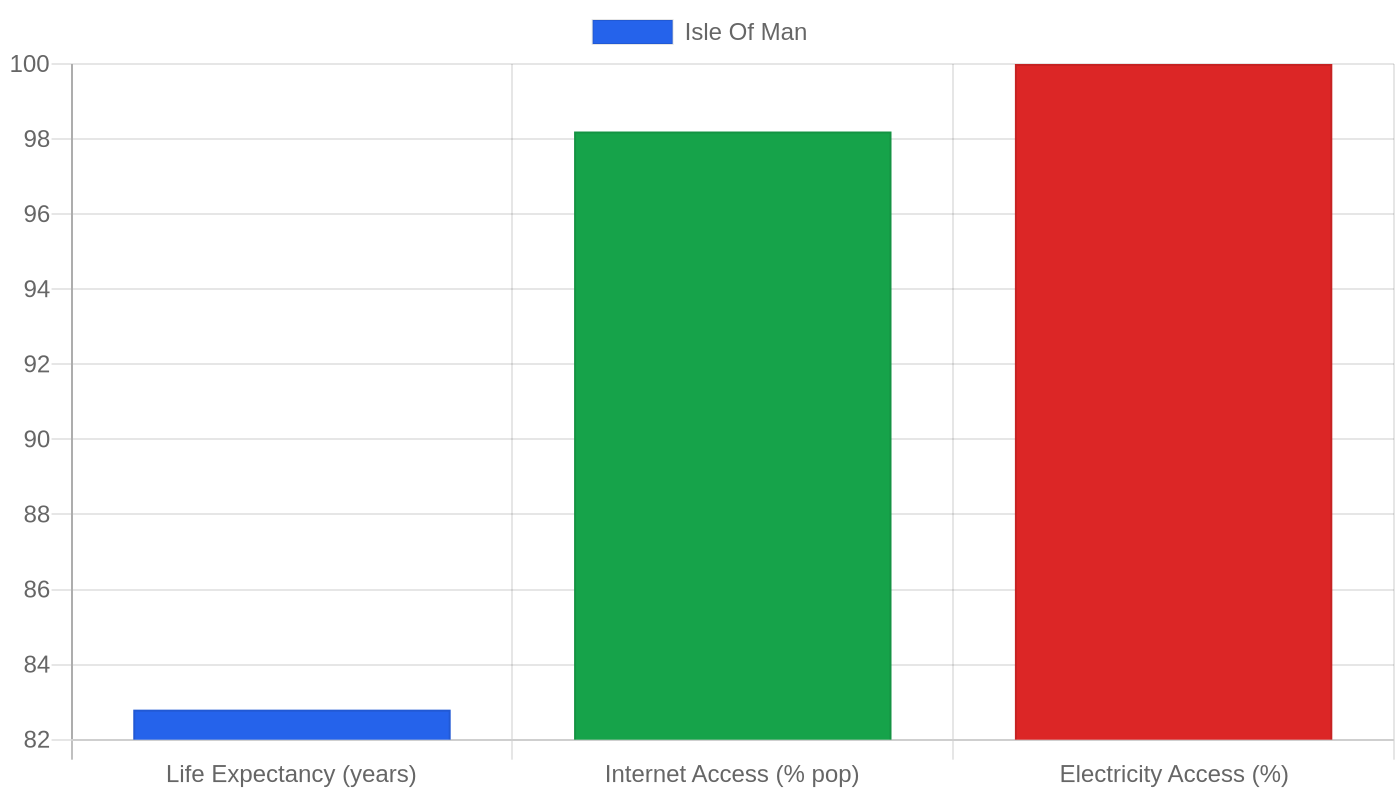
The Isle of Man presents an intriguing paradox for economic observers. According to the World Bank, the island’s headline economic indicators — GDP growth, inflation, unemployment, and GDP per capita — are not currently published in the standard international datasets. Yet this statistical silence should not be mistaken for economic dormancy.
The Isle of Man operates one of the world’s most established offshore financial centres, with a reputation carefully cultivated over decades for professionalism, regulatory rigour, and political stability.
The island’s economic model has historically rested on several sturdy pillars: financial services, insurance, online gambling, and a growing professional services sector. The financial industry alone has long been the dominant contributor to national income, with the island offering a stable regulatory environment that attracts international investment.
Unlike many tax havens that have faced international pressure, the Isle of Man has consistently sought to position itself as a transparent, compliant jurisdiction — one that works with, rather than against, international regulatory standards.
What makes the Manx economy particularly resilient is its ability to adapt. When global pressure mounted on offshore centres, the island pivoted toward substance-based activities, emphasising genuine economic presence over brass-plate arrangements. The absence of World Bank data may simply reflect the island’s unique status as a Crown Dependency rather than a fully sovereign state — it is not a member of the United Nations and thus falls outside many standard international reporting frameworks.
Yet for those who do business there, the island’s economic fundamentals remain solid: a skilled workforce, low corporate tax rates, and a legal system based on ancient Norse-derived customary law blended with UK common law.
The Price of Paradise: Cost of Living and Housing Dynamics
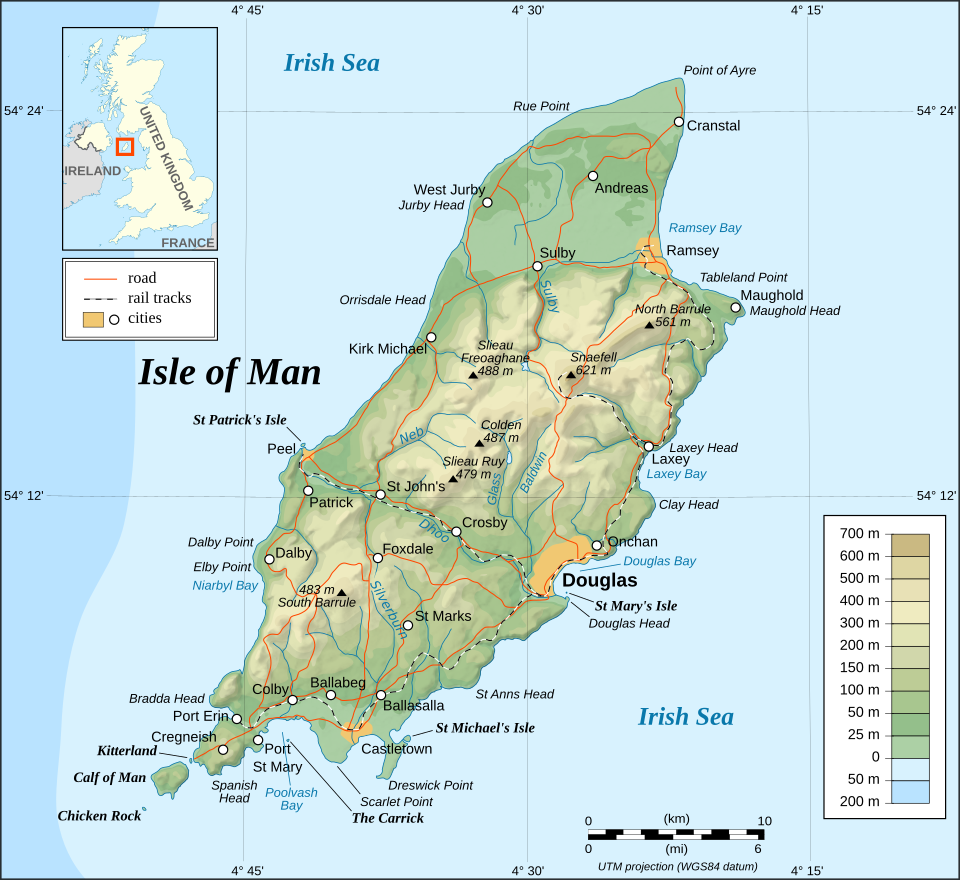
The Isle of Man’s cost of living reflects its position as a prosperous, geographically isolated jurisdiction. While precise housing data from the World Bank is unavailable, the island’s property market has historically been characterised by a persistent imbalance between supply and demand. The island’s physical constraints — it measures roughly 33 miles long and 13 miles wide — mean that developable land is finite, and this scarcity inevitably pushes property values upward.
For residents, the cost equation is complicated by the island’s tax advantages. There is no capital gains tax, no inheritance tax, and a standard income tax rate that is significantly lower than in the United Kingdom. This fiscal environment means that while the sticker price of housing may appear high, the effective cost of living — when tax savings are factored in — can be more favourable than equivalent lifestyles in the UK’s more expensive southern regions.
The rental market has seen consistent demand from professionals relocating for work in the financial sector, as well as from families attracted by the island’s excellent schools and safe streets. The island’s healthcare system, part-funded through National Insurance contributions, adds another layer to the cost-of-living calculation.
For those considering a move, the trade-off is clear: you pay a premium for the privilege of living on a small, beautiful island with a strong community feel — but you keep more of what you earn.
Business and Investment: Where Capital Finds a Home
The Isle of Man’s business environment is defined by its pro-enterprise stance. The island’s corporate tax rate for most businesses is a flat 0%, with the exception of certain regulated activities such as banking and retail which face a modest 10% rate. This tax structure has made the island an attractive domicile for holding companies, investment vehicles, and international businesses seeking a stable, well-regulated base within European time zones.
The island’s top companies span a range of sectors: financial services firms, insurance groups, online gaming operators, and a growing cluster of fintech and digital businesses. The island has also invested heavily in its digital infrastructure, recognising that its future prosperity depends on connectivity as much as on its physical assets. The government’s strategy has been to attract high-value, knowledge-intensive industries that can thrive in a small, agile jurisdiction.
For investors, the Isle of Man offers something increasingly rare: predictability. The island’s legal system is robust, its courts are respected, and its regulatory bodies are professional and accessible. The absence of the political polarisation seen in larger economies creates a business climate where long-term planning is genuinely possible.
While the island cannot compete on scale, it competes on stability, responsiveness, and quality — and for many businesses, those factors matter more than sheer market size.
Safety, Politics, and the Manx Way of Life
The Isle of Man’s political landscape is one of its most distinctive features. As the World Bank data notes, most Manx politicians stand for election as independents rather than as representatives of political parties. This creates a legislature where personality, local knowledge, and individual judgement often matter more than party discipline. The island’s parliament, Tynwald, is the oldest continuous parliament in the world, with roots stretching back over a thousand years to Viking settlers.
This historical continuity gives Manx politics a measured, deliberative quality that stands in stark contrast to the adversarial party politics of larger nations.
The island’s safety record is a significant part of its appeal. While specific crime indices from the World Bank are unavailable, the Isle of Man has long enjoyed a reputation as one of the safest places to live in the British Isles. Violent crime is rare, and the island’s community-focused policing model benefits from the simple fact that everyone knows everyone.
This safety dividend is not just a quality-of-life bonus; it is an economic asset, attracting families and retirees who might otherwise choose other locations.
The quality of life on the island extends beyond safety. The natural environment is spectacular, with coastal cliffs, glens, and green hills providing ample opportunity for outdoor recreation. The island has a rich cultural calendar, from the famous TT motorcycle races to music festivals and agricultural shows. For those who value community, tradition, and a slower pace of life, the Isle of Man offers a compelling alternative to the intensity of mainland urban living.
Current Affairs: An Island at a Crossroads
The Isle of Man currently finds itself navigating a complex set of opportunities and challenges. The island’s relationship with the United Kingdom remains a subject of ongoing discussion, particularly regarding the post-Brexit trading arrangements and the island’s access to UK markets. The Manx government has been proactive in seeking to diversify its economic base, with particular attention paid to the digital economy, space technology, and clean energy sectors.
One of the most significant ongoing developments is the island’s response to international tax transparency pressures. The Isle of Man has worked hard to shed its historic reputation as a tax haven, instead positioning itself as a transparent, well-regulated international financial centre. This has involved signing tax information exchange agreements with numerous countries and implementing robust anti-money laundering measures.
The island’s continued success depends on maintaining this delicate balance: offering genuine tax advantages while satisfying international standards of compliance.
The island is also grappling with demographic pressures. An ageing population and the need to attract young, skilled workers to sustain the economy are ongoing policy concerns. Housing affordability, particularly for first-time buyers, has become a political issue, with the government exploring various interventions to increase supply.
The island’s relationship with the UK’s immigration system — it operates its own work permit regime — gives it tools to manage population flows, but also creates friction for businesses seeking to recruit from abroad.
Tourism remains a vital part of the island’s economy, with the TT races drawing visitors from around the world. The island has invested in upgrading its visitor infrastructure, recognising that tourism supports not just hotels and restaurants but also the broader retail and service sectors. As the world emerges from the pandemic-era disruptions, the island is keen to rebuild its tourism numbers while also developing year-round attractions that reduce the seasonality of visitor income.
The Bottom Line
The Isle of Man is a jurisdiction that rewards those who look beyond headline statistics. Its absence from World Bank datasets reflects its unique constitutional status rather than any economic weakness. For financial services professionals, entrepreneurs seeking a stable base, and families prioritising safety and quality of life, the island offers a compelling package. The coming years will test whether the island can maintain its distinctive model in the face of international pressure and demographic change.
For now, the Isle of Man remains what it has been for centuries: a small island with an outsized sense of its own identity, and the determination to chart its own course.
Sources & Methodology
This article is authored by Economic Pulse Net for informational and research purposes. Economic Pulse Net sources its data from multilateral institutions, national statistics bureaus, and proprietary databases. All data is believed to be current as of the date of publication.
Published: August 02, 2026 | Category: Research — Isle Of Man
Use these signals in your own platform
Economic Pulse publishes its live signal feed through a documented, read-only API. Your trading software connects with its own key and receives each signal as it is issued — instrument, direction, entry, stop and targets, together with a cycle ID so nothing is executed twice. The feed is independent of this website and cannot change it.
Signals are informational only and are not financial advice.