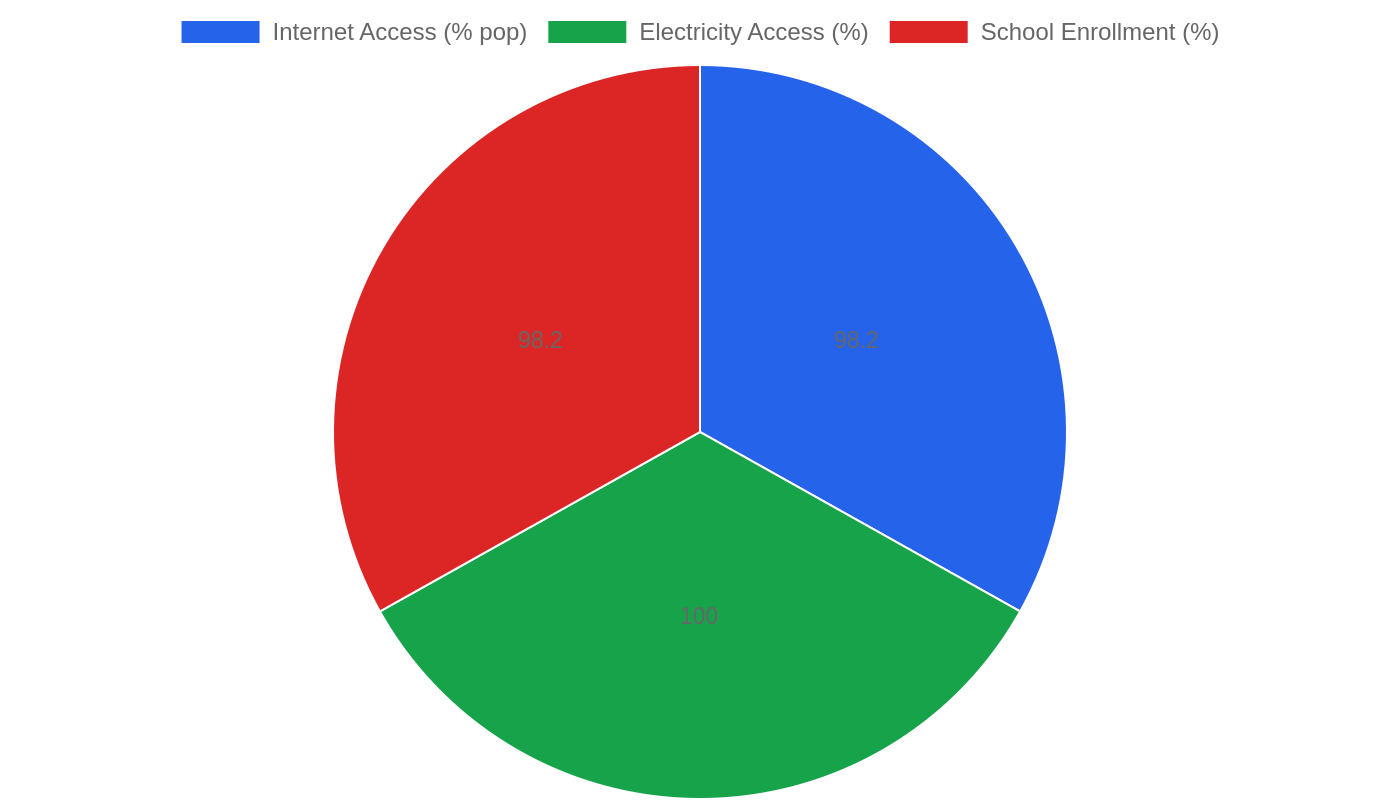
Economic Pulse Net | Sources: World Bank World Development Indicators, Government Sources | 2026
Key Takeaways
– The Isle of Man operates with a unique political model where most politicians stand as independents, creating a legislative environment distinctly different from the United Kingdom’s party system.
– Despite the absence of publicly available World Bank data on GDP growth, inflation, and unemployment, the island maintains a reputation as a stable, low-tax jurisdiction with a highly specialised economy.
– The Manx economy relies heavily on financial services, insurance, online gambling, and shipping — sectors that benefit from the island’s constitutional autonomy and favourable regulatory framework.
– Cost of living on the island is generally higher than many parts of the UK, driven by limited housing stock and the challenges of importing goods to a small island economy.
– Political stability, low crime, and a high quality of life continue to attract both businesses and remote workers seeking a secure environment outside the mainstream UK regulatory orbit.
The Manx Model — An Economy Built on Autonomy and Specialisation
The Isle of Man does not publish a standard suite of macroeconomic indicators through the World Bank, and no official figures for GDP growth, inflation, or unemployment are currently available from that source. This absence of data, however, is not a sign of economic obscurity. Rather, it reflects the island’s unique constitutional status as a Crown Dependency — a self-governing territory that is not part of the United Kingdom but whose international relations are largely handled by London.
The island has its own parliament, Tynwald, which claims to be the oldest continuous parliament in the world, and it sets its own fiscal and economic policies.
The Manx economy is not a generalist’s economy. It is a carefully curated one. The main industries — financial services, insurance, online gambling, and shipping — are not accidental. They are the result of deliberate policy choices made over decades. The island offers a zero-to-ten percent corporate tax rate, no capital gains tax, no inheritance tax, and a maximum personal income tax rate of twenty percent.
These incentives have attracted a concentration of financial and professional services firms that might otherwise have located in London, Dublin, or Jersey.
Without conventional GDP data, economists and analysts often look to proxy indicators: employment in the finance sector, company registrations, and government revenue from corporate taxes. The island’s fiscal position has historically been strong, with budget surpluses common and public debt low.
The absence of a central bank and the use of the Manx pound — which is pegged to the British pound sterling — means monetary policy is effectively imported from the UK, but fiscal sovereignty remains firmly in Douglas.
The Price of Paradise — Housing and Daily Life on a Small Island
Living on the Isle of Man comes with a premium. Housing costs are among the highest in the British Isles relative to local earnings, driven by a combination of limited land availability, strict planning regulations, and demand from inward migrants attracted by the tax regime. The island’s population, while not officially recorded in the data provided, is estimated to be around 85,000 — a figure that has grown modestly but steadily in recent years.
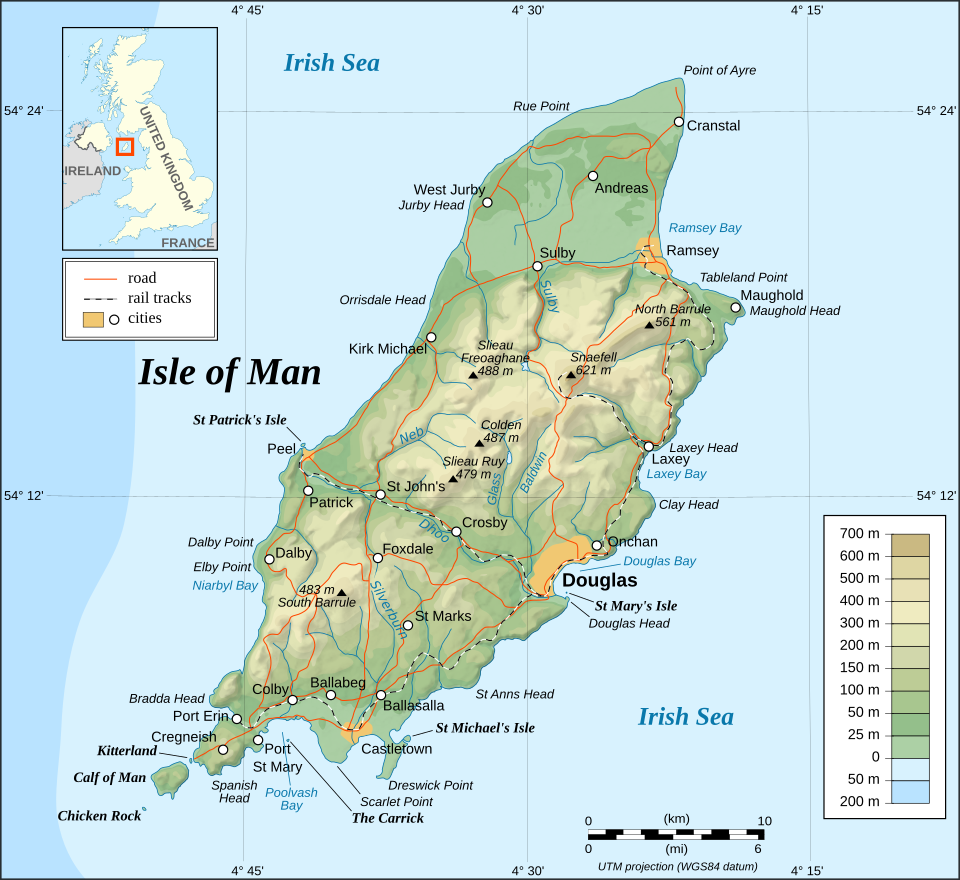
The rental market is particularly tight. Properties in the capital, Douglas, and in coastal towns like Ramsey and Peel command rents that rival those in parts of southern England. Buying a home is similarly expensive, with average house prices significantly above the UK average when adjusted for local wages. The island does not have a large social housing stock, and new developments are often slow to gain approval due to environmental and heritage considerations.
Daily expenses for groceries, fuel, and utilities also run higher than on the mainland, largely because most goods must be shipped across the Irish Sea. The cost of living is a recurring topic in local political discourse, with residents frequently calling for more affordable housing and better infrastructure to support a growing workforce. For those who can afford it, however, the trade-off is a lifestyle defined by low crime, clean air, and a strong sense of community.
Where the Money Moves — Investment, Business, and the Corporate Landscape
The Isle of Man is home to a concentration of companies that do not necessarily make household names but are deeply embedded in global finance. The top companies on the island include major insurance firms, fund administrators, trust companies, and online gambling operators. The island has positioned itself as a centre for captive insurance — insurance companies set up by larger corporations to insure their own risks — and it is one of the largest captive insurance domiciles in Europe.
The business climate is deliberately business-friendly. Company registration is straightforward, the regulatory environment is transparent, and the legal system is based on English common law, which provides comfort to international investors. The island also offers a range of incentives for digital and fintech businesses, including a regulatory sandbox for blockchain and cryptocurrency firms.
Sectors to watch include e-gaming, which has been a major driver of economic activity and government revenue, and professional services such as legal advice, accounting, and wealth management. The island has also made efforts to diversify into clean technology and maritime services, leveraging its long shipping tradition.
However, the dominance of financial services means the economy is vulnerable to shifts in global tax policy and regulatory standards, particularly as the European Union and OECD push for greater transparency and tax harmonisation.
Safe, Secure, and Independent — Life Beyond Party Politics
The Isle of Man consistently ranks as one of the safest places to live in the British Isles. Crime rates are low, and violent crime is rare. The island has its own police force, the Isle of Man Constabulary, and its own legal system, including a high court and a court of appeal. The Safety Index data is not available from the sources provided, but anecdotal and historical evidence supports the view that residents enjoy a high degree of personal security.
Politically, the island operates differently from the United Kingdom. Most Manx politicians stand for election as independents rather than as representatives of political parties. Although political parties do exist, their influence is not as strong as in the United Kingdom. This creates a legislature where votes are often cast on the merits of individual issues rather than along party lines.
The Chief Minister is elected by members of Tynwald, and governments are typically coalitions of independents and small-party representatives.
This political culture fosters stability. There are no dramatic swings in policy following elections, and the island’s economic strategy has remained remarkably consistent across decades. The absence of party discipline means that legislation is often debated thoroughly, and backbench members wield significant influence. For residents and investors alike, the predictability of Manx politics is a major asset.
Current Affairs — Navigating Global Pressure While Preserving Autonomy
Right now, the Isle of Man is navigating a period of external scrutiny and internal adjustment. The island has faced increasing pressure from international bodies, including the OECD and the European Union, to reform its tax practices and improve transparency. In recent years, the Manx government has responded by introducing economic substance requirements for companies registered on the island, and by signing automatic information exchange agreements with other jurisdictions.
A significant current development is the ongoing review of the island’s beneficial ownership register. The UK government has pushed for Crown Dependencies to make their registers publicly accessible, a move that the Isle of Man has resisted on the grounds of privacy and commercial confidentiality. The debate is ongoing, and the outcome will have implications for the island’s attractiveness as a financial centre.
On the domestic front, the island is grappling with housing affordability and infrastructure constraints. The government has announced plans to build more affordable homes and to invest in digital connectivity, recognising that the island must compete for talent in a post-pandemic world where remote work has become mainstream. There is also a growing conversation about the island’s relationship with the United Kingdom, particularly around trade and customs arrangements following Brexit.
The Isle of Man was not part of the EU, but it had a special protocol that allowed for the free movement of goods. That arrangement has been renegotiated, and businesses are still adjusting to new customs procedures.
The Bottom Line
The Isle of Man is not a country that demands attention through size or economic scale, but it rewards close observation for anyone interested in how small, autonomous jurisdictions can carve out prosperous niches in a globalised economy. Investors and businesses seeking a stable, low-tax environment with a high quality of life will find the island appealing.
Policy analysts and economists should watch how the Manx government balances international pressure for transparency with the need to maintain its competitive edge. For now, the Isle of Man remains a quiet success story — one that thrives precisely because it does not follow the crowd.
Sources & Methodology
This article is authored by Economic Pulse Net for informational and research purposes. Economic Pulse Net sources its data from multilateral institutions, national statistics bureaus, and proprietary databases. All data is believed to be current as of the date of publication.
Published: July 17, 2026 | Category: Research — Isle Of Man
Use these signals in your own platform
Economic Pulse publishes its live signal feed through a documented, read-only API. Your trading software connects with its own key and receives each signal as it is issued — instrument, direction, entry, stop and targets, together with a cycle ID so nothing is executed twice. The feed is independent of this website and cannot change it.
Signals are informational only and are not financial advice.