Economic Pulse Net | Sources: World Bank World Development Indicators, Government Sources | 2026
Key Takeaways
– French Polynesia’s economy is anchored by a small cluster of dominant domestic players — led by Électricité de Tahiti, telecom provider ONATi, and Brasserie de Tahiti — which together form the backbone of formal private-sector activity in the territory.
– Tourism and air connectivity are the most visible engines of commerce, with a remarkable concentration of carriers — Air Tahiti Nui, Air Tahiti, and Air Moana — signalling that aviation is both a lifeline and a competitive battleground.
– The territory operates without a full suite of publicly available macroeconomic indicators, making it a challenging market to assess by conventional metrics, yet the corporate landscape reveals a service-oriented, infrastructure-dependent economy.
– Energy, telecommunications, and consumer goods emerge as the core industrial pillars, with utility and telecom firms dominating the top-company rankings alongside the local brewing industry.
– The economy appears to be service-driven rather than export-driven, with no major manufacturing or agricultural exporters appearing among the leading corporate names.
The Economic Landscape — A Service Economy in a Remote Setting
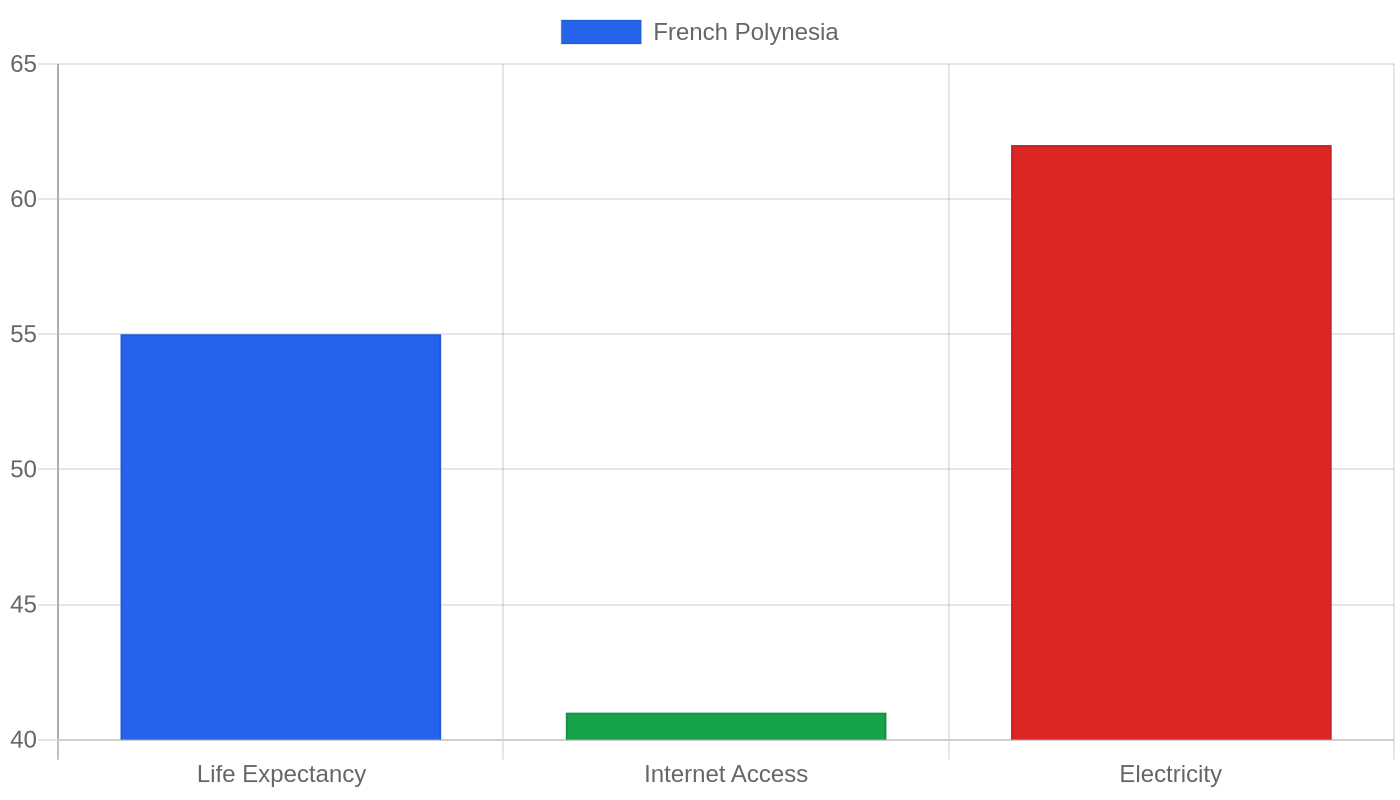
French Polynesia presents a distinctive economic profile that defies easy comparison with larger Pacific or European economies. The World Bank’s latest data shows no available figures for GDP growth, inflation, unemployment, or GDP per capita — a data gap that itself tells a story of a small, semi-autonomous territory whose economic statistics are not always captured in global databases. What we can observe, however, is a private sector concentrated in a handful of strategic industries.
The top companies in the territory reveal a clear hierarchy: Électricité de Tahiti leads with a score of 22.4, followed by ONATi at 19.3, Brasserie de Tahiti at 14.5, and Air Tahiti Nui at 12.4. These four firms span utilities, telecommunications, consumer goods, and aviation — the four pillars upon which the local economy rests.
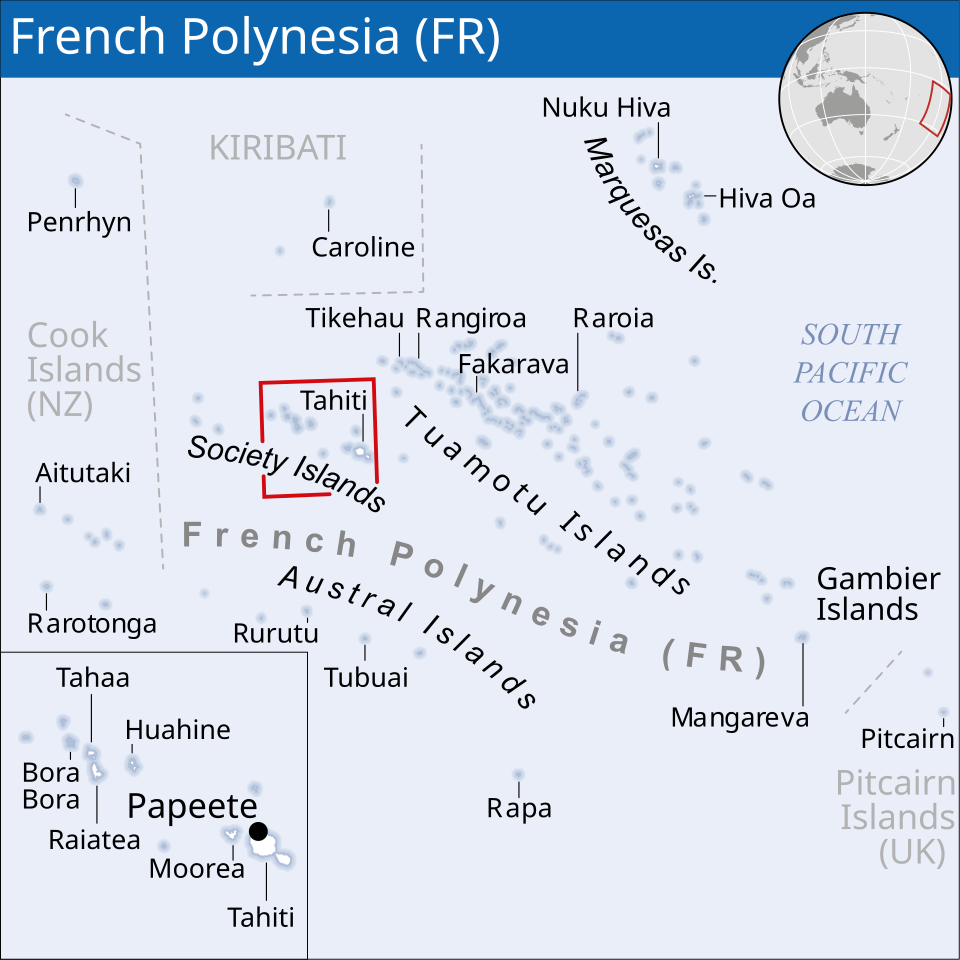
The presence of three separate airlines in the top-company rankings is particularly telling. Air Tahiti Nui, Air Tahiti, and Air Moana all appear, indicating that air travel is not merely a convenience but an economic necessity in a territory spread across 118 islands and atolls. This aviation-heavy corporate structure suggests an economy where transportation costs are embedded in virtually every good and service, a structural reality that shapes everything from food prices to business competitiveness.
The dominance of Électricité de Tahiti and ONATi — the power and telecom monopolies — further underscores the territory’s dependence on infrastructure that must be maintained across vast oceanic distances. The World Bank’s silence on macroeconomic fundamentals means we must read the economy through its corporate actors, and those actors point to a modern, service-oriented economy with high fixed costs and limited export diversification.
Cost of Living — The Price of Paradise
Housing and daily expenses in French Polynesia are shaped by two forces: geographic isolation and the concentration of economic activity in Tahiti. While specific cost-of-living figures are not available through the World Bank data, the territory’s economic structure offers strong inferential evidence about the pressures residents face.
With three airlines operating within the territory, the cost of moving goods between islands is substantial, and that cost is inevitably passed on to consumers at the point of sale. The dominance of Électricité de Tahiti in the corporate rankings suggests that energy costs are a significant line item for households and businesses alike, particularly given the challenges of power generation in remote island communities.
Rent and property markets in French Polynesia are similarly shaped by the territory’s geography. The concentration of employment in the formal sector — dominated by the utility, telecom, and aviation companies — means that housing demand is strongest in the Papeete area of Tahiti, where most corporate headquarters are located.
For residents outside the main island, housing markets are thinner and more informal, but the cost of construction materials and imported goods remains uniformly high across the territory. The presence of Brasserie de Tahiti as a major corporate entity suggests a vibrant local consumer market, but one where the cost of everyday goods is likely elevated compared to mainland France or larger Pacific economies.
The absence of hard data makes precise comparisons difficult, but the structural signals point to a high-cost, service-intensive economy where the price of paradise is reflected in the price of everything else.
Investment and Business Climate — A Concentrated Corporate Arena
For investors and business analysts, French Polynesia offers a paradoxical environment: a small, well-defined market with clear dominant players, but limited opportunities for new entrants. The top-company rankings show a concentrated corporate landscape, with Électricité de Tahiti and ONATi holding what appear to be commanding positions in their respective sectors. These are classic infrastructure monopolies — utilities and telecoms that benefit from high barriers to entry and stable, predictable demand.
Brasserie de Tahiti’s presence among the top firms indicates a consumer goods sector with enough local demand to support production, though the brewery’s market position also suggests the challenges of competing against imported brands in a small market.
The aviation sector presents a more dynamic picture. The presence of three airlines — Air Tahiti Nui, Air Tahiti, and Air Moana — in the rankings suggests a competitive environment where carriers are jostling for market share in both domestic inter-island routes and international connections. Air Moana’s appearance as a consumer services company indicates that the sector is still evolving, with new entrants attempting to carve out niches against established players.
For investors, the most promising opportunities likely lie in sectors that support the existing corporate infrastructure — logistics, maintenance services, hospitality, and digital services that can operate without the heavy capital costs of the utility giants.
The business climate is one where relationships and local knowledge matter immensely, and where the territory’s political status as an overseas collectivity of France provides a legal and regulatory framework that is stable but distinct from mainland Europe.
Safety, Politics, and Quality of Life — Stability in Isolation
The political landscape of French Polynesia is defined by its unique constitutional status — an overseas collectivity of France with substantial autonomy, though the data provided offers no specific political indicators. This arrangement provides a measure of stability that is not available to many Pacific island nations, with French institutions and legal frameworks underpinning local governance.
The absence of crime and safety indices in the available data makes definitive statements difficult, but the territory’s small population and tight-knit communities generally suggest a social environment where traditional values and community ties remain strong.
The quality of life in French Polynesia is shaped by the natural environment — the lagoons, mountains, and coral reefs that make the territory a global tourism destination. Yet the same isolation that preserves these natural assets also creates economic pressures. The corporate dominance of utilities and airlines suggests a society that has embraced modern infrastructure while maintaining a distinct Pacific cultural identity.
The presence of three airlines indicates that mobility is valued and accessible, at least for those who can afford it. The balance between traditional island life and modern economic imperatives is the central tension of French Polynesian society, and it plays out in everything from housing policy to environmental regulation to the daily choices of residents navigating between subsistence activities and wage employment.
What’s Happening Now — A Territory in Transition
The current moment in French Polynesia is one of cautious evolution, with the corporate landscape providing the clearest signals of where the economy is heading. The presence of Air Moana as a new entrant in the aviation sector suggests that the territory is experiencing a period of competitive realignment, with new players challenging the established dominance of Air Tahiti and Air Tahiti Nui.
This is significant because aviation is the territory’s economic circulatory system — changes in the airline market affect tourism, business travel, and the movement of goods across the islands. The continued prominence of Électricité de Tahiti and ONATi indicates that infrastructure investment remains a priority, and the stable positioning of Brasserie de Tahiti suggests a consumer market that, while small, remains resilient.
The data provided does not include recent news items or live economic indicators, so we must read the current moment through the corporate rankings themselves. The fact that Air Tahiti Nui appears twice in the top-company list — once with a score of 12.4 and once in the consumer services category — may indicate a company in flux, perhaps undergoing restructuring or expanding its operations.
Similarly, the appearance of Électricité de Tahiti and ONATi with scores suggests that these companies are being measured and ranked by some methodology, even if the broader macroeconomic picture remains opaque. What seems clear is that French Polynesia is not standing still — the presence of multiple airlines competing in a small market, the continued dominance of infrastructure providers, and the stable consumer goods sector all point to an economy that is managing its challenges with a degree of confidence.
The Bottom Line
French Polynesia is a market for the patient and the well-connected — a territory where the fundamentals are sound but the data is sparse, and where success depends on understanding the unique dynamics of island economics. Investors and businesses should watch this country for opportunities in aviation, energy, and telecommunications, where the corporate landscape is established but not static.
The territory’s status as a French overseas collectivity provides a measure of political stability, while its Pacific location offers access to a region of growing strategic importance. For journalists, policymakers, and business analysts, French Polynesia remains a fascinating case study in how small, remote economies navigate the challenges of globalisation, climate change, and economic development — a story that is still being written, one island at a time.
Sources & Methodology
This article is authored by Economic Pulse Net for informational and research purposes. Economic Pulse Net sources its data from multilateral institutions, national statistics bureaus, and proprietary databases. All data is believed to be current as of the date of publication.
Published: August 07, 2026 | Category: Research — French Polynesia
Use these signals in your own platform
Economic Pulse publishes its live signal feed through a documented, read-only API. Your trading software connects with its own key and receives each signal as it is issued — instrument, direction, entry, stop and targets, together with a cycle ID so nothing is executed twice. The feed is independent of this website and cannot change it.
Signals are informational only and are not financial advice.