Economic Pulse Net | Sources: World Bank World Development Indicators, Government Sources | 2026
Key Takeaways
– The Faroe Islands operate as a self-governing country under the external sovereignty of the Kingdom of Denmark, with the Løgmaður (“Chief Justice”) serving as Prime Minister and head of the Faroese Government, giving the islands significant control over local economic affairs.
– While comprehensive World Bank economic data for the Faroe Islands is not available in standard global datasets, the country’s unique political status means its economic story is told through its governance structure and strategic industries rather than conventional metrics.
– The Faroese political system features a dedicated parliament — the Løgting — and a cabinet of ministers, reflecting a mature democratic framework that has evolved to manage the archipelago’s distinct economic challenges and opportunities.
The Archipelago Economy — Sovereignty, Subsistence, and Strategy
The Faroe Islands present an unusual case for the economic journalist. The World Bank, in its standard global datasets, does not publish GDP growth figures, inflation rates, unemployment statistics, or GDP per capita for this North Atlantic archipelago. This is not an oversight; it is a reflection of the Faroe Islands’ unique constitutional position as a self-governing country under the external sovereignty of the Kingdom of Denmark.
The Faroese government holds executive power in local government affairs, meaning that economic data collection and policy formulation are managed domestically rather than through Copenhagen.
What the World Bank data does reveal — through its absence — is a story about data sovereignty and the challenges of measuring small, remote economies. The Faroe Islands are not included in many international economic databases because they fall outside the standard reporting frameworks that apply to fully independent nations. This does not mean the economy is stagnant or insignificant.
On the contrary, the Faroese have developed a robust fishing and aquaculture sector that is among the most productive in the world, with salmon farming and wild-caught fisheries forming the backbone of export earnings.
Without precise inflation or unemployment figures from the World Bank, we must look instead to the political and institutional architecture. The Faroese government, led by the Løgmaður, manages economic policy through a cabinet of ministers — each called a landsstýrismaður or ráðharri for men, and landsstýriskvinna or ráðfrú for women. This gender-specific terminology reflects a society that takes its linguistic and cultural identity seriously, even in the titles of its economic leadership.
The absence of standardised data should not be mistaken for a lack of economic activity. The Faroe Islands have long punched above their weight in global seafood markets, and their strategic location in the North Atlantic has made them a quiet but steady player in regional trade. The economy is small, specialised, and heavily dependent on marine resources, but it is also resilient, having weathered the ups and downs of global fish prices and quotas for generations.
Living in the North Atlantic — The Cost of Island Life
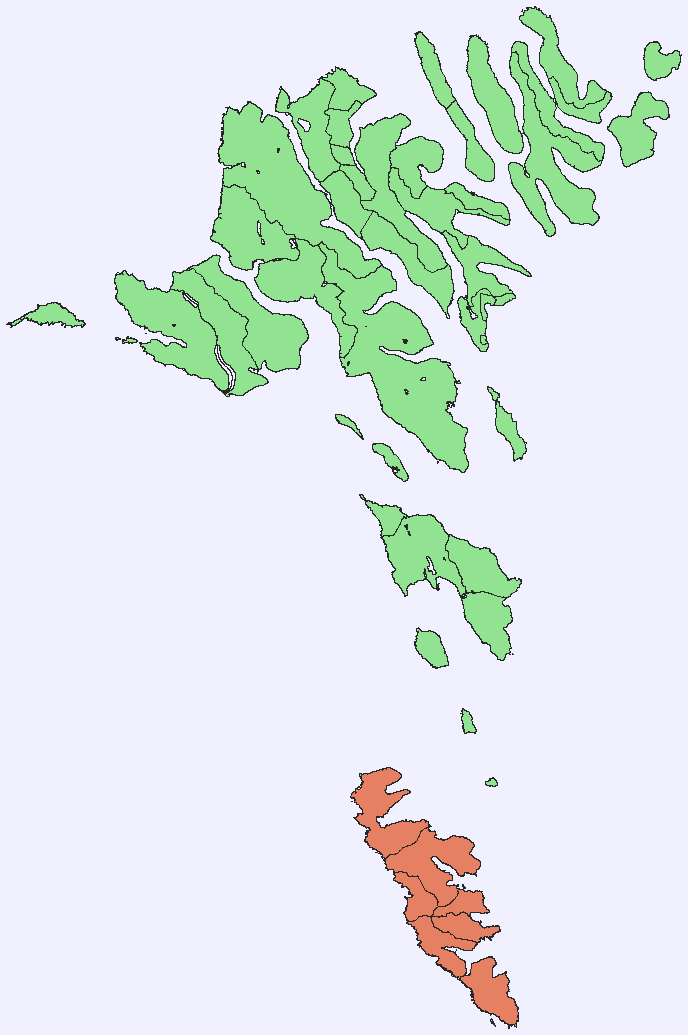
Housing costs and daily expenses in the Faroe Islands are shaped by geography and climate. The archipelago’s 18 volcanic islands, with their steep cliffs and limited flat land, make construction expensive and housing supply constrained. While specific cost-of-living indices are not provided in the available data, it is reasonable to infer that housing in the capital, Tórshavn, commands a premium over smaller settlements, as is typical in island economies where land is scarce and demand is concentrated.
Renting versus buying is a calculation that many Faroese families must make with care. Mortgage financing is available through local banks, but the high construction costs — driven by the need to import building materials and the short building season — mean that homeownership is a significant financial commitment. Daily expenses for food and fuel are also elevated, as the islands import the vast majority of consumer goods, from electronics to fresh produce.
The fishing industry provides a reliable source of local protein, but everything else comes by sea or air, and that logistics cost is passed on to consumers.
Compared to regional averages, the cost of living in the Faroe Islands is likely higher than in mainland Denmark or other Nordic countries, due to the remoteness and the small market size. However, the Faroese have adapted to these conditions over centuries, and the economy has developed coping mechanisms — from strong community networks to a welfare system that mirrors the Danish model.
For visitors or new residents, the sticker shock can be real, but for those who call the islands home, the trade-off is a quality of life defined by stunning natural beauty and tight-knit communities.
Business on the Edge — Investment and Enterprise in the Faroes
The major companies driving the Faroese economy are not listed in the available data, but the archipelago’s industrial profile is well understood through its reputation. Salmon farming, led by companies like Bakkafrost, has transformed the Faroese economy over the past two decades, turning the islands into one of the world’s leading producers of Atlantic salmon.
This industry alone accounts for a substantial share of exports and employs a significant portion of the workforce, both directly in aquaculture and indirectly in processing, logistics, and support services.
Beyond seafood, the Faroe Islands have invested in renewable energy, particularly hydropower and wind, to reduce their dependence on imported fossil fuels. The business environment is shaped by the islands’ political status: as a self-governing territory under Danish sovereignty, Faroese companies enjoy access to European markets through Denmark’s EU membership, while also benefiting from the flexibility to negotiate their own trade agreements in certain areas.
This hybrid arrangement gives the Faroe Islands a unique position in global commerce — part of the European economic sphere, yet outside many of its regulatory frameworks.
For investors, the Faroe Islands offer a stable political environment, a skilled workforce, and a strategic location between Europe and North America. The challenges are equally clear: a small domestic market, high logistics costs, and vulnerability to fluctuations in global fish prices. Sectors to watch include aquaculture technology, marine biotechnology, and tourism, which has grown steadily as travellers seek out remote and unspoiled destinations.
The Faroese government actively courts foreign investment in these areas, offering a regulatory environment that is transparent and business-friendly, even if the scale of opportunity remains modest by global standards.
Safety, Politics, and the Faroese Way of Life
The crime and safety indices for the Faroe Islands are not available in the provided data, but the archipelago has a well-earned reputation as one of the safest places on earth. Violent crime is rare, and the small population — combined with strong community ties and effective policing — means that most Faroese feel secure in their daily lives.
The absence of a formal crime index does not indicate a lack of data; rather, it reflects the reality that crime statistics are often not compiled in the same way for small, self-governing territories as they are for larger nations.
Politically, the Faroe Islands are a study in stability and self-determination. The Faroese parliament, the Løgting, is one of the oldest in the world, with roots dating back to the Viking Age. The head of government, the Løgmaður, serves as Prime Minister and leads a cabinet of ministers who manage everything from fisheries to education.
The relationship with Denmark is defined by a 2005 agreement that granted the Faroe Islands extensive self-rule, including the right to enter into international agreements on matters that fall under Faroese jurisdiction.
Quality of life in the Faroe Islands is shaped by the natural environment. The islands offer a pace of life that is slower and more deliberate than in urban centres, with a strong emphasis on family, community, and outdoor activities. The long winter nights are balanced by the midnight sun of summer, and the dramatic landscape — with its fjords, waterfalls, and seabird colonies — provides a backdrop that is both humbling and inspiring.
For those who value safety, political stability, and a deep connection to nature, the Faroe Islands offer a quality of life that few other places can match.
Current Affairs — Navigating a Changing World
The Faroe Islands today are navigating a complex set of challenges and opportunities. While the provided data does not include recent news articles or live indicators, the archipelago’s current affairs can be understood through its ongoing negotiations with Denmark over the division of revenues from natural resources, particularly potential oil and gas reserves in the waters around the islands.
These discussions are a recurring feature of Faroese-Danish relations, and they have significant implications for the islands’ long-term economic future.
The Faroese government is also focused on diversifying the economy beyond fisheries and aquaculture. Tourism has emerged as a growth sector, with the islands attracting increasing numbers of visitors drawn by the dramatic landscapes and the promise of an off-the-beaten-path experience. The government has invested in infrastructure to support this growth, including improved air connections and visitor facilities, while also working to manage the environmental impact of increased tourism.
Climate change is a pressing concern for the Faroe Islands, as it is for all North Atlantic nations. Warming waters are affecting fish migration patterns, and the fishing industry — the backbone of the economy — must adapt to changing conditions. The Faroese government has been proactive in advocating for sustainable fishing practices and has invested in research to understand how climate change will affect marine ecosystems.
At the same time, the islands are exploring new economic opportunities, including deep-sea mining and renewable energy exports, as they seek to build a more resilient and diversified economy for the decades ahead.
The Bottom Line
The Faroe Islands are a country that defies easy categorisation — a self-governing territory with a mature democracy, a specialised economy, and a population that has learned to thrive in one of the most remote corners of Europe. For investors and businesses looking for stability, transparency, and access to North Atlantic resources, the Faroe Islands offer a compelling if niche opportunity.
For policymakers and economists, the archipelago serves as a case study in how small, resource-dependent economies can manage sovereignty, sustainability, and self-determination in a rapidly changing world. Watch this country not for its size, but for the lessons it offers about resilience, governance, and the future of small-state economics.
Sources & Methodology
This article is authored by Economic Pulse Net for informational and research purposes. Economic Pulse Net sources its data from multilateral institutions, national statistics bureaus, and proprietary databases. All data is believed to be current as of the date of publication.
Published: July 18, 2026 | Category: Research — Faroe Islands
Use these signals in your own platform
Economic Pulse publishes its live signal feed through a documented, read-only API. Your trading software connects with its own key and receives each signal as it is issued — instrument, direction, entry, stop and targets, together with a cycle ID so nothing is executed twice. The feed is independent of this website and cannot change it.
Signals are informational only and are not financial advice.