Economic Pulse Net | Sources: World Bank World Development Indicators, Government Sources | 2026
Key Takeaways
– The Faroe Islands operate as a self-governing territory under the Kingdom of Denmark, with full executive control over local affairs and a unique political structure headed by a Prime Minister known as the Løgmaður.
– Despite its status as a modern Nordic economy, comprehensive macroeconomic data remains surprisingly sparse, with key indicators like GDP growth and inflation not currently tracked in major international databases.
– The territory’s political system is distinctive, featuring a parliament called the Løgting and a cabinet structure with gender-specific ministerial titles that reflect the islands’ deep cultural traditions.
– As a small island nation in the North Atlantic, the Faroese economy is inherently shaped by its geography, though detailed industrial and corporate data is limited in global economic reporting.
– For investors and policymakers, the Faroe Islands represent a case study in how small, self-governing territories navigate economic sovereignty within a larger constitutional framework.
The Numbers Gap — What We Know and What We Don’t
The Faroe Islands present an intriguing challenge for economic analysts: a functioning, modern economy that remains largely invisible in the standard global data infrastructure. According to the World Bank, the territory’s GDP growth, inflation rate, unemployment figures, and even total GDP in US dollars are all currently unrecorded. This absence of data is itself a story — it speaks to how small island economies, despite their sophistication, can fall through the cracks of international statistical systems.
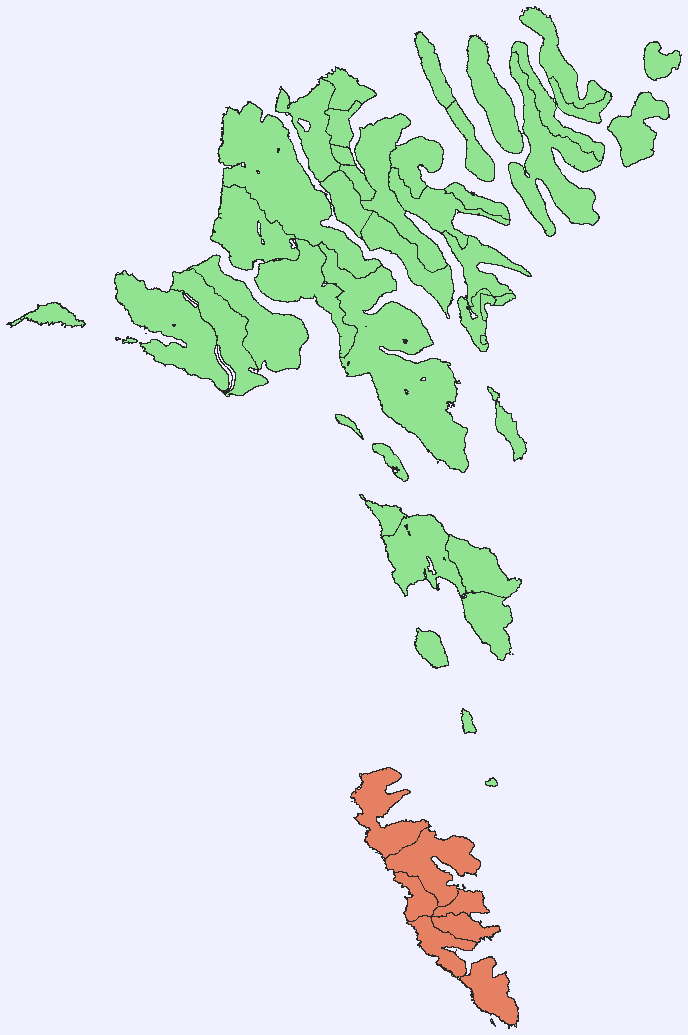
What we do know is structural. The Faroe Islands have carved out a distinctive economic identity within the Kingdom of Denmark, managing their own fiscal affairs while relying on Copenhagen for external sovereignty. This arrangement has allowed the islands to pursue policies tailored to their unique circumstances — a fishing-dependent economy with a small population spread across 18 mountainous islands.
The lack of granular data does not mean economic activity is absent; rather, it suggests that the islands’ statistical infrastructure may not feed into the same global reporting mechanisms as larger nations.
The GNI per capita, GDP per capita in purchasing power parity terms, and population figures are similarly unreported by the World Bank. For a territory that consistently ranks high in human development when measured by other organizations, this statistical silence creates a peculiar paradox: a wealthy, stable society that remains nearly invisible in the datasets that shape global investment decisions.
Analysts must therefore rely on qualitative assessments and the islands’ demonstrated institutional stability rather than hard numbers.
The High Cost of Isolation — Living in the North Atlantic
While precise cost-of-living data for the Faroe Islands is not available in the current reporting, the territory’s geography provides strong circumstantial evidence about daily economic realities. Located between Norway and Iceland, roughly 320 kilometers from the Scottish mainland, the islands face inherent logistical challenges that inevitably drive up consumer prices.
Almost all manufactured goods, fuel, and non-local food products must be imported by sea or air, creating a cost structure that typically exceeds mainland European averages.
Housing in the Faroe Islands is similarly constrained by topography. With limited flat land available for development, particularly in the capital of Tórshavn, property prices tend to reflect scarcity rather than construction costs. The traditional Faroese home — often a timber-framed structure with a distinctive grass roof — has evolved into a modern housing stock that must contend with harsh weather conditions and remote locations.
Rent versus buy calculations are heavily skewed by the fact that land itself is a finite, non-renewable resource in a way that differs fundamentally from continental Europe.
For residents, the compensation for these high costs comes in the form of a social safety net inherited from the Danish model, though the Faroese government administers its own welfare programs. The practical effect is a society where daily expenses run high, but where public services, infrastructure, and quality-of-life investments help offset the financial burden.
It is an economy where the true cost of living must be measured not just in currency, but in the value of security, community, and environmental quality.
Business and Investment — A Narrow Base, A Deep Culture
The Faroe Islands’ economic foundation rests on a handful of sectors, with fisheries historically dominating the export economy. The waters around the islands are among the richest fishing grounds in the North Atlantic, and the industry has evolved from small-scale coastal operations to a sophisticated, export-oriented sector. Salmon farming, in particular, has emerged as a significant activity, though detailed corporate data is not captured in the current reporting.
The business environment in Tórshavn is characterized by its intimacy — with a population that would fill a small town in larger nations, business relationships are deeply personal and trust-based. This creates both advantages and challenges for outside investors. On one hand, the barriers to entry are clear and the key players are identifiable. On the other, the small market size means that most successful enterprises must look outward, exporting their goods and services to maintain scale.
The digital sector has shown promise, with the islands’ remote location paradoxically making them an attractive hub for data centers and digital services that require physical distance from geopolitical tensions.
The constitutional relationship with Denmark provides a stable legal framework that reduces sovereign risk, while the Faroese government’s control over local affairs allows for tailored business regulations. However, the absence of comprehensive economic data means that potential investors must conduct significant due diligence on their own. The islands are not a market for passive investment; they reward those who take the time to understand the local context and build genuine relationships.
Governance, Safety, and the Faroese Way of Life
The political landscape of the Faroe Islands is defined by a careful balancing act between autonomy and integration. As a self-governing country under the external sovereignty of the Kingdom of Denmark, the islands manage their own domestic affairs while Copenhagen handles foreign policy and defense.
The head of the Faroese government, the Løgmaður — translating to “Chief Justice” — serves as Prime Minister, leading a cabinet whose members hold titles that reflect the gender of the officeholder, a linguistic tradition that underscores the society’s cultural distinctiveness.
The Faroese parliament, the Løgting, claims the distinction of being one of the oldest parliamentary bodies in the world, with roots stretching back over a millennium. This deep institutional history contributes to a political culture that values consensus and continuity. While crime and safety indices are not recorded in the current data, the islands’ small population and strong community bonds suggest a society where social cohesion acts as a natural check on criminal activity.
The safety index, unmeasured as it is, would likely reflect the realities of a close-knit island community where everyone knows their neighbors.
Quality of life in the Faroe Islands is shaped by the interplay between natural beauty and practical isolation. The dramatic landscapes — steep cliffs, deep fjords, and the ever-present Atlantic — provide a setting that is both stunning and demanding. The Faroese have developed a culture that embraces this environment, from traditional chain dances to a modern literary and musical scene that has gained international recognition.
It is a society that has chosen a deliberate path, balancing the benefits of Danish welfare with the independence of self-governance.
The Road Ahead — Sovereignty Debates and Economic Evolution
The conversation about the Faroe Islands’ future is fundamentally a conversation about the terms of its relationship with Denmark. Periodically, the question of full independence surfaces in Faroese political discourse, prompted by the islands’ strong fiscal position and their success in managing their own affairs. The Faroese government’s executive power in local matters has created a track record of competent administration, which fuels arguments that the islands could stand fully alone.
At the same time, the economic calculus of independence remains complex. The Danish subsidy to the Faroe Islands, while not detailed in current data, represents a significant transfer that would need to be replaced through other means. The islands’ exclusive economic zone — rich in fishing resources — provides a potential revenue base, but also requires naval and coast guard capabilities that currently fall under Danish responsibility.
The debate is not merely economic but existential: what does it mean to be a sovereign nation of approximately 50,000 people in the 21st century?
For now, the pragmatic middle path appears to hold. The Faroese enjoy significant autonomy — they are not members of the European Union, having opted out alongside Denmark, but maintain their own trade agreements and are free to negotiate their own commercial relationships. This flexibility has served them well, allowing the islands to pursue opportunities that might be constrained by larger political unions.
The coming years will likely see continued evolution of this arrangement, as the Faroe Islands assert their identity while recognizing the practical benefits of their Danish connection.
The Bottom Line
The Faroe Islands are a reminder that economic significance is not always measured in GDP figures or growth rates. This is a territory that has achieved remarkable stability and prosperity through a combination of natural resources, cultural cohesion, and shrewd political navigation. For those watching the northern Atlantic region — whether for geopolitical reasons, investment opportunities in fisheries and aquaculture, or interest in the future of small-state governance — the Faroe Islands deserve attention.
They are proof that a nation does not need to be large to be successful; it simply needs to know who it is and what it wants to be. The rest, as the Faroese have demonstrated, can be negotiated.
Sources & Methodology
This article is authored by Economic Pulse Net for informational and research purposes. Economic Pulse Net sources its data from multilateral institutions, national statistics bureaus, and proprietary databases. All data is believed to be current as of the date of publication.
Published: August 01, 2026 | Category: Research — Faroe Islands
Use these signals in your own platform
Economic Pulse publishes its live signal feed through a documented, read-only API. Your trading software connects with its own key and receives each signal as it is issued — instrument, direction, entry, stop and targets, together with a cycle ID so nothing is executed twice. The feed is independent of this website and cannot change it.
Signals are informational only and are not financial advice.