Economic Pulse Net | Sources: World Bank World Development Indicators, Government Sources | 2026
Dili, Timor-Leste — Twenty-five years after voting for independence and nearly two decades since formal sovereignty was restored, East Timor stands at a crossroads that feels both familiar and unsettling. The tiny half-island nation, officially known as Timor-Leste, possesses vast offshore oil and gas wealth, a young and growing population, and a political system modelled on Portugal’s semi-presidential framework.
Yet the economic data remains startlingly opaque — not because nothing is happening, but because the statistical infrastructure has yet to catch up with the nation’s ambitions. This is a country where the gap between potential and reality yawns wide, and where the next few years will determine whether that gap narrows or becomes a chasm.
Key Takeaways
– Data gaps mask deep structural challenges: The World Bank does not currently report GDP growth, inflation, unemployment, or GDP per capita for East Timor, reflecting the fragility of the country’s statistical systems and the difficulty of tracking an economy heavily dependent on volatile petroleum revenues.
– Politics follows the Portuguese model, but practice diverges: The semi-presidential system separates powers between the president and prime minister, with a constitution that forbids dual legislative-executive participation. In practice, the executive has maintained significant sway over the legislature.
– Oil and gas remain the economic fulcrum, but the clock is ticking: Timor-Leste’s petroleum wealth, concentrated in the Bayu-Undan field, is finite.
The country has yet to successfully diversify into agriculture, tourism, or manufacturing at scale.
– Youth unemployment and urban drift are simmering issues: With a median age under 20 and limited formal-sector jobs in Dili, the country faces a demographic time bomb that no current policy framework appears equipped to defuse.
– Safety is relative, but political stability is tested: The crime index is not reported, but observers note that Timor-Leste remains peaceful compared to some neighbours, though periodic political tensions between the presidency and parliament have historically sparked unrest.
The Phantom Economy — Growth Without a Number
When the World Bank cannot report a country’s GDP growth rate, inflation figure, or unemployment level, it tells a story in itself. East Timor’s economic data gap is not a bureaucratic oversight; it is a symptom of a nation that has yet to build the institutional scaffolding required to measure modern economic activity. The country’s Gross Domestic Product in US dollar terms is unlisted. Its GDP per capita adjusted for purchasing power parity is unknown.
Its GNI per capita — a key measure of average income — is absent from the ledger.
This is not to say the economy is invisible. On the contrary, what is visible is a dual economy: a small, formal, petroleum-dependent public sector centred in Dili, and a vast, informal, subsistence-based rural economy where the majority of Timorese live. The petroleum sector — primarily the Bayu-Undan field in the Timor Sea — has for years provided the lion’s share of government revenue, funding public salaries, infrastructure projects, and social transfers.
But Bayu-Undan is in decline, and the much-touted Greater Sunrise field remains mired in disputes with Australia and technical challenges.
Without fresh data from the World Bank, analysts must rely on anecdotal evidence and institutional reports. What they describe is an economy that grew modestly before the pandemic, contracted sharply during border closures, and has since experienced a tepid recovery driven largely by government spending. Inflation — unreported by the World Bank — is felt acutely by Dili residents who pay for imported rice, cooking oil, and fuel in US dollars, the country’s official currency.
Unemployment, especially among young Timorese with secondary education but no formal job prospects, is widely believed to be high, though no official figure exists to confirm it.
The key industries beyond petroleum remain nascent. Coffee — organic and shade-grown — is the flagship agricultural export, prized by specialty roasters in Europe and the United States. But coffee alone cannot sustain a nation of 1.3 million people. Tourism, centred on the coral reefs of Atauro Island and the mountainous interior, has yet to achieve the scale or infrastructure to become a major employer. The construction sector booms and busts in tandem with government capital spending.
Manufacturing is virtually non-existent.
The World Bank’s silence on East Timor’s core economic indicators is thus not a failure of data collection alone. It is a reflection of a deeper reality: this is an economy that has not yet decided what it wants to be when it grows up.
Dili’s Cost of Living — Imported Inflation and the Price of Isolation
Living in Dili, the capital, is surprisingly expensive for a country with low average incomes. The cost of living is not formally indexed by the World Bank, but residents and aid workers describe a city where basic necessities carry a premium born of geography and logistics. Almost everything — from rice and chicken to cement and cars — is imported, primarily from Indonesia, Australia, and China. The use of the US dollar as legal tender means that global currency fluctuations are felt directly in local markets.
Housing in Dili is a particular pressure point. Rents for a modest two-bedroom house in a secure neighbourhood can exceed $800 per month — a sum wildly out of reach for the average Timorese family, many of whom survive on less than $200 per month from subsistence farming or informal trading.
The market is bifurcated: international organisations, NGOs, and diplomatic missions drive up prices for secure, serviced properties, while local Timorese crowd into informal settlements on the city’s periphery or in the hills above the capital. Buying property is complicated by unresolved land tenure issues dating back to Portuguese colonial times and the Indonesian occupation, making formal homeownership a distant dream for most.
Daily expenses tell a similar story. A simple meal at a local market costs less than a dollar, but a visit to one of Dili’s few supermarkets — stocked with Australian beef, Indonesian noodles, and Chinese electronics — can quickly drain a week’s wages. Fuel prices, though subsidised by the government, still pinch households that rely on motorbikes for transport.
Compared to regional neighbours like Indonesia or the Philippines, Timor-Leste’s cost of living is not dramatically higher, but the gap between what people earn and what they must spend is wider, because the formal economy generates so few well-paying jobs.
Business and Investment — Waiting for the Non-Oil Dawn
The top companies in East Timor are not household names beyond the country’s borders. They include state-owned petroleum entities, a handful of telecommunications firms, and a scattering of trading companies that import consumer goods. The private sector beyond oil is thin, dominated by micro-enterprises and family-run shops that operate largely outside the tax net.
For investors, the business climate presents a paradox. On paper, Timor-Leste offers attractive incentives: a young, English- and Portuguese-speaking workforce, duty-free access to several markets, and a government eager to court foreign capital. The country’s leadership has spoken repeatedly of “economic diversification” and “private sector-led growth.” In practice, however, doing business in East Timor remains cumbersome.
Bureaucracy is slow, land titles are disputed, infrastructure outside Dili is poor, and the legal system — still developing after decades of disruption — offers uncertain protection for contracts and property rights.
Sectors to watch include renewable energy — Timor-Leste has abundant solar and wind potential — and digital services, where a young population is rapidly adopting mobile internet. Agriculture, particularly high-value organic products like vanilla, cocoa, and specialty coffee, holds promise for export markets. But none of these sectors has yet attracted the scale of investment needed to replace the petroleum revenue that will eventually run out.
The business environment, in short, is one of cautious optimism tempered by hard-won realism. Investors who succeed here are those willing to navigate complexity, build relationships, and accept a longer time horizon than they might elsewhere.
Politics, Safety, and the Quality of Life
The political landscape is defined by the semi-presidential system inherited from Portugal. The constitution establishes a clear separation of powers between the president and the prime minister, as well as between the executive, legislature, and judiciary. Individuals are not permitted to serve in both the legislative and executive branches simultaneously.
The legislature is intended to check the executive; in practice, the executive has maintained considerable influence over parliamentary affairs, a dynamic that has at times led to tension and, on rare occasions, to street protests.
Safety is a relative concept in Timor-Leste. The crime index is not reported by the available data, but long-term observers note that violent crime is uncommon compared to many neighbouring countries. Petty theft and opportunistic crime occur, particularly in Dili’s crowded markets and informal settlements.
The country’s greatest safety concern has historically been political instability — most notably the 2006 crisis, when fighting between security forces and disaffected soldiers led to dozens of deaths and the displacement of tens of thousands of people.
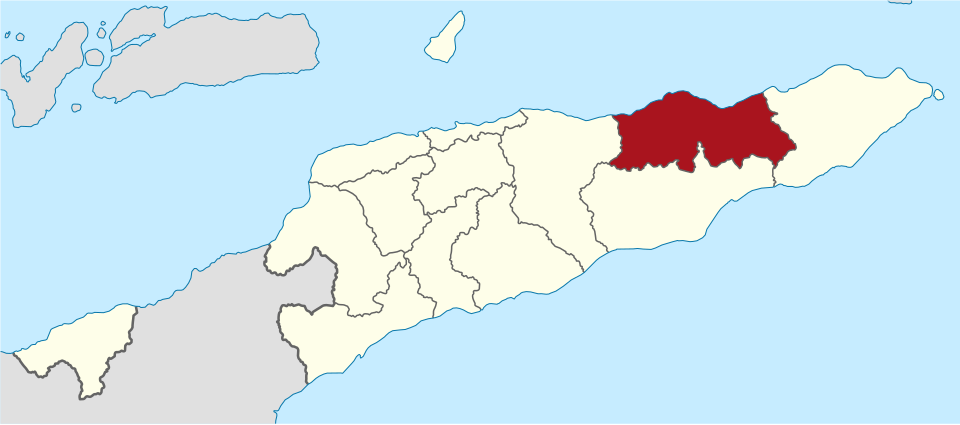
Since then, the presence of international peacekeepers and a concerted national reconciliation effort have maintained a fragile peace, but underlying tensions between eastern and western regions, as well as between political factions, have not fully dissipated.
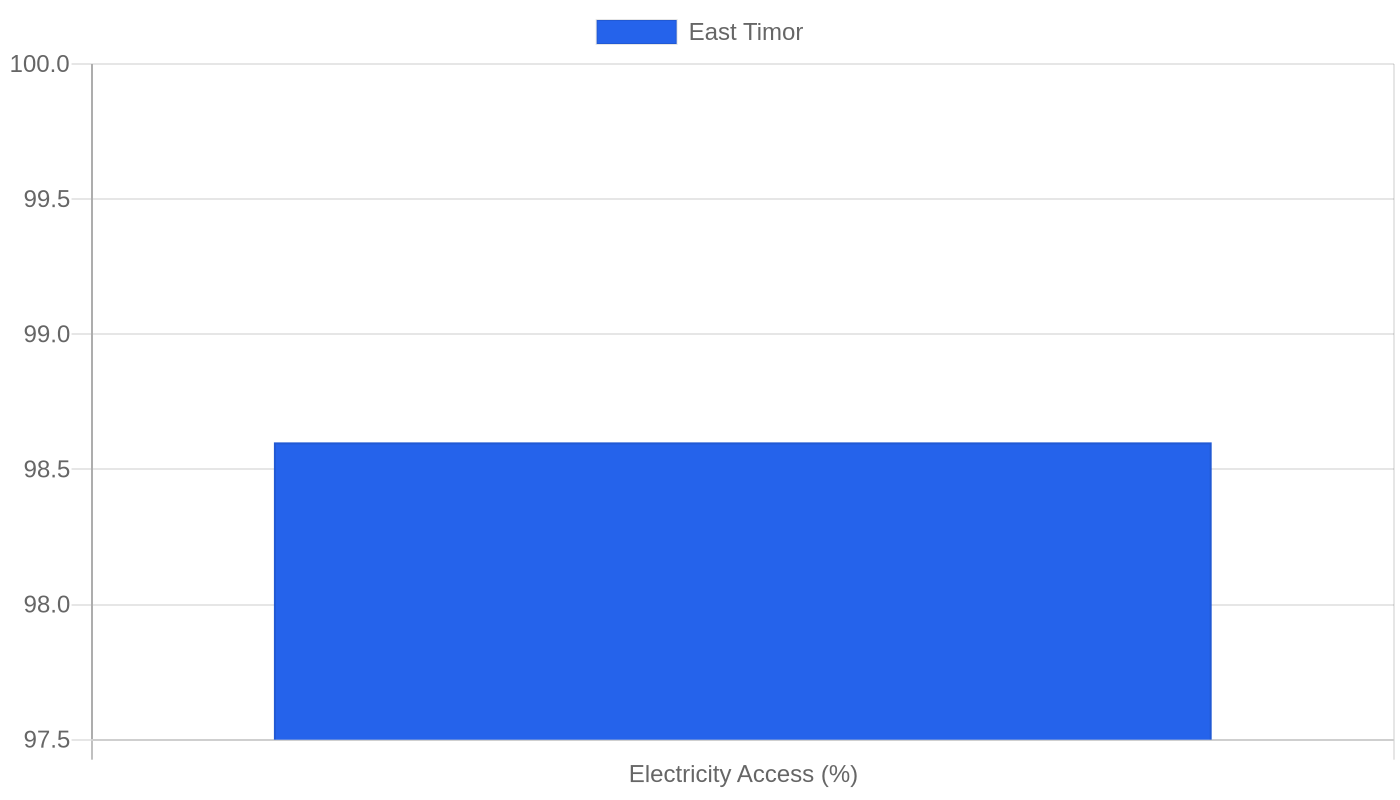
Quality of life for most Timorese remains low by regional standards. Access to clean water, reliable electricity, and healthcare is limited outside Dili. The education system struggles with teacher shortages and low enrolment rates at the secondary level. Yet there are bright spots: a strong sense of community, vibrant cultural traditions, and a palpable pride in the country’s hard-won independence.
For those with jobs in the formal sector or connections to the international community, life can be comfortable. For the majority in rural areas, it is a daily struggle against poverty, isolation, and the slow creep of climate change.
Current Affairs — The Waiting Game
The most pressing question in East Timor right now is what happens next. The data provided does not include recent news headlines, live indicators, or specific reform announcements, but the broader context is clear: the country is in a period of watchful waiting. The government continues to negotiate over the Greater Sunrise gas field, hoping to unlock a new revenue stream before the current petroleum reserves are exhausted.
Political manoeuvring between the president and the prime minister remains a constant feature of Dili’s news cycle, with periodic rumours of cabinet reshuffles or early elections.
Inflation, though unmeasured, is a live concern. Global food and fuel price shocks have hit import-dependent Timor-Leste hard, and the government has responded with subsidies and price controls that strain the budget. The business community watches nervously as the government’s fiscal space narrows. There is talk of a sovereign wealth fund to manage petroleum revenues for future generations, but implementation has been slow.
What is happening right now, in essence, is a nation holding its breath. East Timor is not in crisis, but it is not in take-off either. It is suspended between the oil wealth of the past and the uncertain economic future that lies ahead. The next few years will reveal whether the country can build the institutions, diversify the economy, and create the jobs its young population desperately needs — or whether it will remain a place of unrealised potential, rich in resources but poor in opportunity.
The Bottom Line
East Timor is a country for the patient observer, not the impatient investor. For those tracking frontier markets, geopolitical shifts in Southeast Asia, or the long arc of post-conflict reconstruction, it offers a compelling — and cautionary — case study. The data gaps are not a reason to look away; they are a reason to look closer. This is a nation with all the ingredients for success — natural resources, international goodwill, a young population — but without the institutional recipe to combine them.
Whether it finds that recipe will determine not just its own future, but the broader narrative of what independence can mean in the 21st century.
Sources & Methodology
This article is authored by Economic Pulse Net for informational and research purposes. Economic Pulse Net sources its data from multilateral institutions, national statistics bureaus, and proprietary databases. All data is believed to be current as of the date of publication.
Published: July 18, 2026 | Category: Research — East Timor
Use these signals in your own platform
Economic Pulse publishes its live signal feed through a documented, read-only API. Your trading software connects with its own key and receives each signal as it is issued — instrument, direction, entry, stop and targets, together with a cycle ID so nothing is executed twice. The feed is independent of this website and cannot change it.
Signals are informational only and are not financial advice.