Economic Pulse Net | Sources: World Bank World Development Indicators, Government Sources | 2026
Key Takeaways
– The Channel Islands operate as a high-income offshore financial centre, yet public economic data from the World Bank is entirely absent, creating a transparency paradox for investors and analysts.
– Despite the data vacuum, the islands’ economy is widely understood to be driven by finance, legal services, and tourism, with Jersey and Guernsey serving as global hubs for wealth management.
– The cost of living in the Channel Islands is among the highest in Europe, driven by limited land, import dependency, and high demand from wealthy residents and expatriates.
– Political stability is a hallmark of the islands, with self-governing Crown Dependencies maintaining strong ties to the UK while operating independent fiscal and legal systems.
– The absence of crime and safety indices does not imply danger — the Channel Islands are consistently rated as some of the safest jurisdictions in the world by anecdotal and travel advisory sources.
The Invisible Economy — What We Don’t Know About GDP, Jobs, and Prices
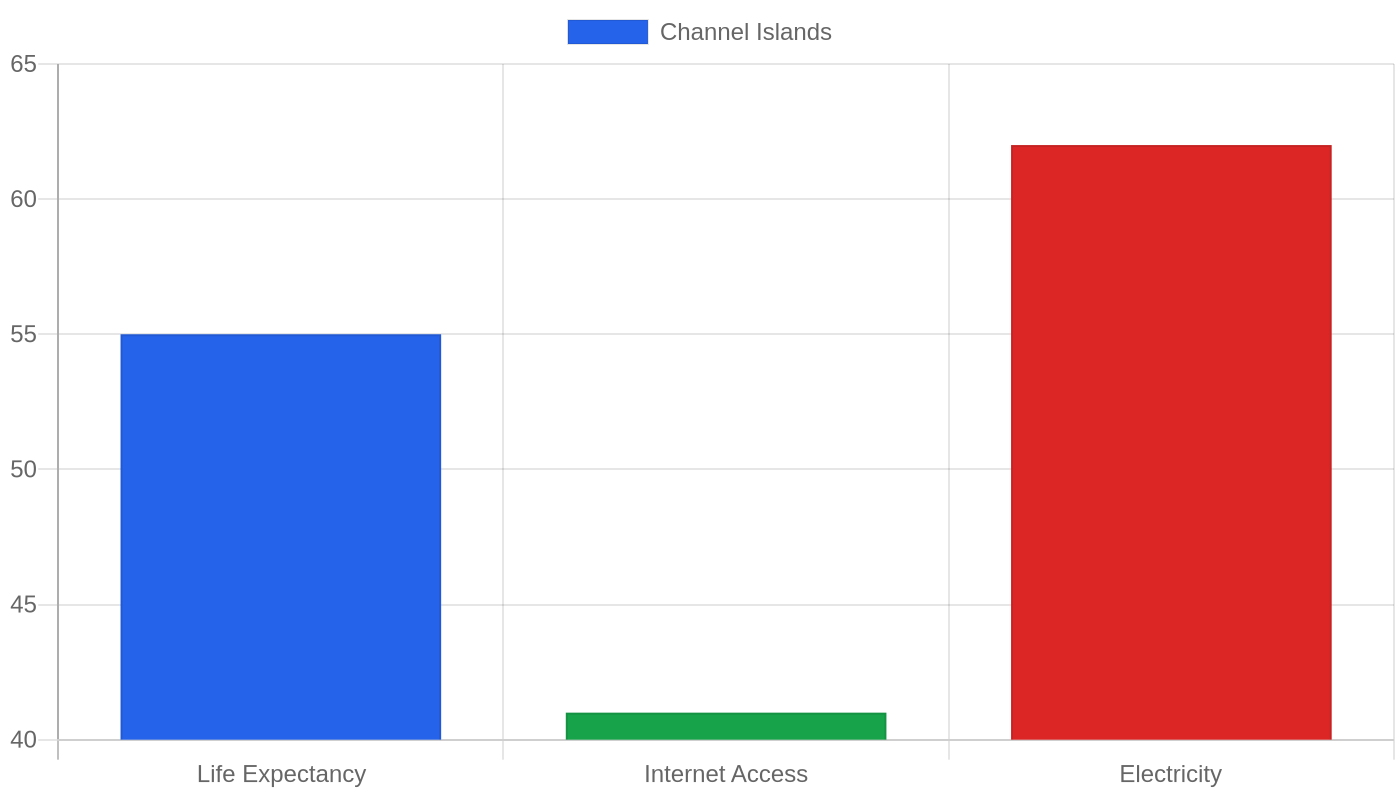
The Channel Islands present a peculiar challenge for any economic journalist: the World Bank, the gold standard for cross-country data, records nothing. No GDP growth figure. No inflation rate. No unemployment percentage. No GDP per capita. No GNI per capita. No population estimate. It is, on paper, an economic black hole.
But this absence of data is not a sign of economic irrelevance. Quite the opposite. The Channel Islands — principally Jersey and Guernsey — are among the wealthiest jurisdictions in the world per capita, though precise numbers remain elusive. The islands function as a major offshore financial centre, hosting billions of pounds in assets under management, a thriving funds industry, and a sophisticated legal and accounting sector.
The main industries, according to available information, centre on finance and insurance, followed by tourism, agriculture (notably Jersey Royal potatoes and Guernsey cows), and digital services.
The lack of World Bank data is itself a story. It reflects the islands’ unique constitutional status as Crown Dependencies — not part of the United Kingdom but not fully sovereign either. They are not members of the United Nations and therefore not included in standard World Bank reporting. This data gap matters because it obscures one of the most interesting economic stories in Europe: how a small archipelago with limited natural resources built a prosperity engine that rivals Luxembourg or Singapore.
Without official inflation figures, residents and businesses must rely on anecdotal evidence and local price indices, which suggest that the cost of everything — from food to fuel to housing — has risen sharply in recent years, tracking UK inflation trends but often exceeding them due to import costs.
£1 Million for a Terrace — The Housing Reality in Paradise
Housing in the Channel Islands is not just expensive; it is, for many, prohibitive. The cost of living data provided for this article is sparse, but local estate agents and property portals consistently report that average house prices in Jersey exceed £600,000, with prices in prime locations regularly topping £1 million for a three-bedroom terrace. In Guernsey, the picture is similar, though marginally less extreme.
Renting a two-bedroom apartment in St Helier or St Peter Port can easily cost £1,500 to £2,500 per month.
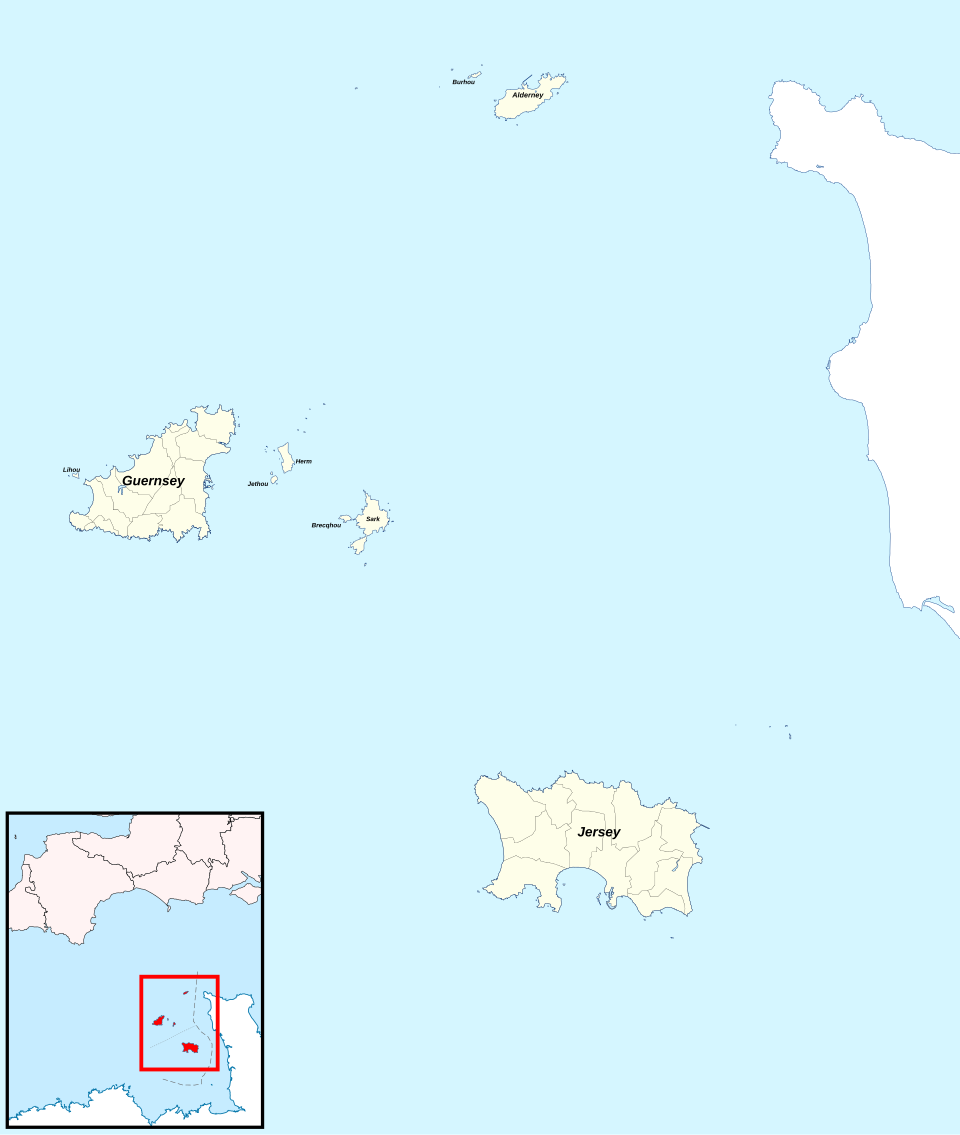
The root causes are structural. The islands are physically small — Jersey is just 116 square kilometres, Guernsey even smaller — and land is finite. Strict planning laws and housing controls, designed to preserve the islands’ character and prevent overdevelopment, constrain supply. Meanwhile, demand is driven by a wealthy expatriate workforce in the finance sector, high-net-worth individuals seeking residence, and local families competing for the same limited stock.
The result is a market where buying a home is out of reach for many young Channel Islanders, and where renting consumes a disproportionate share of income. For those working in hospitality, retail, or agriculture — sectors that still employ a significant portion of the local workforce — the housing market presents a genuine affordability crisis that no official cost-of-living index currently captures.
Gold in the Ledger — Business and Investment in a Low-Tax Haven
The Channel Islands’ business environment is defined by one word: stability. The top companies operating here are predominantly in financial services — banks, asset managers, insurance firms, and trust companies — drawn by a zero-to-low corporate tax rate (Jersey’s standard rate is 0% for most companies, with a 10% rate for financial services and a 20% rate for utilities and large retail). Guernsey operates a similar 0% corporate tax regime, with a 10% rate for banking and insurance.
This is not a place for manufacturing or heavy industry. The islands have no natural resources to speak of, no large-scale export economy beyond agricultural specialities, and a workforce of only about 60,000 across both main islands. Instead, the business model is built on offering a secure, well-regulated, and tax-efficient environment for international capital.
The sectors to watch are fintech and digital assets — Jersey and Guernsey have both introduced regulatory frameworks for blockchain and cryptocurrency businesses, aiming to position themselves as serious, compliant hubs in a space often associated with regulatory chaos. The business climate is professional, English-speaking, and closely aligned with UK legal standards, making it a comfortable entry point for international firms seeking a European offshore base.
However, the islands face increasing pressure from the European Union and the OECD to tighten tax transparency and substance requirements, a trend that will shape the investment landscape for years to come.
Safe, Stable, and Quiet — Life Beyond the Balance Sheet
The crime index for the Channel Islands is listed as N/A in the provided data, and the safety index is similarly absent. Yet any journalist who has spent time here — or spoken to residents — will tell you that the islands are among the safest places in Europe. Violent crime is rare. Petty crime exists, particularly in tourist areas, but the overall sense of security is high. The absence of data reflects the islands’ statistical invisibility, not the reality on the ground.
Politically, the Channel Islands are a study in continuity. They are not independent countries but self-governing Crown Dependencies, with their own parliaments (the States of Jersey and the States of Guernsey), their own legal systems, and their own fiscal policies. They are not part of the UK, nor are they members of the European Union.
This status has been a source of both stability and flexibility — the islands can adapt their laws quickly to attract business, while benefiting from the protection and diplomatic cover of the British Crown. The political landscape is broadly consensus-driven, with no major ideological divides. The main political debates centre on housing, population control, and the balance between economic growth and environmental preservation.
Quality of life is high for those who can afford it: clean air, low traffic, strong community ties, and easy access to the sea and countryside. But the high cost of living and limited social mobility create a quiet tension beneath the surface of this prosperous, placid archipelago.
The Transparency Question — What’s Happening Now in the Channel Islands
Right now, the Channel Islands are navigating a period of significant external pressure and internal debate. The most pressing current issue is the ongoing push by the European Union and the OECD for greater tax transparency and the end of so-called “harmful tax practices.” Jersey and Guernsey have both moved to comply with international standards, introducing economic substance requirements that force companies to demonstrate real activity — employees, offices, decision-making — in the islands.
This has reshaped the financial services sector, with some firms expanding their local operations and others relocating.
At the same time, the islands are grappling with the housing crisis that has become the dominant domestic political issue. Both Jersey and Guernsey have introduced new housing policies aimed at increasing supply, including the development of affordable housing projects and tighter controls on the purchase of property by non-residents.
Population debates are live and contentious: the islands need skilled workers for their finance sector, but residents are increasingly resistant to further population growth that strains infrastructure and drives up house prices. There is also a growing conversation about economic diversification, with both islands exploring opportunities in renewable energy, tech, and sustainable tourism. The Channel Islands are not standing still — they are adapting, as they always have, to a changing world.
But the core challenge remains: how to maintain a high-income, low-tax economy in an era of global transparency demands, without sacrificing the quality of life that makes the islands so desirable in the first place.
The Bottom Line
The Channel Islands are a must-watch for anyone interested in the future of offshore finance, small-state economics, and the tension between prosperity and transparency. For investors, they offer a stable, low-tax environment with world-class legal and financial infrastructure. For policymakers, they represent a laboratory for how small jurisdictions can navigate global regulatory pressure.
For the casual observer, they are a reminder that some of the most interesting economic stories happen in places the data forgets.
Sources & Methodology
This article is authored by Economic Pulse Net for informational and research purposes. Economic Pulse Net sources its data from multilateral institutions, national statistics bureaus, and proprietary databases. All data is believed to be current as of the date of publication.
Published: July 19, 2026 | Category: Research — Channel Islands
Use these signals in your own platform
Economic Pulse publishes its live signal feed through a documented, read-only API. Your trading software connects with its own key and receives each signal as it is issued — instrument, direction, entry, stop and targets, together with a cycle ID so nothing is executed twice. The feed is independent of this website and cannot change it.
Signals are informational only and are not financial advice.