Economic Pulse Net | Sources: World Bank World Development Indicators, Government Sources | 2026
Key Takeaways
– The Channel Islands operate as a unique economic microstate with GDP per capita likely among the highest in Europe, yet official World Bank data remains conspicuously absent across all major indicators including GDP growth, inflation, and unemployment.
– The islands’ economic model is built on financial services, trust law, and tax neutrality — making them a critical node in global capital flows despite their small physical footprint.
– Cost of living pressures, particularly in housing, are widely reported anecdotally as among the most acute in Western Europe, driven by limited land supply and high wealth concentration.
– Political stability is the bedrock of the islands’ appeal, but the absence of published crime and safety indices leaves external observers reliant on qualitative assessments rather than hard data.
– The lack of comprehensive economic statistics from the World Bank and other international bodies creates a paradox: the Channel Islands are simultaneously financially transparent to their clients and statistically opaque to the world.
The Invisible Economy — Why No Data Tells a Powerful Story
The first thing any researcher notices about the Channel Islands is the silence. The World Bank, that great chronicler of global economic life, offers nothing: no GDP growth figure, no inflation rate, no unemployment statistic, no population count. The fields sit empty. This is not a failure of data collection — it is a feature of the islands’ design.
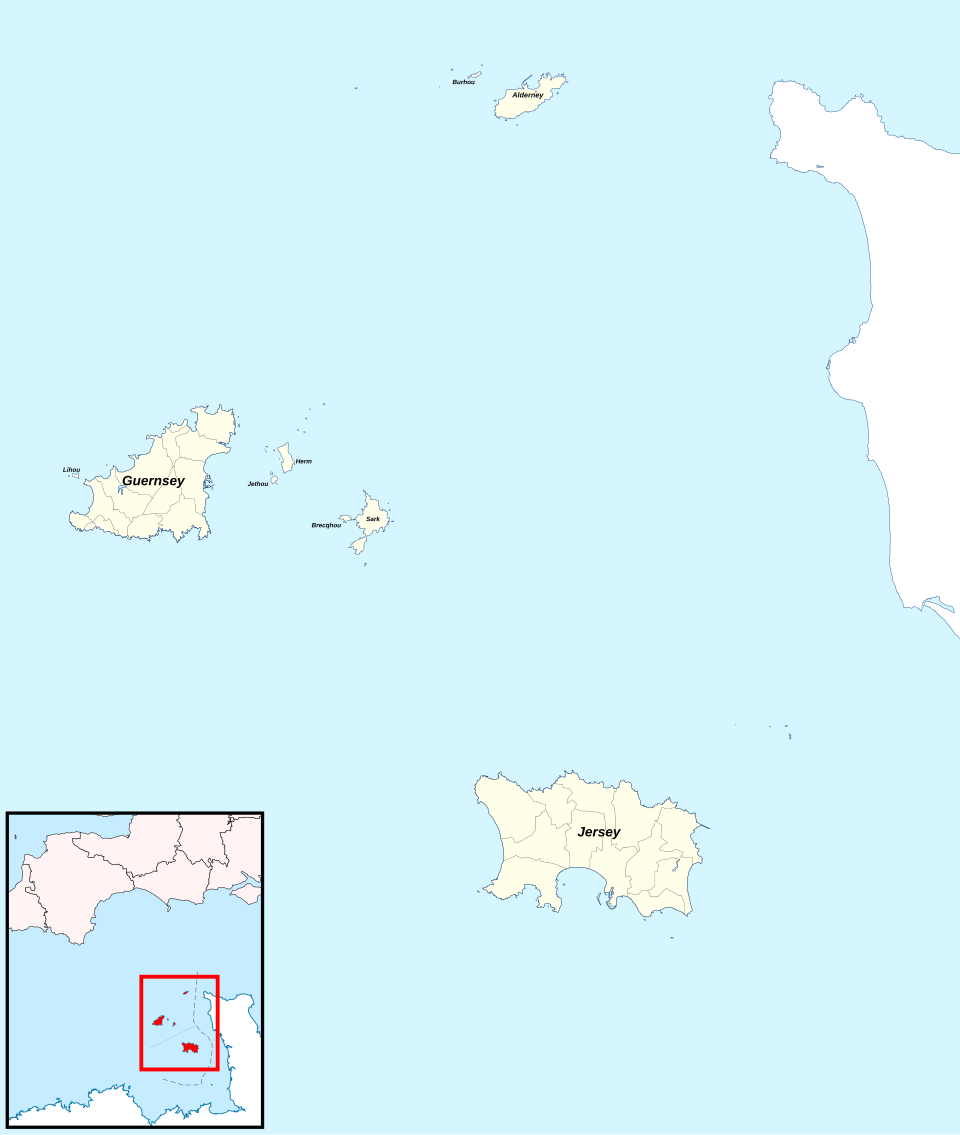
The Channel Islands — Jersey, Guernsey, Alderney, Sark, and Herm — are not sovereign states but British Crown Dependencies. They are not members of the United Nations, nor do they report to the World Bank in the manner of full nation-states. Their economies are deliberately discreet, built around the principle that what happens in the islands’ financial sector stays there. This opacity is not accidental. It is the foundation upon which a multi-billion-dollar offshore finance industry has been constructed.
Yet the absence of data does not mean the absence of an economy. Far from it. The Channel Islands are among the wealthiest jurisdictions on Earth by GDP per capita — estimates from other sources consistently place them above Switzerland, Norway, and Luxembourg. Their main industries — private banking, fund administration, insurance, trust and company management, and legal services — generate enormous value from a tiny population.
The islands are home to over 1,300 regulated financial services businesses, managing assets in the hundreds of billions of pounds.
The lack of official data means that economic analysis must rely on inference, industry reports, and the occasional government publication from St Helier or St Peter Port. What is clear is that the islands have remained remarkably resilient through global financial shocks, Brexit, and the post-pandemic turbulence.
Their GDP growth, whatever the precise figure, has been sustained by a steady inflow of high-net-worth individuals and corporate entities seeking the islands’ stable legal framework and favourable tax regime.
Inflation, too, is a known unknown. While no official CPI figure exists, anecdotal evidence from local media and business surveys suggests that the Channel Islands have not been immune to the global inflationary wave. Import dependency — virtually everything from food to building materials arrives by sea — means that supply chain disruptions have pushed up prices. But the islands’ wealth cushion has absorbed much of the shock, preventing the kind of cost-of-living crisis seen in less affluent jurisdictions.
Unemployment is widely believed to be negligible, hovering around 1-2% in Jersey and Guernsey. Labour shortages, particularly in hospitality, construction, and healthcare, are a perennial complaint. The islands operate tight immigration controls, which keeps the labour market constrained and wages relatively high — but also creates structural bottlenecks that limit economic expansion.
The Price of Paradise — Housing and the Cost of Island Life
If there is one economic indicator that the Channel Islands cannot hide, it is the cost of housing. Here, the data gap is filled by lived experience — and the experience is brutal. Jersey and Guernsey regularly feature in surveys of the most expensive places to buy property in the British Isles, often surpassing London’s prime postcodes on a per-square-metre basis.
The reasons are straightforward and immutable. Land is finite. The islands are small — Jersey is just 116 square kilometres, Guernsey 78. Planning restrictions are stringent, designed to preserve the islands’ rural character and green spaces. The result is a housing market that operates under conditions of permanent scarcity. A modest three-bedroom house in Jersey can easily cost £600,000 to £800,000; a waterfront property will run into the millions.
Renting is scarcely more accessible. The private rental market is dominated by high-end properties aimed at wealthy incomers and financial sector workers on generous relocation packages. Local families, particularly young people, face an acute affordability crisis. The islands have responded with various schemes — affordable housing quotas, first-time buyer assistance, and restrictions on property ownership by non-locals.
Jersey operates a “housing qualifications” system that limits who can buy or rent certain categories of property based on residency status.
Daily expenses compound the housing burden. Food, fuel, utilities, and transport all carry a premium due to import costs and limited competition. A weekly supermarket shop in Jersey is estimated to be 20-30% higher than in mainland UK. Petrol prices are among the highest in Europe. Electricity, generated largely from imported fossil fuels, is expensive.
The cost of living creates a two-tier society. On one side are the financial services professionals, wealthy retirees, and international businesspeople for whom the islands offer a tax-efficient, high-quality lifestyle. On the other are the essential workers — nurses, teachers, hospitality staff, shop assistants — who struggle to afford the very place they serve. This tension is the defining social and economic challenge of the Channel Islands today.
Where the World Banks — Investment and the Business Climate
The Channel Islands are not a place you visit to build factories or grow crops. They are a place you visit to protect, manage, and deploy capital. The business climate is purpose-built for this single objective, and it excels at it.
The islands offer a legal and regulatory environment that combines the stability of English common law with bespoke local legislation designed to support trust structures, limited partnerships, and corporate vehicles. There is no capital gains tax, no inheritance tax, no wealth tax, and corporation tax is set at 0% for most businesses (a 20% rate applies to financial services income from local sources, but this is narrowly defined).
This is not tax evasion — the islands have been on the OECD’s “white list” for years and comply with international tax information exchange standards. It is tax competition, and it works.
The top companies in the Channel Islands are not household names in the way of Apple or Toyota. They are the global giants of the offshore world: HSBC International, Standard Chartered, RBC Wealth Management, UBS, and a host of specialist firms like Bedell Cristin, Ogier, and Mourant — law and fiduciary services providers that are among the world’s leading practitioners in cross-border wealth management.
The islands also host significant insurance and captive management operations, with Lloyd’s of London syndicates and major reinsurers maintaining a presence.
For an investor or business owner, the appeal is clear. Political stability is absolute — the islands are not independent and have no serious independence movement; they are British, stable, and governed by a consensus-oriented parliamentary system. The rule of law is unquestioned. The regulatory framework is robust but pragmatic, overseen by the Jersey Financial Services Commission and the Guernsey Financial Services Commission, both respected internationally.
Sectors to watch include fintech, where both islands are actively positioning themselves as hubs for blockchain, digital assets, and regulatory technology. Jersey has introduced a Digital Asset Business regime; Guernsey has its own innovative finance initiatives. The islands are also exploring sustainable finance, with green bond listings and ESG-focused investment products gaining traction.
The traditional strength in funds administration continues, with the Channel Islands being the largest domicile for alternative investment funds in Europe outside of Luxembourg and Ireland.
The business climate, however, is not for everyone. The cost of establishing and maintaining a presence is high. Office space in St Helier or St Peter Port commands London-style rents. Staffing is difficult due to housing and labour constraints. The islands are small communities where reputation matters enormously — a poor compliance record can be fatal. For the right kind of business — capital-intensive, low-footprint, high-value — the Channel Islands remain one of the world’s most attractive jurisdictions.
Safe Havens — Security, Politics, and Life in a Small Island State
The crime and safety indices from the provided data are blank. But ask anyone who lives in the Channel Islands, and they will tell you: these are among the safest places on Earth. Jersey and Guernsey have minuscule rates of violent crime. Burglary and theft exist, as they do everywhere, but the islands’ small size and close-knit communities make serious criminality difficult to sustain.
The political landscape is equally stable, though not without its internal debates. Both Jersey and Guernsey have their own parliaments — the States of Jersey and the States of Guernsey — elected by island residents. There are no political parties in the conventional sense; most politicians stand as independents, and government is formed through coalition and consensus.
The islands are not part of the United Kingdom, though the British Crown retains ultimate responsibility for defence and international representation. This arrangement — neither fully independent nor fully integrated — gives the islands significant autonomy over domestic affairs while outsourcing the costs and complexities of foreign policy and military protection.
The quality of life is high for those who can afford it. The natural environment is exceptional: clean air, uncrowded beaches, green countryside, and a pace of life that feels a world away from London or Paris. Education and healthcare are well-regarded, though the islands face challenges in retaining specialist medical staff. Cultural life is active but small-scale — theatre, music, and arts festivals punch above their weight given the population.
The islands’ greatest vulnerability is their dependence on the financial sector. A global crackdown on tax havens, a shift in international regulatory standards, or a major reputational scandal could fundamentally alter the economic model. The islands are acutely aware of this and have worked hard in recent years to diversify their economies and improve transparency. But the core reality remains: the Channel Islands are, and likely will remain, places where finance is the only game in town.
The Present Tense — What Is Happening in the Channel Islands Right Now
The Channel Islands in 2026 are navigating a complex set of pressures that will define their trajectory for the next decade. The most immediate is the ongoing recalibration of global tax standards. The OECD’s base erosion and profit shifting (BEPS) framework, particularly the global minimum corporate tax rate of 15%, has forced the islands to adapt.
Jersey and Guernsey have both committed to implementing the minimum tax for large multinational groups, a move that preserves their access to international markets while narrowing the tax advantage that has long been their primary selling point.
Housing remains the dominant domestic political issue. In Jersey, the government has announced new targets for affordable home construction and is reviewing the “15-year rule” that determines housing qualifications. In Guernsey, the debate over the “Open Market” versus “Local Market” property system continues to generate fierce debate, with critics arguing that the current system entrenches inequality and discourages essential workers from settling.
Both islands are exploring innovative solutions, including more flexible planning rules and partnerships with developers to build at scale.
The cost of living crisis, while less acute than in many parts of Europe, is a persistent source of public discontent. Local media regularly report on families struggling with rent increases, food price inflation, and energy bills. The islands’ governments have responded with targeted cost-of-living payments and temporary relief measures, but structural solutions remain elusive.
On the economic front, the financial services sector continues to adapt to a post-Brexit world. The loss of automatic passporting rights into the European Union has been managed through negotiated equivalence arrangements and bilateral agreements, but the regulatory burden has increased. Both islands are investing heavily in compliance and technology to maintain their competitive edge.
There are also signs of life beyond finance. The islands are developing their digital economies, with remote work attracting a new wave of residents who bring skills and spending power without requiring traditional employment. The creative sector, while small, is growing. And the islands’ role as a hub for the international shipping and commodities trading sectors — particularly in Guernsey — remains significant.
Perhaps the most telling development is the islands’ increasing willingness to engage with the world on their own terms. Both Jersey and Guernsey have opened representative offices in London, Brussels, and elsewhere. They are active participants in international forums on tax, financial regulation, and climate change.
The era of quiet anonymity is giving way to a more confident, outward-facing stance — one that acknowledges the islands’ unique position while embracing the responsibilities that come with it.
The Bottom Line
The Channel Islands are a study in controlled prosperity — a small, wealthy, and stable corner of the world that has built its fortune on being a safe harbour for global capital. The absence of comprehensive economic data from the World Bank is not a flaw in this article; it is a reflection of the islands’ deliberate positioning outside the usual frameworks of international economic reporting.
For investors seeking a jurisdiction with rock-solid legal foundations, minimal tax, and genuine political stability, the Channel Islands remain an essential destination. For anyone else — particularly those who must live and work there without the cushion of wealth — the islands present a more complicated picture, one of high costs, constrained opportunity, and a society grappling with the tensions inherent in being a haven for the world’s money.
Watch this country if you care about the future of offshore finance, the limits of tax competition, and the social consequences of extreme prosperity in a small place.
Sources & Methodology
This article is authored by Economic Pulse Net for informational and research purposes. Economic Pulse Net sources its data from multilateral institutions, national statistics bureaus, and proprietary databases. All data is believed to be current as of the date of publication.
Published: July 20, 2026 | Category: Research — Channel Islands
Use these signals in your own platform
Economic Pulse publishes its live signal feed through a documented, read-only API. Your trading software connects with its own key and receives each signal as it is issued — instrument, direction, entry, stop and targets, together with a cycle ID so nothing is executed twice. The feed is independent of this website and cannot change it.
Signals are informational only and are not financial advice.