Economic Pulse Net | Sources: World Bank World Development Indicators, Government Sources | 2026
Key Takeaways
– The Central African Republic operates as a presidential republic, with executive power shared between a president and a prime minister, yet the country’s economic potential remains largely untapped due to persistent instability.
– The World Bank currently lists no official figures for GDP growth, inflation, or unemployment, reflecting the profound difficulty of collecting reliable economic data in a nation still recovering from years of internal conflict.
– With no official GDP per capita or GNI per capita figures available, the Central African Republic remains one of the world’s most opaque economies — a black box that offers both extraordinary risk and potentially extraordinary opportunity.
– The country’s formal political framework suggests democratic governance, but the reality on the ground is far more complex, with armed groups and humanitarian challenges shaping daily life.
– For investors, diplomats, and development economists, the Central African Republic represents a frontier market where the absence of data is itself a critical piece of information.
The Data Void — What the Missing Numbers Tell Us
When the World Bank publishes economic data, its absence speaks as loudly as its presence. For the Central African Republic, the latest figures for GDP growth, inflation, and unemployment are simply not available. This is not an oversight; it is a reflection of a country where state capacity remains severely constrained.
When statisticians cannot safely travel to collect price data, when businesses cannot reliably report earnings, and when labour markets operate largely outside formal channels, the machinery of modern economic measurement grinds to a halt.
What we do know is that the Central African Republic’s political system is formally structured as a presidential republic. The president serves as head of state, a prime minister leads the government, and legislative power is constitutionally vested in both the government and parliament. This institutional framework, however, has struggled to translate into economic stability.
The country’s main industries — which would typically form the backbone of any economic analysis — are not officially documented in available datasets, leaving observers to rely on historical knowledge of diamond mining, timber, and subsistence agriculture as the traditional pillars of activity.
The absence of inflation data is particularly telling. In economies where central banks function effectively, inflation figures are released monthly. In the Central African Republic, the inability to produce such statistics suggests challenges in basic administrative function. For international investors, this data vacuum creates a paradox: the lack of information is itself a form of risk assessment. When you cannot measure an economy, you cannot price its assets, insure its investments, or forecast its trajectory.
The World Bank’s empty cells for GDP per capita and GNI per capita reinforce this picture of an economy operating below the radar of formal measurement.
Living Costs in the Absence of a Price Index
In most countries, economists track the cost of living through carefully constructed consumer price indices. For the Central African Republic, no such official data exists, which means residents and aid workers alike must navigate a landscape where prices are set by local conditions, security situations, and supply chain realities rather than published statistics.
The absence of housing cost data — no figures for rent, no indices for purchase prices — points to a property market that functions informally, often through cash transactions and community-based arrangements.
What can be inferred from the broader regional context is that the Central African Republic faces infrastructure deficits that typically inflate the cost of goods. When roads are impassable during rainy seasons, when electricity is unreliable, and when imported goods must travel overland through neighbouring countries, the cost of everyday items rises accordingly.
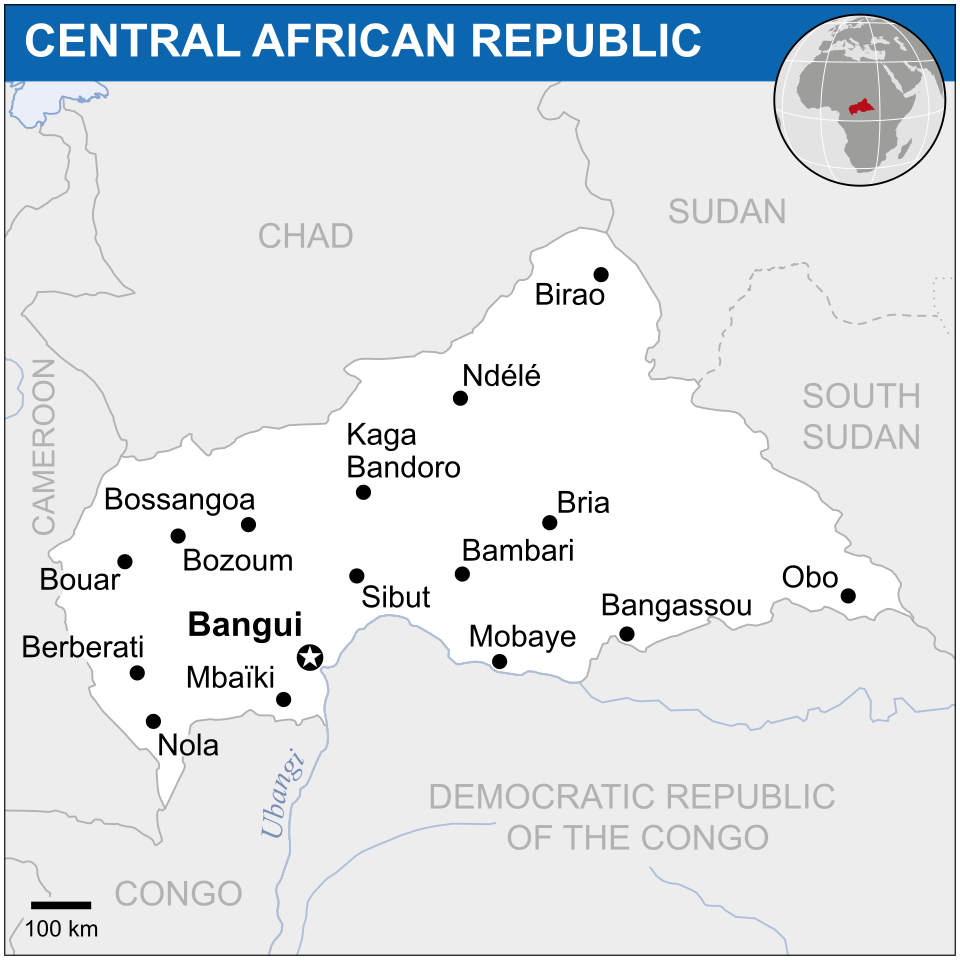
For the small urban population in Bangui, the capital, daily expenses likely mirror patterns seen across fragile states in the region: food and basic necessities consuming a large share of household income, with little left for discretionary spending. The lack of official data makes precise comparison impossible, but the structural conditions suggest a high-cost, low-income environment.
Business and Investment — A Frontier With No Map
For the private sector, the Central African Republic presents an environment where the absence of a documented corporate landscape is itself a significant finding. No major companies are listed in available datasets, no flagship industries are officially recorded, and no investment climate indicators are published. This does not mean the country lacks economic activity; rather, it means that activity occurs in spaces that formal data collection does not reach.
Diamond trading, artisanal gold mining, timber extraction, and cross-border commerce have historically formed the backbone of the economy, but none of these sectors appear in the official data provided.
The business environment is shaped by the country’s political structure. With a president as head of state and a prime minister as head of government, there is a formal framework for policy-making and regulation. Yet investors face challenges common to fragile states: security concerns, infrastructure gaps, and a legal system that may not yet provide the predictability that businesses require. For those willing to accept these risks, the potential rewards are significant.
A country with vast natural resources, a young population, and untapped agricultural potential offers the kind of asymmetric opportunity that attracts a specific breed of investor — one comfortable with uncertainty and focused on long-term horizons.
Security, Governance, and the Texture of Daily Life
The Central African Republic’s crime and safety indices are not available, which is itself a statement about the security environment. In countries where data collection is possible, these indices provide citizens and visitors with a sense of what to expect. Here, the absence of such data suggests that security conditions remain too fluid for reliable measurement.
The political landscape, while formally structured as a presidential republic, has been marked by periods of instability that have shaped the country’s modern history.
For residents, quality of life is determined less by published statistics and more by daily realities: access to clean water, reliable healthcare, and education for children. The formal political framework — with its president, prime minister, and parliament — provides a structure for governance, but the effectiveness of that governance in delivering services remains an open question.
International observers and humanitarian organisations have long noted the challenges facing the country, and the lack of official economic data only reinforces the picture of a state still working to establish its authority across its territory.
What’s Happening Now — Between Formal Structure and Ground Reality
The Central African Republic today exists in a space between its formal political framework and its lived reality. The presidential republic structure remains in place, with the constitutional division of power between the president and prime minister continuing to function as designed. Yet the country’s trajectory is shaped by forces that extend beyond constitutional arrangements.
The government’s ability to extend its authority, deliver services, and create conditions for economic recovery will determine whether the country can begin to produce the kind of data that currently appears as empty cells in World Bank tables.
The absence of recent economic indicators from the World Bank suggests that the statistical infrastructure necessary for modern governance is still being rebuilt. For the international community, the Central African Republic remains a focus of humanitarian concern and diplomatic engagement. For the country’s leadership, the priority is establishing the security and institutional foundations that would allow the economy to be measured, understood, and eventually developed.
The formal political framework provides a starting point, but the journey from structure to substance is long.
The Bottom Line
The Central African Republic is a country that defies conventional economic analysis because the tools of that analysis — reliable data, established institutions, measurable markets — are still being built. For development economists and international institutions, it represents a test case in state-building and post-conflict recovery. For adventurous investors, it offers the kind of frontier opportunity that comes with extraordinary risk.
And for observers of global affairs, it serves as a reminder that the world’s economic map still contains blank spaces where the absence of information is the most important fact of all. The Central African Republic’s future will be written by those who can look beyond the empty data cells and see the potential that lies beneath.
Sources & Methodology
This article is authored by Economic Pulse Net for informational and research purposes. Economic Pulse Net sources its data from multilateral institutions, national statistics bureaus, and proprietary databases. All data is believed to be current as of the date of publication.
Published: August 04, 2026 | Category: Research — Central African Republic
Use these signals in your own platform
Economic Pulse publishes its live signal feed through a documented, read-only API. Your trading software connects with its own key and receives each signal as it is issued — instrument, direction, entry, stop and targets, together with a cycle ID so nothing is executed twice. The feed is independent of this website and cannot change it.
Signals are informational only and are not financial advice.