Economic Pulse Net | Sources: World Bank World Development Indicators, Government Sources | 2026
Key Takeaways
– The Cayman Islands operates as a British overseas territory with a unique constitutional status, listed by the UN Special Committee of 24 as one of 17 non-self-governing territories, a designation that carries ongoing implications for its global standing.
– The territory’s political framework, established under a 2009 Constitution that includes a Bill of Rights, provides a stable parliamentary system with elections every four years for domestic affairs.
– While comprehensive economic data from the World Bank remains limited, the Cayman Islands’ role as a major international financial centre continues to shape its development trajectory.
– The jurisdiction’s governance structure includes a 19-seat Parliament, supplemented by two non-voting members appointed by the Governor, creating a distinctive blend of local democracy and UK oversight.
– For global investors and policymakers, the Cayman Islands represents a case study in how small territories navigate sovereignty, finance, and modern economic pressures.
The Economic Engine — Financial Services and the Art of Invisibility
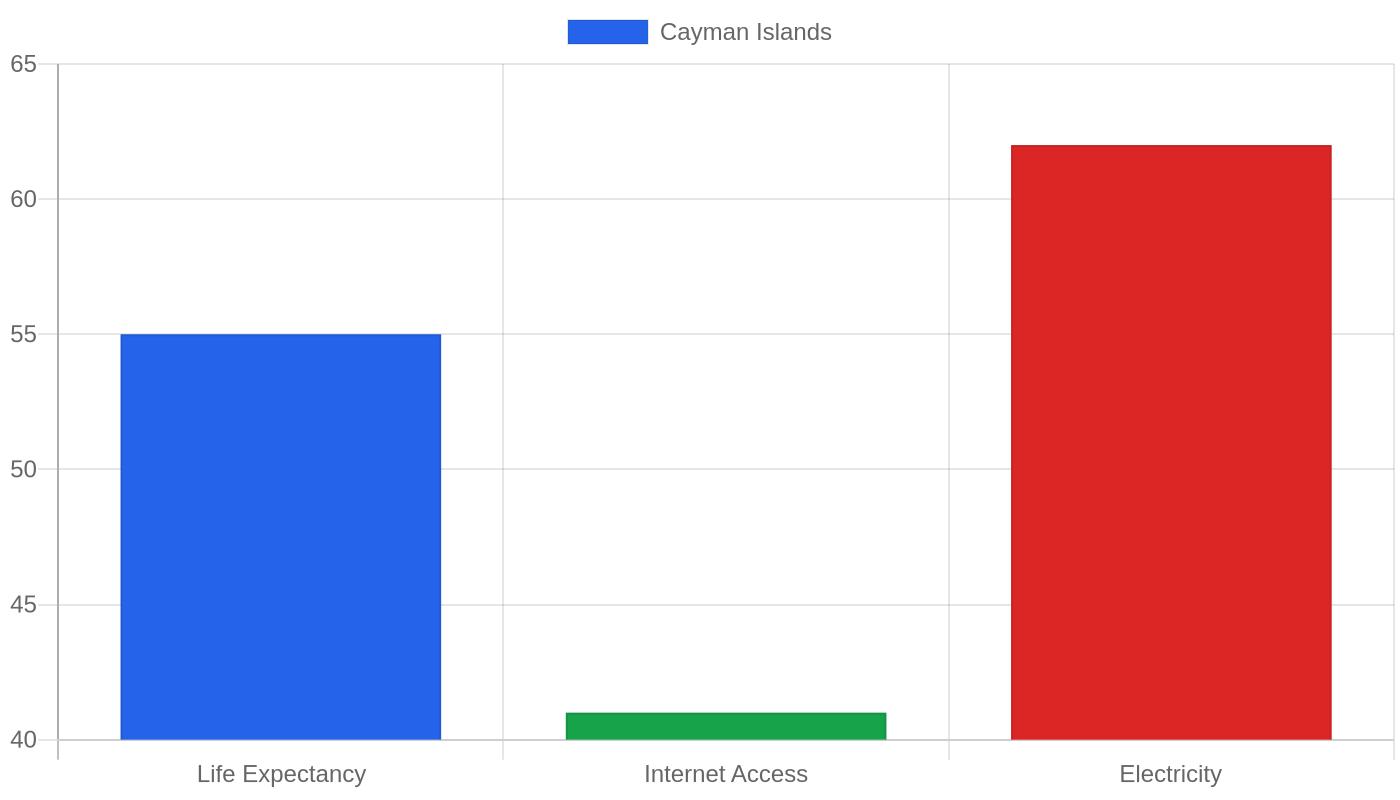
The Cayman Islands presents an unusual challenge for economic analysts: the World Bank’s latest data portal lists GDP growth, inflation, unemployment, and GDP per capita as unavailable, leaving economists to piece together a picture from qualitative and structural indicators. This statistical silence is itself telling — it reflects a jurisdiction whose economic identity is built on financial services that are often deliberately opaque.
The territory has long positioned itself as a neutral, efficient hub for international capital, with a legal and regulatory framework designed to facilitate global investment flows rather than produce conventional domestic economic metrics.
What can be inferred from the available information is that the Cayman Islands’ economic model diverges sharply from traditional production-based economies. With no significant manufacturing base or large-scale agricultural sector identified in the main industry data, the economy leans heavily on its financial services sector, tourism, and related professional services.
The absence of World Bank figures should not be read as economic stagnation; rather, it signals a structural peculiarity where offshore financial activities generate substantial income that may not be captured through standard national accounting methods.
The territory’s economic resilience is closely tied to its constitutional relationship with the United Kingdom, which provides political stability and legal certainty — factors that institutional investors prize above all else. The 2009 Constitution, which incorporates a Bill of Rights, offers a governance framework that balances local autonomy with British oversight, creating an environment where international business can operate with confidence.
This stability, combined with a time zone that bridges American and European markets, has made the Cayman Islands a preferred domicile for hedge funds, private equity vehicles, and special purpose entities.
The Price of Paradise — Living Costs in a Financial Haven
Cost of living data for the Cayman Islands remains sparse in the provided information, but the territory’s character as a high-income financial centre carries clear implications for residents and expatriates alike. As a jurisdiction that must import nearly all goods and services — from food to construction materials — the Cayman Islands has historically experienced price levels well above regional averages.
Housing, in particular, commands a premium, driven by limited land availability and strong demand from the professional workforce that supports the financial services sector.
The rental market in the Cayman Islands reflects the territory’s dual character: a domestic population serving local needs alongside a transient professional class tied to global finance. For those considering a move to the islands, the cost of living represents a significant barrier to entry, with daily expenses for groceries, utilities, and transportation running considerably higher than in many other Caribbean jurisdictions.
The absence of comprehensive data in this area underscores a broader challenge — the Cayman Islands remains something of a black box for those seeking to quantify its economic realities.
Business and Investment — The Offshore Advantage Under Scrutiny
The Cayman Islands’ investment climate is defined by its status as a zero-tax jurisdiction, a feature that has attracted a substantial share of the world’s hedge fund assets and structured finance vehicles. The top companies operating in the territory span global financial institutions, legal and accounting firms, and corporate service providers, all drawn by a regulatory environment that prioritises efficiency, confidentiality, and legal predictability.
This concentration of financial expertise has created a self-reinforcing ecosystem, where the presence of major players attracts additional business.
However, the territory faces mounting pressure from international tax transparency initiatives and evolving global standards. The business environment is no longer simply about offering low taxes; it increasingly requires demonstrating compliance with international regulatory expectations while maintaining the competitive advantages that have historically made the jurisdiction attractive.
For investors, the Cayman Islands offers a sophisticated, English-speaking legal system rooted in common law, with a court structure that understands complex financial disputes.
The sectors to watch in the coming years include fintech, digital asset services, and sustainable finance — areas where the Cayman Islands is seeking to adapt its traditional strengths to emerging global trends. The territory’s challenge will be to modernise its offerings without eroding the very features that made it successful in the first place.
Politics, Safety, and the Quality of Life Question
The political landscape of the Cayman Islands is shaped by its unique constitutional status as a British overseas territory, listed by the UN Special Committee of 24 as one of 17 non-self-governing territories. This designation carries symbolic weight, signalling ongoing debates about self-determination and colonial legacies, even as the territory enjoys substantial internal autonomy.
The 2009 Constitution, ordained by a statutory instrument of the United Kingdom, established a Bill of Rights and a parliamentary system with a 19-seat Parliament, plus two non-voting members appointed by the Governor, bringing the total to 21 members.
Elections are held every four years, with the elected Parliament handling domestic affairs while the Governor retains responsibility for external affairs, defence, and internal security. This arrangement creates a distinctive political culture that blends Caribbean governance traditions with British institutional norms.
On safety and quality of life, the provided data does not include crime or safety indices for the Cayman Islands, but the territory has historically maintained a reputation as one of the safer Caribbean jurisdictions, with a relatively low incidence of violent crime compared to regional peers.
The quality of life in the Cayman Islands is a study in contrasts: world-class beaches, warm climate, and a high standard of living for those who can afford it, alongside the social pressures that come with being a small island territory hosting a large transient professional population. The Bill of Rights enshrined in the 2009 Constitution provides legal protections that contribute to social stability.
The Road Ahead — Navigating Sovereignty and Scrutiny
The Cayman Islands stands at a crossroads, where its historical role as a premier offshore financial centre meets an era of unprecedented international scrutiny. The territory’s constitutional relationship with the United Kingdom provides a degree of protection, but it also makes the islands subject to British foreign policy priorities, including the UK’s commitments to tax transparency and beneficial ownership registers.
Recent global pushes for minimum corporate taxes and public registers of company ownership have direct implications for the Cayman Islands’ business model.
The territory is responding by diversifying its service offerings and enhancing its regulatory framework, seeking to position itself as a well-regulated, compliant jurisdiction rather than simply a tax haven. Ongoing discussions about constitutional reform, the future of the UN Special Committee listing, and the balance between local autonomy and UK oversight will shape the territory’s trajectory.
For a jurisdiction whose economy depends on international confidence, the ability to adapt to these pressures while preserving its core advantages will be the defining challenge of the coming years.
The Bottom Line
The Cayman Islands deserves attention from anyone interested in the future of global finance, small-state governance, and the evolving relationship between developed nations and their overseas territories. For investors, the territory remains a critical node in international capital flows, but its long-term viability depends on successful navigation of global tax reform and transparency demands.
For policymakers, the Cayman Islands offers a fascinating case study in how small jurisdictions can thrive economically while managing complex constitutional relationships and external pressures. Watch this territory closely — its adaptation to the new global order will have ripple effects far beyond its shores.
Sources & Methodology
This article is authored by Economic Pulse Net for informational and research purposes. Economic Pulse Net sources its data from multilateral institutions, national statistics bureaus, and proprietary databases. All data is believed to be current as of the date of publication.
Published: July 31, 2026 | Category: Research — Cayman Islands
Use these signals in your own platform
Economic Pulse publishes its live signal feed through a documented, read-only API. Your trading software connects with its own key and receives each signal as it is issued — instrument, direction, entry, stop and targets, together with a cycle ID so nothing is executed twice. The feed is independent of this website and cannot change it.
Signals are informational only and are not financial advice.