Economic Pulse Net | Sources: World Bank World Development Indicators, Government Sources | 2026
Key Takeaways
– The Cayman Islands, a British Overseas Territory, operates under a constitution ordained by the United Kingdom in 2009, which includes a Bill of Rights, and is listed by the UN Special Committee of 24 as one of 17 non-self-governing territories.
– With a 19-seat Parliament (plus two non-voting members appointed by the Governor, bringing the total to 21), the territory manages its domestic affairs through elections held every four years.
– While comprehensive World Bank economic data (GDP growth, inflation, unemployment, GDP per capita) is currently unavailable, the territory’s significance lies in its unique constitutional status and its role as a major global financial center.
– The political structure reflects a delicate balance: elected officials handle domestic policy while the UK-appointed Governor retains significant authority, a dynamic that shapes the territory’s economic and political trajectory.
The Constitutional Tightrope — Politics, Power, and the Path to Self-Determination
The Cayman Islands occupy a singular space in the global economic order. As a British Overseas Territory, it is neither fully independent nor entirely sovereign, and its political landscape reflects this intricate balancing act. The United Nations Special Committee of 24 has placed the territory on its list of non-self-governing territories, a designation that carries significant political weight and keeps the question of decolonization on the international agenda.
This status is not merely ceremonial; it shapes the territory’s governance, its international relations, and its economic policies.
The 2009 Constitution, established by a statutory instrument of the United Kingdom, represents a landmark moment in the islands’ political development. For the first time, the territory received a formal Bill of Rights, enshrining fundamental freedoms and protections for its citizens.
This constitutional framework created a hybrid system where a 19-seat Parliament, elected by the people every four years, handles domestic affairs, while the Governor—appointed by the British Crown—retains responsibility for external affairs, defense, and internal security. Two additional non-voting members appointed by the Governor bring the total parliamentary complement to 21, though the appointed members’ influence over legislative matters remains limited by design.
This political arrangement has profound implications for economic governance. The Cayman Islands cannot unilaterally enter into international trade agreements, cannot independently represent itself in global financial forums, and must navigate the complex interplay between local democratic mandates and London’s oversight. Yet this same constitutional framework provides a degree of political stability and legal certainty that has proven attractive to international investors and financial institutions.
The tension between local autonomy and British oversight continues to define the territory’s political discourse, with periodic debates over the pace and direction of constitutional evolution.
The Economic Paradox — A Global Financial Powerhouse Without Conventional Metrics
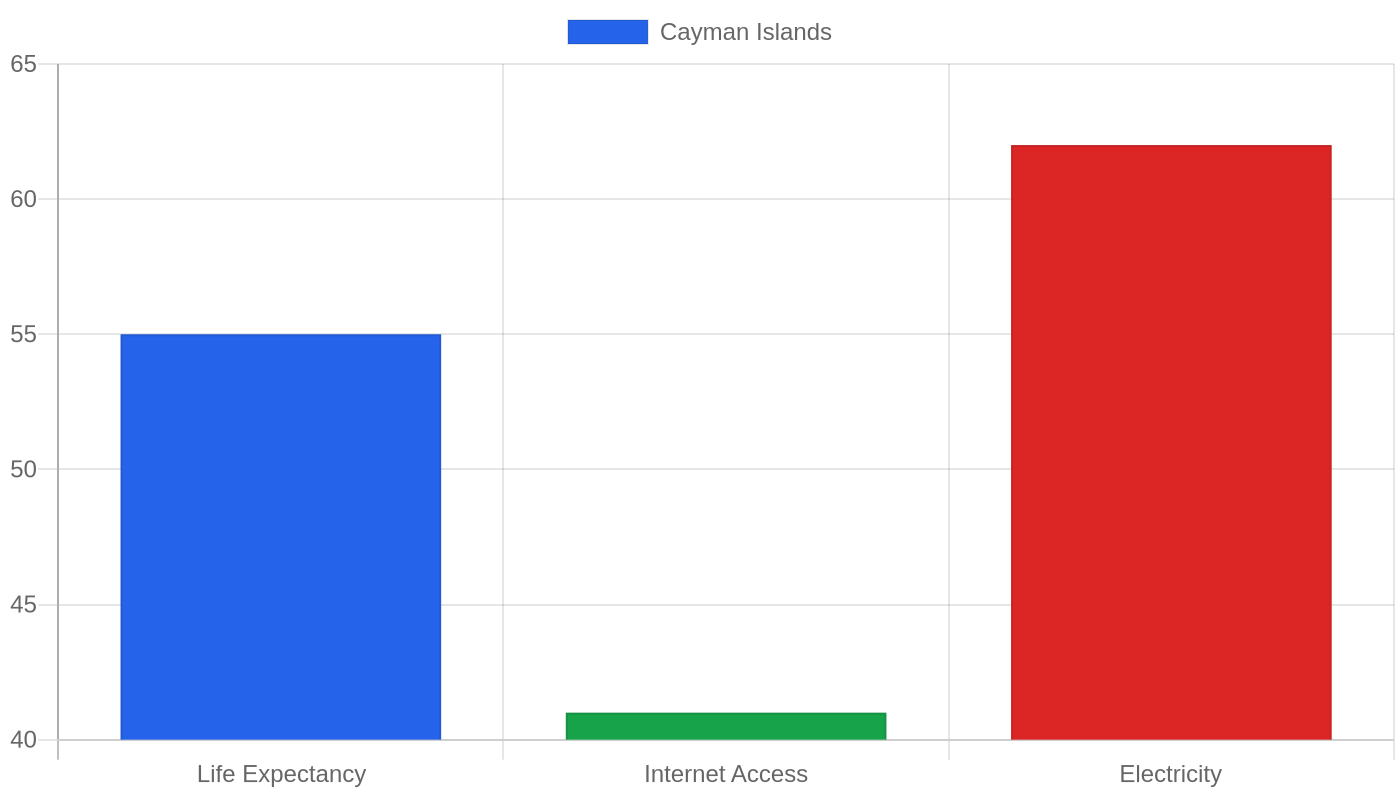
The Cayman Islands presents a curious challenge to economic analysts: despite its outsized role in global finance, comprehensive macroeconomic data from the World Bank remains unavailable. GDP growth figures, inflation rates, unemployment statistics, and per capita income measurements are all absent from the standard international datasets.
This data gap is itself revealing—it speaks to the territory’s unique economic structure, which is dominated by the financial services sector and offshore investment vehicles rather than traditional productive industries.
What is clear is that the Cayman Islands has positioned itself as one of the world’s premier financial centers, a jurisdiction of choice for hedge funds, private equity vehicles, and international corporations seeking a stable, tax-neutral environment. The absence of direct taxation—there is no income tax, no corporate tax, and no capital gains tax—has made the territory extraordinarily attractive to global capital.
This fiscal environment has driven the development of a sophisticated financial services ecosystem, including legal firms, accounting practices, and fund administrators that service clients from around the world.
The territory’s economic model, however, creates inherent vulnerabilities. With limited domestic production and heavy reliance on imported goods, the cost of living in the Cayman Islands tends to run significantly higher than regional averages.
The economy’s dependence on financial services also means that global regulatory shifts—particularly those emanating from the OECD and the European Union regarding tax transparency and beneficial ownership—can have outsized impacts on the territory’s economic fortunes.
The Cayman Islands has responded to these pressures by enhancing its regulatory framework and cooperating with international information-sharing initiatives, though tensions between offshore confidentiality and global tax enforcement remain an ongoing challenge.
The Price of Paradise — Housing, Daily Life, and Economic Reality
For those who call the Cayman Islands home, the economic reality is shaped by the territory’s status as a high-cost jurisdiction. Housing, in particular, represents a significant financial burden. The islands’ limited land area, combined with strong demand from expatriate professionals working in the financial sector, has driven property prices and rental costs to levels that often exceed those found in many mainland Caribbean nations.
The dynamic is familiar to observers of small island economies: a thriving financial sector attracts high-income professionals, which in turn pushes up real estate prices, creating a two-tiered market that can be challenging for local residents and essential workers.
The cost of living extends beyond housing. As an import-dependent territory, virtually all consumer goods—from food to electronics to vehicles—must be shipped in, and those transportation costs are passed on to consumers. Daily expenses for groceries, utilities, and transportation typically run well above mainland averages, a premium that residents pay for the territory’s political stability, high safety standards, and quality of life.
The Cayman Islands dollar is pegged to the US dollar at a fixed rate, providing currency stability but also linking the local economy to American monetary conditions.
The Investment Landscape — Stability, Sophistication, and Strategic Positioning
The Cayman Islands’ investment climate is defined by its political stability, its common law legal system, and its deep pool of financial services expertise. The territory has cultivated a reputation for regulatory sophistication, with a legal framework that supports complex financial structures while maintaining compliance with international standards.
For global investors, the Cayman Islands offers a familiar and trusted jurisdiction for fund formation, with a well-established infrastructure of service providers who understand the nuances of cross-border investment.
The business environment benefits from the territory’s constitutional link to the United Kingdom, which provides a degree of legal certainty and judicial independence that is valued by international investors. The elected Parliament’s focus on domestic affairs has allowed for the development of locally tailored business legislation that supports the financial services industry.
However, the territory must continuously adapt to evolving international regulatory expectations, and its long-term economic prospects depend on maintaining this delicate balance between offshore flexibility and global compliance.
Safety, Society, and the Quality of Life Equation
The Cayman Islands consistently maintains a reputation as one of the safer jurisdictions in the Caribbean region, with a stable political environment and a well-functioning legal system. The territory’s small population and close-knit community structure contribute to a sense of security that is often cited by both residents and visitors.
The British overseas territory status provides an additional layer of institutional stability, with the Governor responsible for internal security and the maintenance of law and order.
Quality of life in the Cayman Islands is shaped by the territory’s natural beauty, its high standard of living, and its multicultural population drawn from across the globe. The presence of the financial services industry has created a cosmopolitan atmosphere, with a diverse expatriate community working alongside Caymanian nationals.
The Bill of Rights incorporated into the 2009 Constitution provides legal protections that support a high quality of life, and the territory’s political stability—anchored by regular elections and the rule of law—contributes to an environment where residents can plan for the long term.
The Road Ahead — Constitutional Questions and Global Pressures
The Cayman Islands currently finds itself navigating a complex set of pressures that will shape its economic and political future. The ongoing international push for tax transparency continues to challenge the territory’s traditional offshore model, requiring constant adaptation and regulatory evolution.
The debate over constitutional reform—and the territory’s long-term relationship with the United Kingdom—remains a persistent undercurrent in local politics, with periodic discussions about the pace of self-governance and the ultimate question of independence.
The territory’s listed status with the UN Special Committee of 24 ensures that the decolonization question remains on the international agenda, a factor that adds an external dimension to domestic political discourse. At the same time, the Cayman Islands must manage the practical challenges of sustainable development: infrastructure maintenance, environmental protection, and the social pressures that come with economic success.
The territory’s ability to balance its role as a global financial center with the needs of its local population will determine whether it can maintain its prosperity in an increasingly scrutinized and regulated world.
The Bottom Line
The Cayman Islands represents a fascinating case study in the modern global economy—a territory of modest size that has achieved outsized economic significance through its financial services industry. For investors, policymakers, and observers of global finance, the Cayman Islands offers insight into the evolving relationship between offshore financial centers and the international regulatory community.
The territory’s constitutional status, political stability, and economic model make it a jurisdiction worth watching closely as global financial governance continues to evolve. Whether the Cayman Islands can maintain its position as a leading financial center while adapting to new international expectations will be one of the defining questions of its next decade.
Sources & Methodology
This article is authored by Economic Pulse Net for informational and research purposes. Economic Pulse Net sources its data from multilateral institutions, national statistics bureaus, and proprietary databases. All data is believed to be current as of the date of publication.
Published: August 05, 2026 | Category: Research — Cayman Islands
Use these signals in your own platform
Economic Pulse publishes its live signal feed through a documented, read-only API. Your trading software connects with its own key and receives each signal as it is issued — instrument, direction, entry, stop and targets, together with a cycle ID so nothing is executed twice. The feed is independent of this website and cannot change it.
Signals are informational only and are not financial advice.