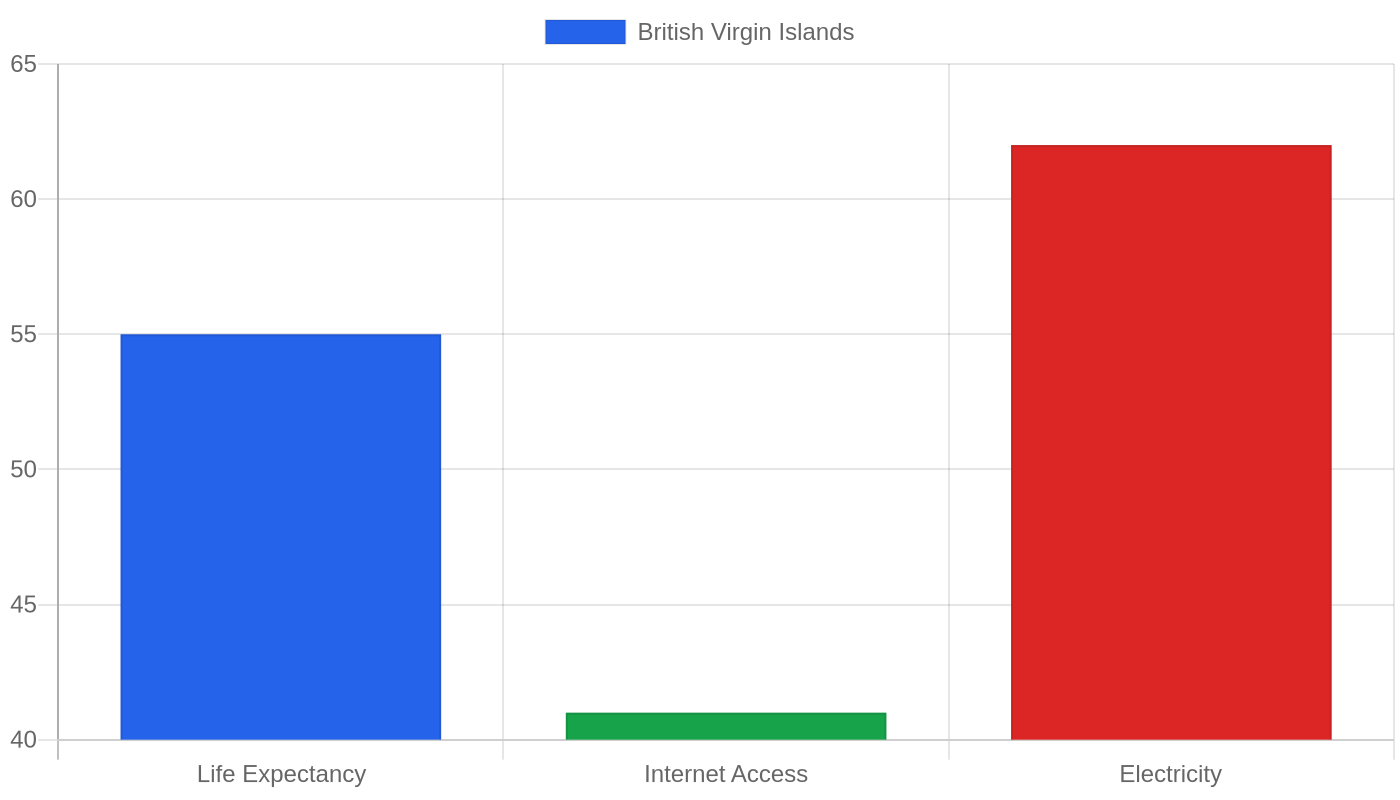
Economic Pulse Net | Sources: World Bank World Development Indicators, Government Sources | 2026
Key Takeaways
– The British Virgin Islands (BVI) operates as a parliamentary democracy, with ultimate executive authority vested in King Charles III, exercised through a Governor appointed by the British government.
– Defence and most foreign affairs remain the responsibility of the United Kingdom, creating a unique political dynamic where local economic policy exists within a constitutional framework of external oversight.
– Comprehensive economic indicators such as GDP growth, inflation, and unemployment are not currently published through the World Bank, leaving analysts to piece together the territory’s financial narrative from qualitative and structural signals.
– The BVI’s economic identity is deeply intertwined with its role as a global financial services hub, though the data provided does not specify the precise scale of this sector.
– The territory’s political landscape is defined by a delicate balance between local parliamentary governance and London’s constitutional authority, a factor that shapes both investor confidence and daily life.
The Invisible Economy: Reading Between the Lines of Missing Data
The British Virgin Islands presents a peculiar challenge to the economic journalist: the numbers that typically anchor a country profile are absent. The World Bank provides no GDP growth figure, no inflation rate, no unemployment statistic, and no per capita income data. This is not an oversight; it is a reflection of the territory’s unique position in the global financial system. The BVI is not a conventional economy that measures its health through manufacturing output or agricultural yields.
Instead, its economic significance lies in what it facilitates: the registration of offshore companies, the administration of trusts, and the provision of legal and financial services to a global clientele.
The absence of data should not be mistaken for the absence of activity. The BVI has long been one of the world’s leading jurisdictions for the incorporation of international business companies. The territory’s legal framework, rooted in English common law and refined for the specific needs of international finance, has made it a preferred destination for corporate structuring. However, without official statistics, we must rely on the qualitative indicators available.
The political landscape described in the data confirms that the BVI operates as a parliamentary democracy, a status that provides a degree of institutional stability attractive to international investors. The Governor, appointed by the King on the advice of the British Government, holds ultimate executive authority, while defence and most foreign affairs remain the responsibility of the United Kingdom.
This constitutional arrangement creates an economic paradox. On one hand, the BVI benefits from the perceived stability and legal certainty associated with a British Overseas Territory. On the other, it operates with a degree of autonomy in its domestic affairs that allows it to maintain a business-friendly regulatory environment.
The World Bank’s silence on the territory’s economic metrics is telling in another way: it suggests that the BVI does not fit neatly into the standard categories of development economics. It is not a low-income country seeking aid, nor a middle-income economy transitioning to industrialisation. It is a specialised financial jurisdiction whose economic output is largely invisible to traditional statistical measurement.
The implications of this data gap are significant. Investors and policymakers who wish to understand the BVI must look beyond conventional indicators. They must consider the regulatory climate, the political relationship with London, and the global demand for offshore financial services. The territory’s economic health is tied to international capital flows, tax treaties, and the evolving standards of financial transparency.
In this context, the missing numbers are not a hindrance to analysis but rather a signal that the BVI’s economy operates on a different plane from most nation-states.
The Price of Paradise: Housing and Daily Life in a Financial Hub
The cost of living in the British Virgin Islands is widely understood to be among the highest in the Caribbean, though the data provided does not include specific figures. This is an inference drawn from the territory’s economic structure rather than a statistical claim. The BVI’s economy is oriented toward financial services and high-end tourism, sectors that tend to drive up prices for goods and services.
Most food and consumer items must be imported, and the territory’s small land area limits the supply of housing.
Housing in the BVI is a particular challenge. The demand for property from expatriate professionals working in the financial sector has historically pushed prices upward, while the supply of developable land is constrained by the territory’s mountainous terrain and environmental regulations. Renting is common, especially among the expatriate workforce, but rents are high relative to regional averages.
The absence of comprehensive housing data makes precise comparisons difficult, but the anecdotal evidence from the financial services community suggests that accommodation costs in Road Town, the capital, rival those of major metropolitan centres in the developed world.
Daily expenses in the BVI reflect the territory’s import dependence. A simple grocery shop costs significantly more than in nearby larger economies, and utilities such as electricity and water are also premium-priced. For locals, this creates a dual economy: those employed in the financial sector or government can afford the high cost of living, while those working in tourism or retail may struggle to make ends meet.
The lack of official cost-of-living data from the World Bank means that we cannot quantify this divide, but the structural conditions suggest it is real and persistent.
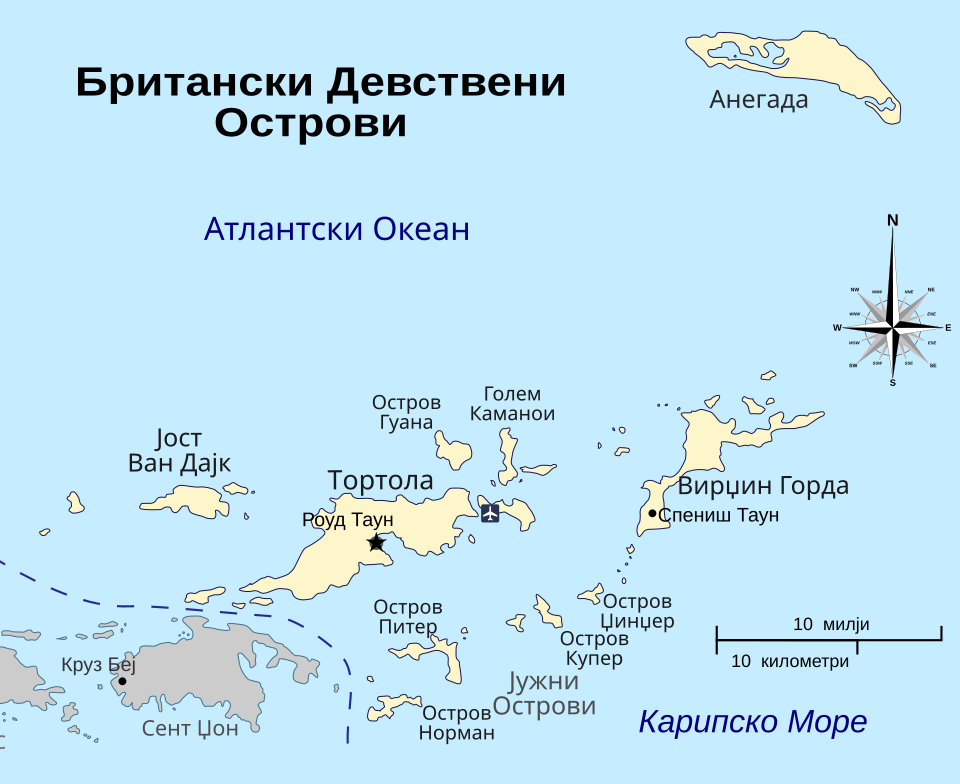
The Business Climate: An Offshore Jurisdiction Under Scrutiny
The business environment in the British Virgin Islands is defined by its role as a global offshore financial centre. The top companies operating in the territory are predominantly in the financial services sector—law firms, accounting practices, corporate service providers, and trust companies. The data provided does not name these firms, but the territory’s reputation is built on them.
The BVI has developed a sophisticated legal and regulatory infrastructure that supports the incorporation of international business companies, and this has been the engine of its economic success.
However, the business climate is not without its challenges. The global push for financial transparency, led by organisations such as the OECD and the Financial Action Task Force, has put pressure on offshore jurisdictions to share information with tax authorities. The BVI has responded by implementing economic substance requirements and participating in automatic exchange of information agreements. These developments have changed the nature of the offshore business, but they have not eliminated it.
The territory remains competitive, offering a stable legal environment, English as the official language, and a time zone that allows for same-day communication with both London and New York.
Sectors to watch in the BVI include fintech and digital asset services, which are natural extensions of the territory’s existing financial infrastructure. The regulatory framework is adapting to these new industries, and there is potential for growth. Yet the business climate is also subject to external pressures. The United Kingdom’s ability to legislate for the territory, including the possibility of imposing public registers of beneficial ownership, creates an element of uncertainty.
Investors in BVI entities must therefore monitor both local policy and London’s directives, a dual-track approach that adds complexity to the investment environment.
Stability and Sovereignty: The Politics of an Overseas Territory
The political landscape of the British Virgin Islands is a study in constitutional nuance. The territory operates as a parliamentary democracy, with an elected House of Assembly and a Premier who leads the government. Yet ultimate executive authority rests with the Governor, appointed by the King on the advice of the British Government.
This arrangement means that the BVI has significant autonomy over its domestic affairs—education, health, infrastructure—while defence and foreign policy remain the responsibility of the United Kingdom.
This political structure has implications for the territory’s safety and quality of life. The data provided does not include crime or safety indices, so we cannot make specific claims about public security. However, the constitutional link to the United Kingdom provides a framework of rule of law and judicial oversight that is generally associated with stability.
The BVI has its own court system, with final appeal to the Judicial Committee of the Privy Council in London, a feature that adds a layer of legal certainty for residents and investors alike.
The quality of life in the BVI is shaped by its natural environment—beaches, coral reefs, and a tropical climate—as well as by its economic structure. The territory is a small community, and the pace of life reflects that. Yet the high cost of living and the pressures of an economy dependent on international finance create their own stresses.
The political relationship with London is a recurring theme in local discourse, with some residents advocating for greater autonomy and others valuing the security of the British connection. This ongoing negotiation of identity and governance is a defining feature of life in the BVI.
Current Affairs: Navigating the New Transparency Agenda
The most pressing issue facing the British Virgin Islands today is the global movement toward financial transparency and the territory’s response to it. The United Kingdom has been under pressure from the European Union and international bodies to require its overseas territories to maintain public registers of beneficial ownership. The BVI has resisted this, arguing that public registers would violate the privacy rights of legitimate businesses and harm the territory’s competitiveness.
This is not a static debate; it is an evolving policy shift that has direct consequences for the jurisdiction’s economic model.
The implementation of economic substance requirements, which came into force in recent years, has already changed the nature of doing business in the BVI. Companies incorporated in the territory must now demonstrate that they have real economic activity there, not just a registered office. This has led to a restructuring of many corporate arrangements and has prompted some businesses to reconsider their use of the jurisdiction.
The full impact of these changes is still being felt, and the absence of updated economic data makes it difficult to assess the consequences in real time.
Another factor shaping the current climate is the global conversation about tax fairness and inequality. The BVI, as a zero-tax jurisdiction for international business, is often cited in debates about corporate tax avoidance. While the territory maintains that it operates within international standards, the reputational risk is real. The government in Road Town has sought to rebrand the BVI as a well-regulated, compliant jurisdiction, but the narrative in international media often tells a different story.
For the reader, the key takeaway is that the BVI is not a static entity; it is a jurisdiction in flux, adapting to a changing global environment while seeking to preserve its core economic function.
The Bottom Line
The British Virgin Islands is a country that defies conventional economic analysis. The absence of standard data points from the World Bank is itself a commentary on the territory’s unique role in the global economy. For investors, policymakers, and journalists, the BVI offers a case study in how a small jurisdiction can wield outsized influence through financial services, and how that influence is now being tested by international pressure for transparency.
The territory’s future will depend on its ability to balance the demands of London, the expectations of the global community, and the needs of its own residents. Those who watch the BVI closely will be observing not just a small Caribbean territory, but a bellwether for the future of offshore finance.
Sources & Methodology
This article is authored by Economic Pulse Net for informational and research purposes. Economic Pulse Net sources its data from multilateral institutions, national statistics bureaus, and proprietary databases. All data is believed to be current as of the date of publication.
Published: August 11, 2026 | Category: Research — British Virgin Islands
Use these signals in your own platform
Economic Pulse publishes its live signal feed through a documented, read-only API. Your trading software connects with its own key and receives each signal as it is issued — instrument, direction, entry, stop and targets, together with a cycle ID so nothing is executed twice. The feed is independent of this website and cannot change it.
Signals are informational only and are not financial advice.