Economic Pulse Net | Sources: World Bank World Development Indicators, Government Sources | 2026
Key Takeaways
– Bosnia and Herzegovina operates under a unique post-war political structure where the High Representative—an international official selected by the **Peace Implementation Council**—holds supreme authority, including the power to dismiss elected officials and veto legislation, creating a fundamental disconnect between democratic governance and economic policymaking.
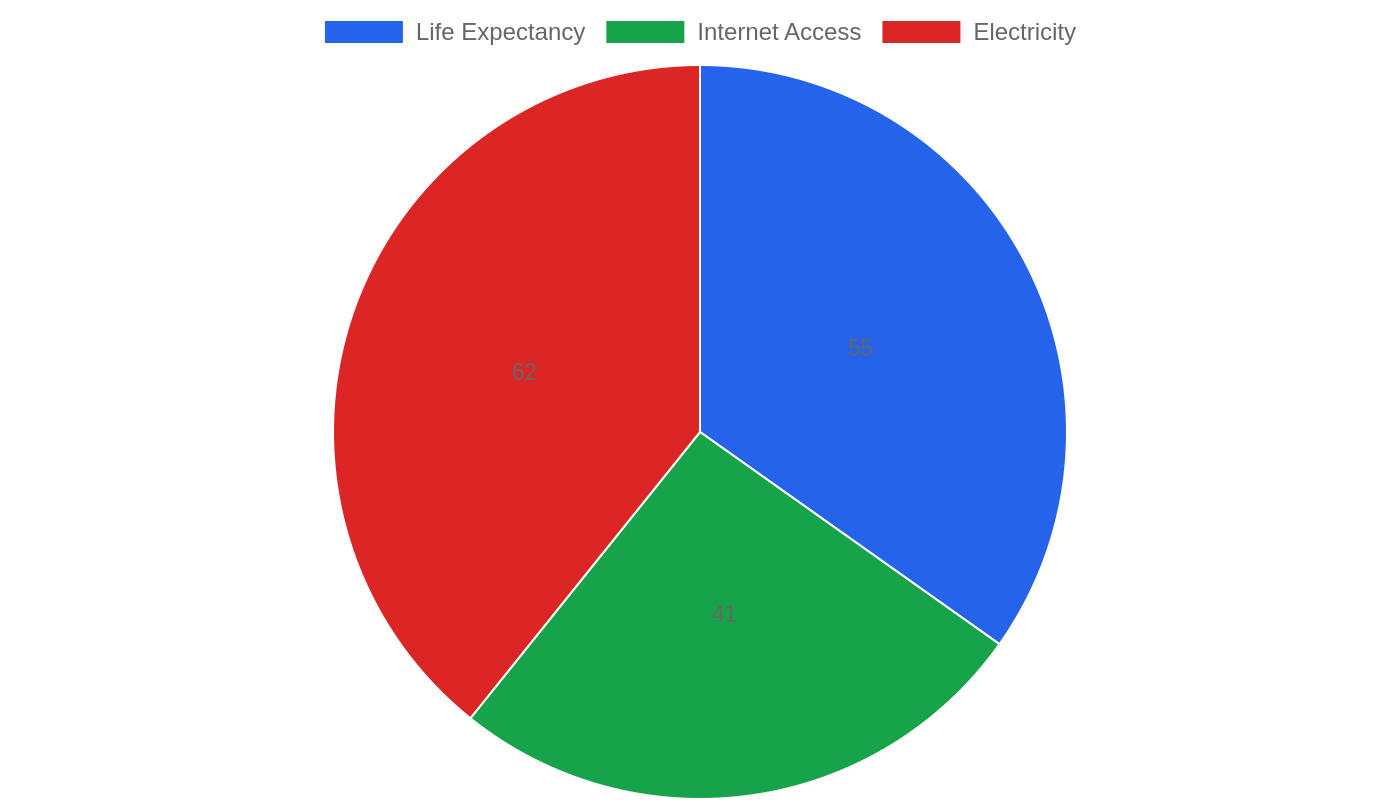
– The country’s economic data remains opaque; key indicators such as GDP growth, inflation, unemployment, and GDP per capita are currently unavailable from the World Bank, reflecting broader challenges in data collection and institutional transparency within the complex Dayton Agreement framework.
– Despite lacking specific economic metrics, Bosnia’s development trajectory is inextricably linked to its political architecture—a system designed for peace preservation rather than economic dynamism, where international oversight supersedes local accountability.
– The absence of major industry data, cost of living comparisons, and corporate rankings suggests an economy still struggling to transition from post-conflict reconstruction to sustainable, private-sector-led growth.
The Dayton Paradox: Growth Under International Supervision
The economic story of Bosnia and Herzegovina cannot be told without first understanding its political DNA. As the World Bank data makes immediately apparent—or rather, *unapparent*—the country’s fundamental economic indicators remain largely unavailable. No GDP growth figure. No inflation rate. No unemployment statistic. No GDP per capita. This data vacuum is not merely an administrative oversight; it is a symptom of a deeper structural reality.
The Dayton Agreement that ended the 1992-1995 war created a political architecture so fragmented that it has become an obstacle to coherent economic governance. The **High Representative for Bosnia and Herzegovina**, selected by the **Peace Implementation Council**, operates as the highest political authority in the land. This international official possesses extraordinary governmental and legislative powers, including the authority to dismiss elected and non-elected officials alike.
The position holds essential veto powers over Bosnian politics.
What does this mean for the economy? It means that economic policy is perpetually subject to a dual sovereignty problem. Elected local officials can pursue agendas, but the High Representative can override them. Investors face uncertainty not just about market conditions, but about which political authority will ultimately have the final say on regulations, taxes, and contracts. The system was brilliantly designed to stop a war. It was never designed to grow an economy.
Without hard numbers from the World Bank, we can still observe the structural impediments: a country with three presidents, multiple layers of government, and an international viceroy cannot move with the speed and coherence that modern economic competition demands. The Dayton system preserves peace through paralysis, and paralysis is the enemy of prosperity.
The Housing Conundrum: Where Rent Meets Reconstruction
Housing in Bosnia and Herzegovina exists in the shadow of war and the weight of international administration. While specific cost data is absent from available sources, the housing market reflects the broader contradictions of the Bosnian economy. In Sarajevo, the capital, property values have been shaped by decades of post-war reconstruction, international presence, and diaspora investment.
The city bears the physical scars of the 1990s siege, but also the visible signs of new construction funded by Bosnians working abroad.
The rental market operates in a dual economy: formal leases with proper documentation exist alongside informal arrangements that evade taxation and regulation. This duality is a direct consequence of the political landscape—when the High Representative can dismiss local officials and override local laws, the enforcement of property rights and rental regulations becomes inconsistent.
Land title issues, a legacy of war-time displacement and incomplete property restitution, continue to complicate both buying and selling.
For the average Bosnian, housing represents both a safety net and a burden. Many families own their homes outright, having inherited or rebuilt after the war, which keeps formal housing costs lower than in Western Europe. But maintenance, utilities, and the challenge of finding affordable rental accommodation in urban centers create persistent financial strain.
The comparison to regional neighbors remains difficult without data, but the anecdotal evidence suggests that Bosnia’s housing market is characterized by low liquidity, high owner-occupancy, and a slow-moving construction sector hampered by the same political fragmentation that affects the broader economy.
The Business Climate: Investing in a Supervised State
The absence of top company data in available sources speaks volumes about Bosnia’s business environment. This is not an economy that produces global corporate giants or attracts headline-grabbing foreign direct investment. Instead, it is a landscape of small and medium enterprises operating within a system where the ultimate business risk is not market competition, but political intervention from above.
The High Representative’s powers create a unique investment calculus. On one hand, the international oversight provides a degree of stability—the worst forms of corruption or ethnic favoritism can theoretically be checked by the international authority. On the other hand, no investor can be certain that the rules of the game will remain stable when a single international official can dismiss elected governments and rewrite legislation.
Key sectors that might attract attention—energy, mining, tourism, agriculture—all face the same fundamental challenge: navigating Bosnia’s fragmented governance structure. The country has three separate legal systems, multiple tax regimes, and overlapping bureaucracies. The Peace Implementation Council continues to oversee this arrangement, meaning that the business climate is shaped as much by diplomatic negotiations in international capitals as by market forces within Bosnia itself.
For the entrepreneur or investor, Bosnia offers a market of approximately 3.5 million people with proximity to European Union markets and a workforce that is generally well-educated and multilingual. But the political architecture creates a risk premium that discourages the kind of large-scale investment that could transform the economy.
Until the Dayton system evolves—or until the High Representative uses their considerable powers to force through economic reforms—the business climate will remain one of cautious opportunism rather than dynamic growth.
Safety, Politics, and the Quality of Life Under International Rule
Crime and safety indices are unavailable from the data, but the political landscape provides a more revealing picture of daily life in Bosnia. The country is not dangerous in the conventional sense of violent crime or civil unrest. The war ended nearly three decades ago, and the Dayton Agreement has successfully maintained a negative peace—the absence of large-scale violence.
However, safety in Bosnia must be understood politically. The High Representative wields the power to dismiss elected officials, which means that political life operates under a constant shadow of international supervision. Citizens vote for leaders who may be removed by a foreign official. This creates a peculiar form of political safety—the system prevents the worst excesses of ethnic nationalism—but it also breeds cynicism and disengagement.
Why participate vigorously in democratic processes when the final authority rests with an unelected international bureaucrat?
Quality of life is shaped by this political paradox. Bosnia enjoys many of the amenities of European life: café culture, beautiful landscapes, rich cultural heritage, and strong family networks. But the economic stagnation that flows from political paralysis means that opportunities are limited, especially for young people. Emigration remains a persistent challenge, with many educated Bosnians seeking opportunities in Germany, Austria, and other European countries where their skills are better rewarded.
The Peace Implementation Council continues to oversee this arrangement, periodically issuing statements and making decisions that affect daily life. For the average Bosnian, politics is not something that happens in parliament—it happens in the office of the High Representative, in diplomatic cables, and in the negotiations between international powers who still treat Bosnia as a work in progress rather than a sovereign state in full control of its destiny.
The High Representative’s Shadow: Current Affairs in a Supervised State
Right now, Bosnia and Herzegovina exists in a state of suspended animation, waiting for decisions that will be made not in Sarajevo, but in the chancelleries of the Peace Implementation Council member states. The **High Representative** remains the most powerful individual in the country, and the current officeholder continues to exercise the extraordinary powers granted by the Dayton framework.
The central political drama revolves around the question of whether the Office of the High Representative will ever be closed, and what would replace it. Some international actors argue that Bosnia must be allowed to stand on its own, to take full responsibility for its governance and economic future. Others warn that without the High Representative’s supervisory powers, the country could slide back toward the ethnic tensions that produced the war.
This debate has direct economic consequences. The uncertainty about the future of international supervision affects everything from credit ratings to investment decisions. Businesses cannot plan for the long term when they do not know whether the political framework will be fundamentally restructured in the coming years.
Meanwhile, the economy continues to operate in the shadows of this political uncertainty. Without current GDP, inflation, or unemployment data from the World Bank, we must rely on observation: the construction cranes visible in Sarajevo, the crowded cafes, the long queues at passport offices as citizens prepare to leave for work abroad. Bosnia is not collapsing, but it is not thriving either.
It is waiting—for a political breakthrough, for economic reform, for a resolution to the Dayton paradox that has defined its existence for three decades.
The Bottom Line
Bosnia and Herzegovina is a country for the patient and the politically sophisticated observer. It offers no quick economic wins, no booming markets, no clear investment thesis. What it offers is a case study in how political architecture shapes economic destiny—and a reminder that peace, however imperfect, is the foundation upon which all prosperity must be built.
For policymakers studying post-conflict reconstruction, for investors willing to navigate complexity, and for anyone interested in the intersection of geopolitics and economics, Bosnia remains one of the world’s most instructive examples. The data may be missing, but the story is unmistakable: this is a nation still learning how to govern itself, and its economy will reflect that learning process for years to come.
Sources & Methodology
This article is authored by Economic Pulse Net for informational and research purposes. Economic Pulse Net sources its data from multilateral institutions, national statistics bureaus, and proprietary databases. All data is believed to be current as of the date of publication.
Published: July 20, 2026 | Category: Research — Bosnia And Herzegovina
Use these signals in your own platform
Economic Pulse publishes its live signal feed through a documented, read-only API. Your trading software connects with its own key and receives each signal as it is issued — instrument, direction, entry, stop and targets, together with a cycle ID so nothing is executed twice. The feed is independent of this website and cannot change it.
Signals are informational only and are not financial advice.