Economic Pulse Net | Sources: World Bank World Development Indicators, Government Sources | 2026
Key Takeaways
– A State Built on Compromise: Bosnia and Herzegovina’s political structure, established by the 1995 Dayton Agreement, remains the single most defining factor in its economic trajectory, creating a complex administrative labyrinth that deters investment.
– The Power of the High Representative: The international community’s envoy holds supreme authority, able to dismiss elected officials and impose laws, making the country’s sovereignty uniquely conditional and its political landscape perpetually volatile.
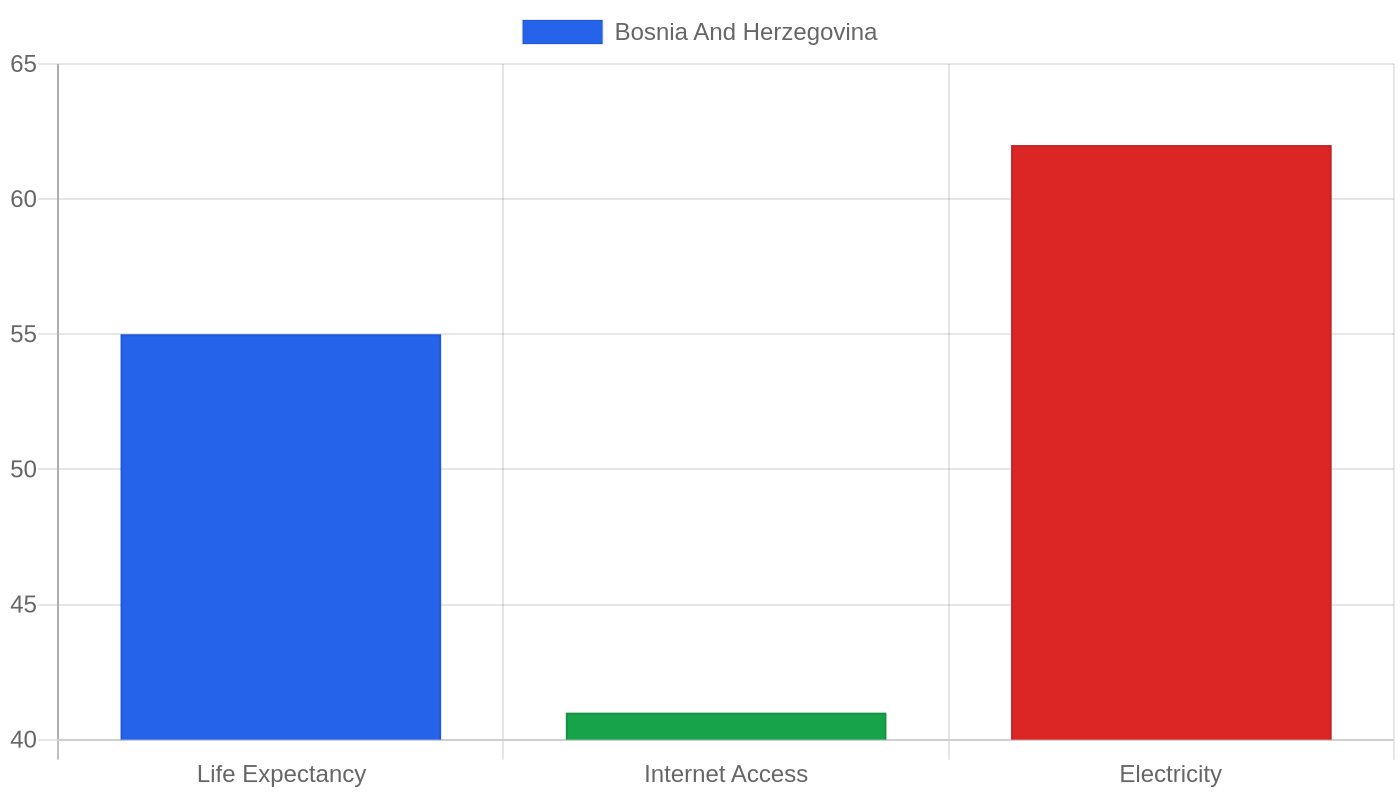
– Data Transparency as a Challenge: The absence of reliable, up-to-date macroeconomic indicators (GDP, inflation, unemployment) from primary sources itself signals a deep institutional fragmentation that hampers both policymaking and investor confidence.
– A Test Case for International Governance: Bosnia serves as a living laboratory for post-conflict reconstruction and international state-building, where the balance between local agency and external oversight is still being negotiated nearly three decades on.
The Dayton Paradox: When Peace is the Only Certainty
For a nation that emerged from the ashes of the most devastating conflict in Europe since World War II, the silence of the data is perhaps the loudest statement of all. Bosnia and Herzegovina, a country of breathtaking landscapes and a deeply resilient population, sits in a curious geopolitical and economic limbo.
The World Bank’s latest indicators for GDP growth, inflation, unemployment, and even population are marked as “N/A”—not because the country doesn’t exist, but because the statistical machinery required to produce such figures is itself a casualty of the country’s hyper-decentralized political structure.
To understand the economy of Bosnia and Herzegovina, one must first understand the political architecture that contains it. As a result of the Dayton Agreement, which ended the war in 1995, the country is not a unitary state but a loose federation of two entities: the Republika Srpska and the Federation of Bosnia and Herzegovina, with the Brčko District as a self-governing administrative unit. This is not merely a political footnote; it is the very bedrock upon which the economy functions—or fails to.
The Dayton Agreement created a system of ethnic power-sharing so complex that it often paralyzes decision-making at the national level. The result is a country that is perpetually in a state of administrative flux, where economic policy is often a casualty of political deadlock.
The most significant external actor in this arrangement is the High Representative for Bosnia and Herzegovina, selected by the Peace Implementation Council. This position, often colloquially referred to as the “international viceroy,” holds the highest political authority in the land. The High Representative possesses vast governmental and legislative powers, including the ability to dismiss elected and non-elected officials who are deemed to be obstructing the peace process.
This unique arrangement means that Bosnia is, in effect, a sovereign state whose final political arbiter is an international civil servant. This has profound implications for the business climate; investors must navigate not only local laws and entity-level bureaucracies but also the potential for sudden, top-down legislative changes imposed by an international actor.
The Economic Enigma: A Landscape Without a Map
Attempting to analyze the Bosnian economy through the lens of standard macroeconomic data is an exercise in patience. With the World Bank unable to provide a definitive figure for GDP growth or inflation, we are left to interpret the structural realities that this data vacuum represents. In a country where the state-level government lacks a unified statistical office that can produce timely data, the capacity for coherent central planning is severely limited.
This is not a critique of the people who work within these institutions, but rather a reflection of the constitutional gridlock that prevents the establishment of a cohesive national economic strategy.
The lack of a unified economic vision is perhaps the most significant barrier to growth. In most nations, the central bank and finance ministry work in tandem to manage inflation and stimulate employment. In Bosnia, the monetary system is managed by a Currency Board, which pegs the local currency, the Convertible Mark (KM), to the Euro. This provides a degree of monetary stability, but it also means the country has no independent monetary policy to respond to domestic shocks.
Fiscal policy is similarly fragmented, with the two entities managing their own budgets, tax systems, and pension funds. This creates a bewildering environment for both domestic and foreign businesses, who must often register and pay taxes in multiple jurisdictions within a country smaller than the state of West Virginia.
The absence of reliable unemployment figures is particularly telling. While unofficial estimates and anecdotal evidence from the ground suggest a persistently high jobless rate, particularly among the youth, the lack of official data makes it impossible to gauge the true scale of the social crisis. This “data drought” is not just a bureaucratic inconvenience; it is a fundamental impediment to attracting foreign direct investment.
Capital flows to certainty, and Bosnia, from a statistical standpoint, offers very little of it. The country remains rich in natural resources, including minerals and timber, and has a strong industrial heritage from the Yugoslav era, but these assets remain underutilized due to the political and administrative barriers that make doing business a Herculean task.
The Cost of Living and the Housing Conundrum
Without specific cost-of-living indices, we must rely on the general picture painted by the country’s economic stagnation. The fragmentation of the state creates significant disparities between the urban centers like Sarajevo, Banja Luka, and Mostar, and the rural hinterlands.
While the region is generally considered more affordable than Western Europe, the combination of low average wages—which remain significantly below EU averages—and the import-dependent nature of the economy creates a specific kind of financial pressure. The Currency Board arrangement, which ties the KM to the Euro, means that when the Euro strengthens, Bosnian exports become more expensive, and imported goods, from food to fuel, maintain a relatively high price floor.
The housing market in Bosnia is a direct reflection of its political reality. In many urban centers, there is a visible boom in new construction, often fueled by diaspora remittances—Bosnians living abroad sending money back to build homes. However, this is not necessarily a sign of a healthy, liquid market. For the average citizen, buying a home is often the only secure form of long-term investment, given the volatility of the banking sector and the lack of trust in state pension systems.
Renting is common among the younger population and students, but the yields for landlords can be unpredictable. The lack of a comprehensive national registry for property values and the complex web of entity-level property laws make the real estate market opaque and difficult to navigate for foreign investors, further insulating it from the kind of liquidity that drives regional growth.
Navigating the Business Climate: Bureaucracy and the Investment Void
When discussing the business environment in Bosnia, the “top companies” are often not private enterprises but rather state-owned or entity-owned behemoths from the socialist era, which have struggled to adapt to market economies. The country lacks a vibrant, large-scale private sector that can compete on the European stage.
This is largely due to the political economy of the Dayton system, where political parties often exert control over large enterprises, using them as sources of patronage and employment to secure votes. This creates a “crony capitalism” that is hostile to new entrants and discourages innovation.
Sectors with potential, such as energy, particularly hydroelectric power given the country’s mountainous terrain, and tourism, remain vastly underdeveloped. The investment climate is hampered by a notoriously slow and often corrupt judicial system, which makes contract enforcement difficult. The World Bank’s “N/A” on GNI per capita is a stark reminder that the average citizen is not feeling the benefits of any economic growth that may be occurring in isolated pockets.
For a business, the primary challenge is not the tax rate, which is relatively competitive, but the sheer cost of compliance. Navigating the administrative requirements of two entities, plus the Brčko District, requires a dedicated legal and accounting team, a cost that is prohibitive for small and medium-sized enterprises, which form the backbone of most European economies.
Until the administrative apparatus is streamlined, Bosnia will continue to struggle to attract the “greenfield” investments it desperately needs.
Safety, Politics, and the Quality of Life
In terms of safety, Bosnia and Herzegovina is a country of stark contrasts. The violent conflict of the 1990s is over, and the streets of its cities are generally safe, with a crime index that, while officially “N/A” in our data, is widely understood to be low compared to Western European standards. Violent crime is rare, and the country is not a major hub for organized crime in the way some of its neighbors are, though corruption remains a pervasive issue that affects daily life.
The high degree of safety is a testament to the resilience of the society, but it is also a fragile peace, one that is maintained not by domestic consensus but by the presence of the High Representative.
The political landscape, as dictated by the Dayton Agreement, is the primary source of instability. The High Representative’s powers to dismiss officials and impose laws are a double-edged sword. On one hand, they prevent any single ethnic group from dominating the state. On the other, they create a culture of irresponsibility among domestic politicians, who can avoid making tough decisions, knowing that if they push too hard, they will be removed by the international community.
This stunts the development of a genuine, accountable political class. The quality of life for the average citizen is therefore a paradox: one can walk safely through the streets of Sarajevo, but one cannot rely on the state to provide a functional healthcare system or a pension that will be paid in the future. The “quality of life” is high in terms of human warmth and cultural richness, but low in terms of institutional reliability.
What’s Happening Now: The Perpetual Prelude
The current political reality is a cyclical crisis, a groundhog day of threats and vetoes. The most pressing issue remains the rhetoric of secession coming from the leadership of the Republika Srpska, which consistently challenges the authority of the central state and the High Representative. This constant friction creates a climate of uncertainty that is toxic for investment.
While there are no newsworthy reforms passing through the central parliament at this moment, the focus remains on the actions of the international community. The Peace Implementation Council’s continued support for the High Representative is crucial; any sign of wavering from the international community could trigger a rapid deterioration in the political situation.
The economic news, in the absence of hard data, is dominated by the struggle for survival. The cost of living is rising, and the lack of state-level solutions to unemployment is pushing more and more of the country’s youth to emigrate. The “brain drain” is not just a statistic; it is a visible phenomenon, with entire villages emptying out as young people seek opportunities in Germany, Austria, and elsewhere in the EU.
The current affairs of Bosnia are therefore not about policy shifts or new economic programs, but about the fundamental question of whether the state can function at all. The country is in a state of suspended animation, waiting for a political consensus that the Dayton system seems structurally incapable of producing. The most significant development is the continued existence of the Dayton framework itself, a framework that guarantees peace but, as it stands, also guarantees stagnation.
The Bottom Line
Bosnia and Herzegovina is a country that must be watched not for its economic indicators, but for its political survival. For investors, it represents a high-risk, potentially high-reward frontier, but only for those with the patience and expertise to navigate its Byzantine bureaucracy. For students of international relations, it is the ultimate case study in the limits and possibilities of international state-building. The country is not a failing state, but it is a stalled one.
It remains a place of immense potential, held hostage by a political structure that was designed to end a war, not to build a prosperous economy. The world should watch Bosnia not for the numbers it produces, but for the political breakthrough it desperately needs to finally start producing them.
Sources & Methodology
This article is authored by Economic Pulse Net for informational and research purposes. Economic Pulse Net sources its data from multilateral institutions, national statistics bureaus, and proprietary databases. All data is believed to be current as of the date of publication.
Published: August 09, 2026 | Category: Research — Bosnia And Herzegovina
Use these signals in your own platform
Economic Pulse publishes its live signal feed through a documented, read-only API. Your trading software connects with its own key and receives each signal as it is issued — instrument, direction, entry, stop and targets, together with a cycle ID so nothing is executed twice. The feed is independent of this website and cannot change it.
Signals are informational only and are not financial advice.