Economic Pulse Net | Sources: World Bank World Development Indicators, Government Sources | 2026
Key Takeaways
– Antigua and Barbuda operates as a unitary parliamentary democracy under a constitutional monarchy, a political structure that has remained largely unchanged since independence in 1981.
– The island of Barbuda maintains significant autonomy from the national government based on Antigua, creating a unique dual-island governance dynamic that shapes economic policy.
– With no major economic data currently available from the World Bank, the country presents a challenge for investors and analysts seeking transparency on GDP, inflation, and employment trends.
– The constitution adopted upon independence replaced a pre-independence framework that failed to clearly define the relationship between the two islands, a legacy that continues to influence political and economic decision-making today.
– Despite data gaps, the country’s political stability and tourism-dependent economy make it a nation worth watching for those interested in small-island developing states navigating post-colonial governance.
The Missing Data Economy — What We Don’t Know and Why It Matters
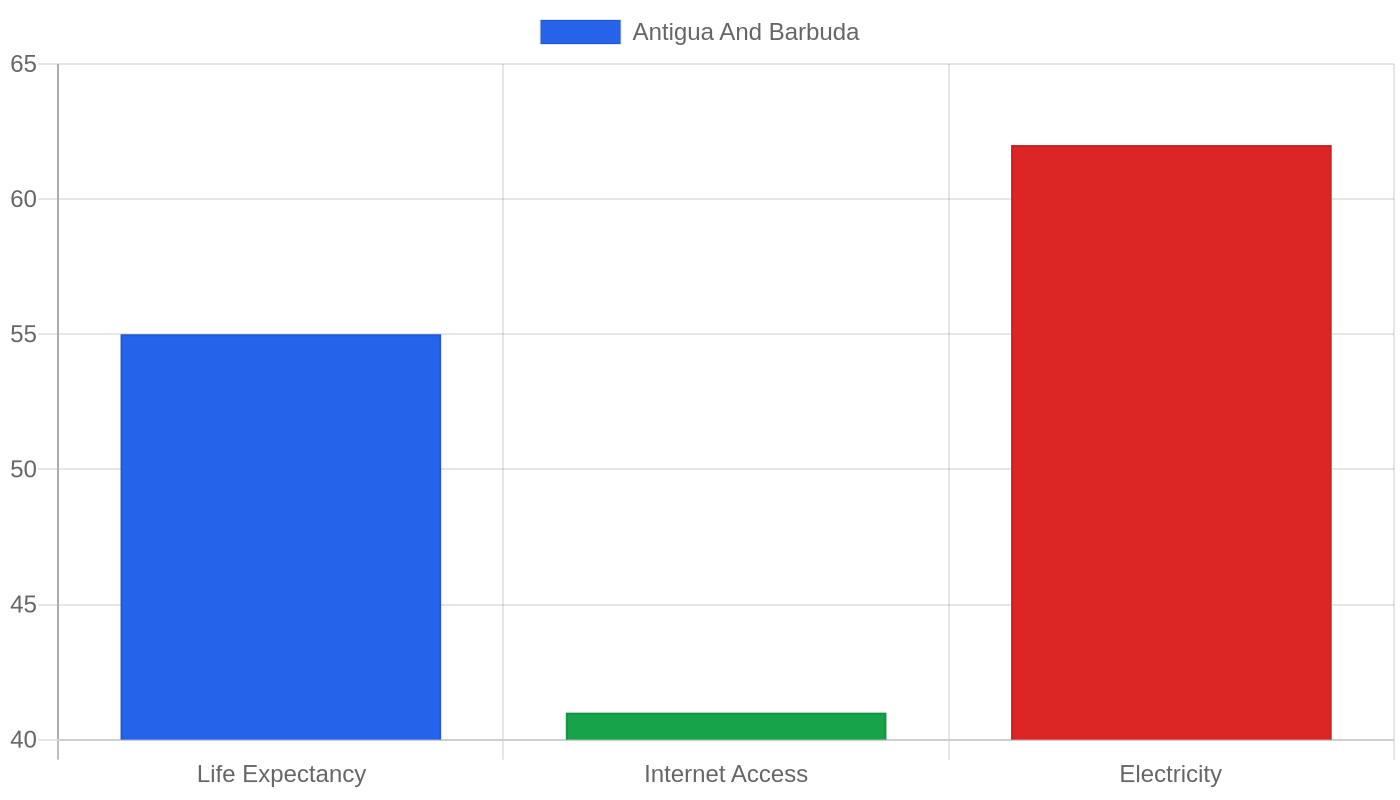
The most striking feature of Antigua and Barbuda’s economic profile is not what the World Bank reports, but what it does not. The latest available figures for GDP growth, inflation, unemployment, GDP in dollar terms, GDP per capita based on purchasing power parity, GNI per capita, and population are all listed as unavailable.
This absence of data is itself a story — one that speaks to the challenges facing small island developing states in collecting, publishing, and disseminating economic statistics to international institutions.
For a nation of two islands that relies heavily on tourism, financial services, and remittances, the lack of transparent economic indicators makes it difficult for the World Bank, international investors, and development partners to assess the country’s true economic health. Without GDP growth figures, it is impossible to determine whether the economy is expanding or contracting. Without inflation data, households and businesses cannot gauge the erosion of purchasing power.
Without unemployment numbers, policymakers lack a critical tool for designing social safety nets and labor market interventions.
The main industries that typically drive the Antiguan economy — tourism, construction, and offshore financial services — are not quantified in the available data, leaving analysts to rely on anecdotal evidence and regional trends. The Caribbean Tourism Organization and national sources often provide more timely data, but the World Bank’s gaps suggest systemic challenges in statistical capacity.
For a country that markets itself as a high-end tourism destination and a jurisdiction for international business, the absence of basic economic data raises questions about transparency and governance that potential investors would be wise to consider.
The High Cost of Island Living — Housing and Daily Expenses in a Tourist Economy
Without specific cost-of-living data from the World Bank, one must look to the structural realities of small-island economies to understand the pressures facing Antigua and Barbuda’s residents. Island nations in the Caribbean typically face higher costs for imported goods, limited housing stock, and wage levels that struggle to keep pace with tourism-driven price inflation.
The country’s reliance on imports for food, fuel, construction materials, and consumer goods means that global supply chain disruptions and shipping costs directly impact household budgets.
Housing in Antigua and Barbuda presents a particular challenge. The island of Antigua, where the national government is based, has seen significant development of luxury villas, resorts, and second homes catering to wealthy foreigners and the tourism sector. This has pushed property prices beyond the reach of many local residents, particularly younger Antiguans entering the housing market.
On Barbuda, the situation is complicated by the island’s smaller population, limited infrastructure, and the aftermath of Hurricane Irma’s devastation in 2017, which destroyed a significant portion of the housing stock. Rent versus buy calculations depend heavily on location, with Antigua’s more developed areas commanding premium prices while Barbuda offers lower costs but fewer amenities.
Daily expenses for essentials such as food, utilities, and transportation reflect the country’s import dependency. Regional comparisons with other Caribbean island nations suggest that Antigua and Barbuda likely falls into the higher-cost bracket among Eastern Caribbean states, driven by its status as a tourism hub and its reliance on imported goods.
For residents, this means that even as the tourism sector generates foreign exchange and employment, the cost of living can erode the benefits of economic activity.
Investment Climate in a Constitutional Monarchy — Business Opportunities and Political Stability
The top companies operating in Antigua and Barbuda are not listed in the available data, but the country’s business environment is shaped by its political structure as a unitary parliamentary democracy under a constitutional monarchy. This framework provides a degree of political stability that is attractive to investors, particularly those in tourism, real estate, and financial services.
The country has positioned itself as a jurisdiction for international business, offering citizenship-by-investment programs that generate significant revenue in exchange for passports and residency rights.
The sectors to watch in Antigua and Barbuda include tourism, which remains the backbone of the economy, as well as construction tied to resort development and infrastructure projects. The citizenship-by-investment program has been a major source of foreign direct investment, funding government budgets and infrastructure improvements.
However, the program also creates risks, including reputational concerns and the potential for sudden policy changes by the government or international pressure from bodies such as the European Union and the Financial Action Task Force.
The business climate benefits from the country’s membership in the Eastern Caribbean Currency Union, which provides monetary stability through a fixed exchange rate pegged to the US dollar. This eliminates currency risk for investors dealing in US dollars and facilitates trade and investment with the broader Caribbean region.
However, the small size of the domestic market, limited skilled labor pool, and vulnerability to natural disasters remain significant constraints for businesses considering establishing operations in the country.
Safety, Politics, and the Barbuda Question — Quality of Life in a Dual-Island Nation
Crime and safety indices are not available in the provided data, but Antigua and Barbuda is generally considered one of the safer destinations in the Caribbean, particularly for tourists staying in resort areas. Petty crime such as theft and burglary exists, as it does in most tourist-dependent economies, but violent crime rates are lower than in many larger Caribbean nations. The political landscape, however, presents a more complex picture.
The current constitution, adopted upon independence on 1 November 1981, replaced the pre-independence constitution of the Associated State of Antigua, which did not thoroughly define the relationship between the two islands. This constitutional ambiguity has been a recurring source of tension between Antigua and Barbuda. Barbuda maintains much autonomy, with its own local government and land ownership system, while Antigua is directly governed by the national government.
This arrangement has led to periodic disputes over resource allocation, development rights, and political representation.
The quality of life in Antigua and Barbuda is shaped by these political dynamics as well as by the country’s natural beauty, warm climate, and relatively strong social indicators compared to other Caribbean nations. Healthcare and education are provided by the state, though residents with means often seek specialized medical treatment abroad.
The dual-island structure means that life on Barbuda is markedly different from life on Antigua, with Barbudans enjoying greater autonomy but facing more limited economic opportunities and infrastructure.
The Autonomy Debate Heats Up — What’s Happening Now in Antigua and Barbuda
The most pressing current affairs in Antigua and Barbuda revolve around the ongoing constitutional relationship between the two islands and the governance of Barbuda’s autonomous status. The pre-independence constitution of the Associated State of Antigua, which did not thoroughly define the relationship between the two islands, left a legacy of ambiguity that continues to generate political friction.
Recent debates have focused on land rights, development control, and the extent of Barbuda’s autonomy in making decisions about its own economic future.
The national government, based on Antigua, has pursued policies aimed at centralizing certain functions and promoting tourism development across both islands, while Barbuda’s local government has pushed back against what it perceives as encroachment on its constitutional autonomy. This tension has implications for investors and developers, who must navigate two layers of governance when seeking to undertake projects on Barbuda.
The political landscape remains stable overall, with the constitutional monarchy providing continuity, but the underlying disagreements over the distribution of power between the two islands are unlikely to be resolved quickly.
The citizenship-by-investment program continues to be a major policy focus, with the government seeking to balance revenue generation against international scrutiny. The program has funded infrastructure projects and social programs, but it also exposes the country to pressure from international bodies concerned about money laundering and tax evasion. For now, the program remains a key driver of foreign exchange and government revenue, making it a critical component of the country’s economic strategy.
The Bottom Line
Antigua and Barbuda is a country of contrasts — a beautiful tourism destination with a complex political structure, a constitutional monarchy with a strong tradition of local autonomy, and an economy that generates significant revenue from international business while lacking basic economic data transparency. Investors and analysts should watch this country for its citizenship-by-investment program, its tourism potential, and the ongoing evolution of its governance model.
The relationship between Antigua and Barbuda will continue to shape economic and political outcomes, making it a fascinating case study in small-island statecraft and post-colonial development.
Sources & Methodology
This article is authored by Economic Pulse Net for informational and research purposes. Economic Pulse Net sources its data from multilateral institutions, national statistics bureaus, and proprietary databases. All data is believed to be current as of the date of publication.
Published: July 30, 2026 | Category: Research — Antigua And Barbuda
Use these signals in your own platform
Economic Pulse publishes its live signal feed through a documented, read-only API. Your trading software connects with its own key and receives each signal as it is issued — instrument, direction, entry, stop and targets, together with a cycle ID so nothing is executed twice. The feed is independent of this website and cannot change it.
Signals are informational only and are not financial advice.