Economic Pulse Net | Sources: World Bank World Development Indicators, Government Sources | 2026
Key Takeaways
– American Samoa operates under a unique political arrangement as a U.S. territory, with the Secretary of the Interior holding ultimate authority—a structure that shapes every facet of its economic governance.
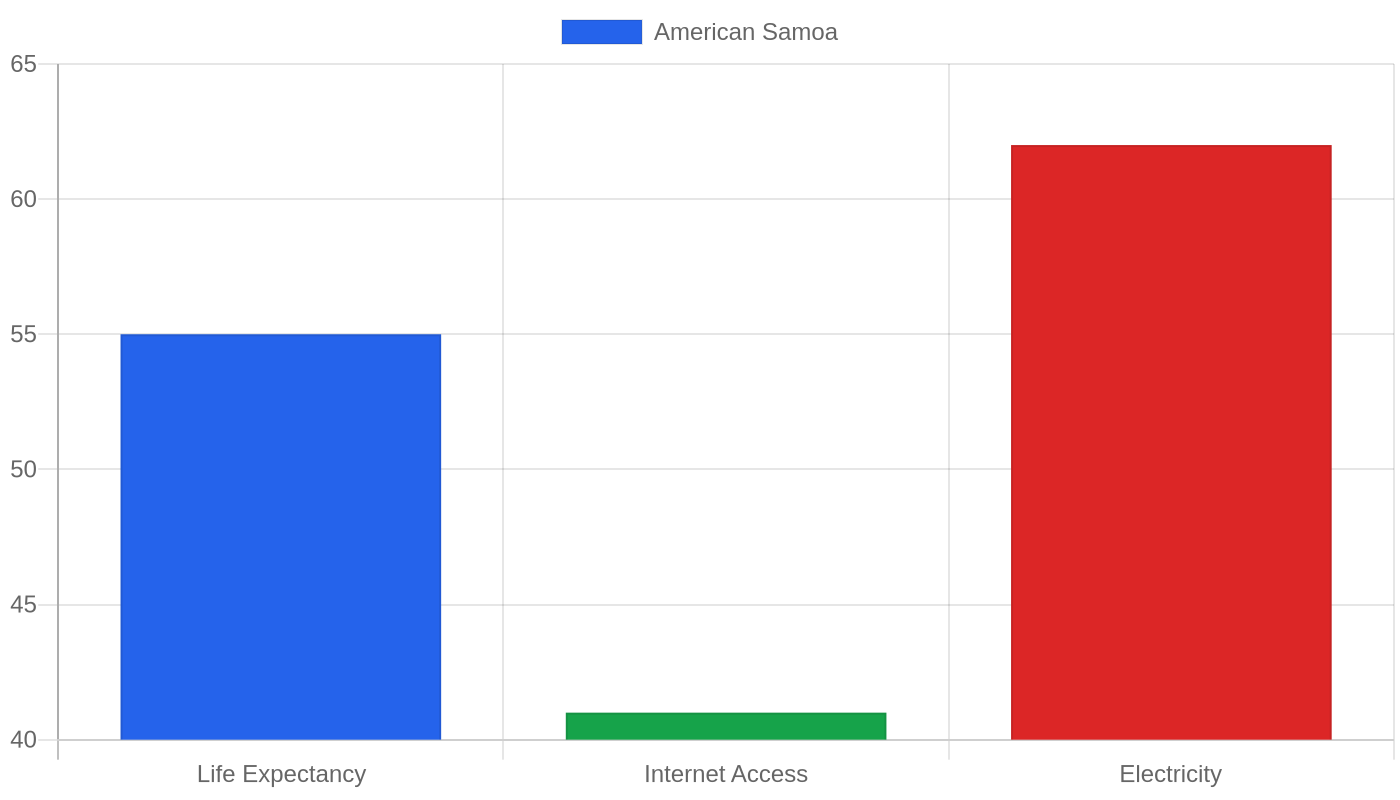
– The territory’s economic indicators remain largely unquantified in international databases, making it one of the most data-sparse economies in the Pacific region.
– Its political evolution has been gradual and distinctive, marked by the establishment of the Secretary of Samoan Affairs role in 1963, reflecting a blend of traditional chieftain authority with administrative governance.
– The economy relies on a narrow base of industries, leaving it vulnerable to external shocks and global market fluctuations.
– For investors and policymakers, American Samoa represents a frontier market where the absence of data is itself a critical piece of information.
The Numbers Gap — Reading Between the Lines of an Unmeasured Economy
Here is the central paradox of American Samoa’s economy: we know almost nothing about it in quantitative terms, and that absence of information tells us everything about its position in the global economic order. The World Bank’s latest data release offers no GDP growth figures, no inflation rate, no unemployment statistics, and no per-capita income measurements for the territory. This is not an oversight—it is a reflection of an economy that operates below the threshold of international statistical visibility.
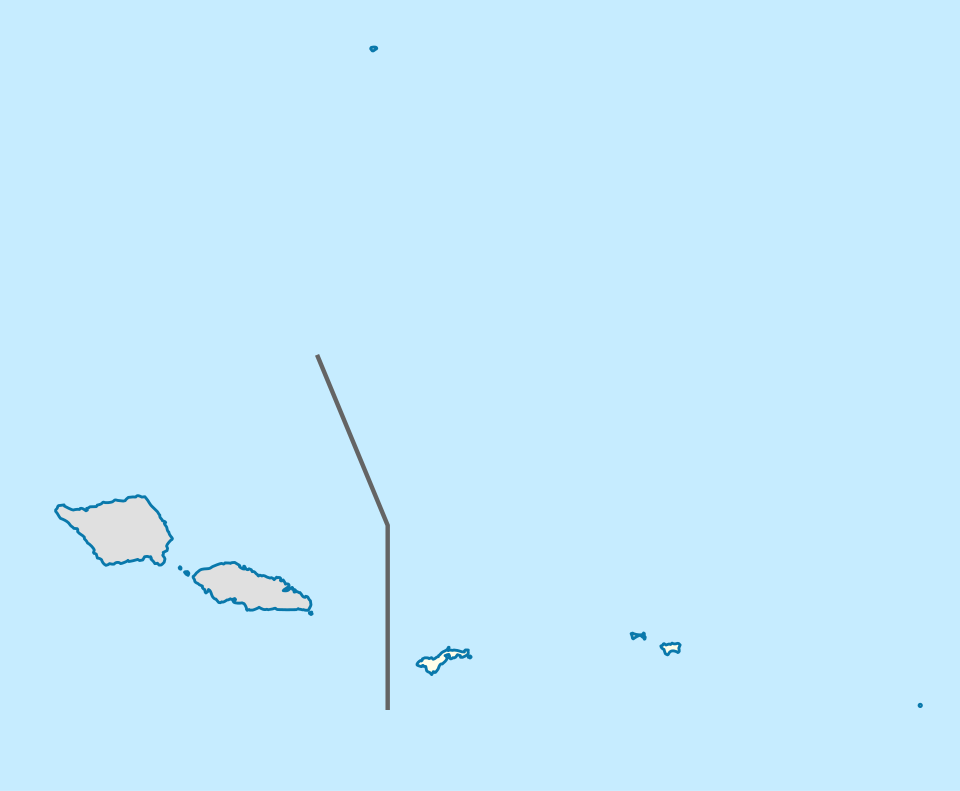
What we do know is structural. American Samoa’s economic lifeblood has historically been its tuna canneries, which have dominated the industrial landscape for decades. The territory’s remote location in the South Pacific, roughly halfway between Hawaii and New Zealand, presents both opportunities and constraints. Its isolation limits trade connectivity while preserving cultural distinctiveness.
The absence of comprehensive economic data from the World Bank suggests an economy in transition, one that may be too small to warrant the full statistical apparatus applied to larger nations, or one whose formal sector is dwarfed by informal economic activity that escapes conventional measurement.
The implications of this data vacuum are significant. Without reliable inflation figures, businesses cannot accurately price long-term contracts. Without unemployment data, policymakers cannot calibrate social programs to actual need. Without GDP measurements, international investors cannot assess the territory’s economic health against regional peers.
The World Bank’s silence on American Samoa is not merely an administrative gap—it is a fundamental constraint on the territory’s ability to participate in the global economy on informed terms.
The Price of Paradise — Cost of Living in a Remote Territory
Living in American Samoa means confronting the economic realities of island geography. The territory’s remote location ensures that nearly everything must be imported, from construction materials to consumer goods, and that reality is reflected in the cost structure of daily life. While comprehensive cost-of-living indices are not available through the World Bank data, the fundamental economics of remote island territories suggest that residents face a premium on virtually every category of expenditure.
Housing costs in American Samoa reflect the tension between limited land availability and population pressure. The traditional communal land tenure system, known as the faʻamatai, governs much of the territory’s land and complicates conventional real estate markets. This system, which vests land authority in family chiefs, means that buying property operates differently than in most market economies. Renting, similarly, operates within a framework where customary practices intersect with formal legal structures.
For residents, the practical effect is an economy where everyday expenses—food, fuel, utilities—carry a significant premium compared to more connected regions. The absence of robust local manufacturing means that even basic goods must traverse long supply chains, each link adding cost. The territory’s economic viability depends on the tuna industry and public sector employment, both of which provide the cash income necessary to sustain consumption in an import-dependent economy.
Business and Investment — Navigating a Concentrated Economic Landscape
The investment climate in American Samoa is defined by concentration. The territory’s economic base rests on a narrow set of activities, with the tuna processing industry serving as the primary private-sector engine. This concentration creates both opportunities and vulnerabilities.
For investors willing to navigate the territory’s unique regulatory environment, there is potential in supporting industries—logistics, cold storage, equipment maintenance, and other services that sustain the core fishing and processing operations.
The political framework adds another layer of complexity for prospective investors. The 1929 Ratification Act vested all civil, judicial, and military powers in the President of the United States, a authority subsequently delegated to the Secretary of the Interior in 1951. This chain of authority means that the business environment is shaped by federal oversight filtered through territorial governance structures.
The establishment of the Secretary of Samoan Affairs position in 1963 marked an important step in incorporating traditional leadership into the administrative framework, creating a hybrid governance model that investors must understand to operate effectively.
For businesses considering entry into American Samoa, the calculus involves weighing the territory’s strategic advantages—its rich fishing grounds, its cultural stability, its unique status—against the challenges of scale, distance, and data opacity. The territory offers no comprehensive economic statistics to guide investment decisions, no clear benchmarks for market size or growth potential.
What it offers instead is a defined economic niche with clear entry points for those who understand the tuna industry and the specific dynamics of Pacific island economies.
Governance, Safety, and the Samoan Way
The political landscape of American Samoa represents one of the most distinctive governance arrangements in the Pacific. The Ratification Act of 1929 established the legal foundation, vesting comprehensive authority in the U.S. President. Executive Order 10264, issued in 1951, delegated that authority to the Secretary of the Interior, creating a chain of administrative oversight that continues to shape the territory’s governance today.
A pivotal moment came on June 21, 1963, when Paramount Chief Tuli Leʻiato of Fagaʻitua was sworn in as the first Secretary of Samoan Affairs by Governor H. Rex Lee. This appointment marked a significant evolution in the territory’s political development, integrating traditional chiefly authority into the formal administrative structure.
The subsequent establishment of the territory’s constitution in 1967, under Interior Secretary Stewart Udall, further codified the relationship between traditional Samoan governance and the administrative framework.
This hybrid system has implications for quality of life that extend beyond formal political structures. The integration of the faʻamatai system—the traditional chiefly governance structure—into the territory’s administrative framework creates a social fabric that prioritizes communal welfare and cultural continuity. The political system, while operating within the broader U.S. territorial framework, maintains distinctive local characteristics that reflect Samoan cultural values and social organization.
A Territory at a Crossroads — The Present Moment
American Samoa stands at a moment of quiet significance. The territory’s political evolution continues to unfold, building on the foundations established in 1929, 1951, and 1963. The governance structure that emerged from these milestones—combining federal oversight with traditional Samoan authority—now faces the challenges of the contemporary Pacific economy.
The economic pressures are real and mounting. The territory’s reliance on a narrow industrial base leaves it exposed to global market shifts in the tuna industry, international competition, and changing trade dynamics across the Pacific region. Climate change presents an existential challenge to low-lying island territories, and American Samoa is not immune to these broader regional concerns.
Yet there are also reasons for measured optimism. The territory’s political stability, its strong cultural identity, and its strategic position in the Pacific all represent assets that could support economic diversification. The same governance structures that sometimes create bureaucratic complexity also provide a degree of predictability and continuity that is valuable in an uncertain region.
The conversation about American Samoa’s economic future is happening now, in the spaces between the sparse data points. It is happening in discussions about how to broaden the economic base beyond tuna processing, in considerations of how to leverage the territory’s unique cultural heritage for sustainable tourism, and in the ongoing negotiation between traditional governance and modern economic requirements.
The Bottom Line
American Samoa is a territory that defies easy categorization—politically distinct, economically concentrated, and statistically under-visible. For Pacific regional specialists, policy analysts, and investors with a tolerance for complexity, it offers a case study in how small island economies navigate the intersection of tradition and modernity.
The territory’s story is not told in GDP figures or inflation rates, but in the governance structures that have evolved over nearly a century, in the resilience of its cultural institutions, and in the quiet persistence of its economic life. Those who watch American Samoa are watching a slow-moving but significant story about how a small Pacific territory maintains its identity while engaging with the global economy on its own terms.
Sources & Methodology
This article is authored by Economic Pulse Net for informational and research purposes. Economic Pulse Net sources its data from multilateral institutions, national statistics bureaus, and proprietary databases. All data is believed to be current as of the date of publication.
Published: July 31, 2026 | Category: Research — American Samoa
Use these signals in your own platform
Economic Pulse publishes its live signal feed through a documented, read-only API. Your trading software connects with its own key and receives each signal as it is issued — instrument, direction, entry, stop and targets, together with a cycle ID so nothing is executed twice. The feed is independent of this website and cannot change it.
Signals are informational only and are not financial advice.